Recent books
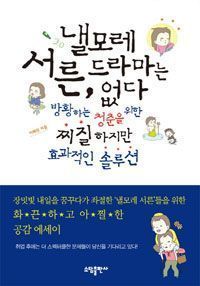
No Drama for Thirties
Lee Hye-rin; Sodam Publishing: 328 pp., 13,800 won
It seems true that being young is painful, especially for 20-somethings facing the current lean job market and soaring university tuition fees. What then lies ahead for future generations when life appears to be getting harsher and harsher?
This book is for women in their late 20s who have to overcome social prejudices and low income levels.
The author lampoons formulae for “healing” often presented in other media and entertainment, saying it doesn’t understand nor address the root causes of the pain young people face.
She explores more realistic approaches that can be taken to face the social situations and difficulties young women are currently facing. She doesn’t offer unhelpful platitudes such as “endure because youth is painful” but instead suggests that they need to sometimes back down a little in the face of irrational or nonsensical situations and hold hands with their rivals. “Cheer up! It’s not enough for those who are hurt. It’s irresponsible because it just judges them, and does not understand them,” she writes.
―Chung Ah-young
The Icon of the City, Art Center
Park Jin-hyun; Enter Book: 256 pp., 12,000 won
More people are consuming cultural content. Some cities such as Daegu, Yeosu, Goyang and Daejeon are transforming into cultural centers to attract more people. Cities once referred to as “cultural wastelands” are being transformed into “cities of art.”
In this book, author Park Jin-hyun, deputy managing editor of the Kwangju Ilbo, a local newspaper in Gwangju, introduces a total of 25 art centers located in Korea and overseas. It is comprised of two parts. “Art Centers of Korea” and “Art Centers of the World.” Centers located in the United States, Japan and Singapore are listed.
The author says “Art centers are not just places that host exhibitions or presents performances any more. They are spaces that can improve the quality of life for citizens.”
Park focuses not only on the Seoul Arts Center and the Sejong Center for the Performing Arts, known as the cultural hub of Seoul, but also the Lincoln Center for the Performing Arts in New York, founded in 1961, and the Suntory Hall in Tokyo which holds about 550 concerts every year attended by half a million people. The author also introduces the Victoria Theatre and Concert Hall in Singapore, which is emerging as an iconic venue in Southeast Asia, holding the Singapore Arts Festival and Singapore Sun Festival every year.
― Baek Byung-yeul
The Hidden Joseon Royal Story
Lee Sun-ja; Pyongdan: 408 pp., 15,000 won
Veteran cultural heritage commentator Lee Sun-ja has written a book on the royal family and their residences during the Joseon Kingdom (1392-1910).
While explaining the history of the palaces to visitors, Lee developed an interest in the private abodes of the Joseon royal family located outside the official residences and went in search of them. Most of the private houses have disappeared, but Lee explored the sites where they once stood and researched the stories behind them to document the lost history of Joseon.
There were several types of royal residence during the Joseon era such as those for princes who were never to become king or princesses who left the palace after marrying noblemen or merchants. These private residences are an integral part of Joseon history. King Sejong, who was frequently sick, died at Dongbyeolgung, a residence owned by his son, and King Gojong married at Unhyeongung.
In 1904, King Gojong nationalized the properties of the royal family, but most of the private homes were forgotten or transferred to individuals or institutions. A shrine for Crown Prince Sado’s mother was transformed into the Seoul National School for the Blind, which Helen Keller visited in 1937.
―Kwon Mee-yoo