Recent Books
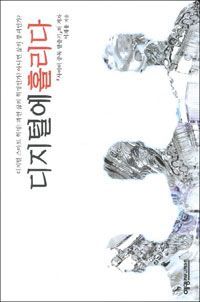
Digitalholic
Lee Jae-yong; Jeyoung Communications: 320 pp., 13,000 won
You might find a friend or your partner tapping on a smartphone while having dinner or talking to you, sometimes ruining the human relationship.
Relentless social ills in cyberspace are already a part of the digital culture.
This book offers reasons why users of digital device are addicted to the Internet and how they can overcome it.
Addiction to online games, social networking sites and online chatting is overwhelming social activities.
The author says that many people are addicted to online games because they offer immediate rewards and achievements within a short period of time. “They bring their dreams, which are hard to achieve in reality, which come true through cyberspace,” the book says.
Such a phenomenon forms a “cyber identity” which separates the ego from reality, in which people don’t feel guilty about their actions. It also widens the generation gap as it also creates a new culture for the young who use Internet-related slang.
― Chung Ah-young
Gum Nan-se's Symphony Guide
Gum Nan-se; Art Books; 344 pp., 20,000 won
Gum Nan-se, music director of the Eurasian Philharmonic Orchestra, is one of the most renowned conductors in Korea.
In a new book to be released Wednesday, he guides readers through the world of symphonies.
The 65-year-old explains the history of some of the most important and best-known symphonies ever written, such as Mahler's Symphony No. 1 in D major known as "Titan" or Tchaikovsky’s Symphony No. 5 in E minor. He also makes CD recommendations.
Gum studied composition at Seoul National University and conducting at the Berlin State School of Music. He previously served as conductor of the KBS Symphony Orchestra and the Suwon Philharmonic.
Gum received the Sejong Culture Award from the Ministry of Culture, Sports and Tourism in 2011 in recognition of his musical work in poor and rural communities. He has set up small youth orchestras in remote areas of Korea, giving underprivileged children an opportunity to be exposed to classical music.
This is his third book following an autobiography and one on symphonies that have a special place in his conducting career.
― DO JE-HAE
Plastic: A Toxic Love Story
Susan Freinkel; translated from English to Korean by Kim Seung-jin; Eulyoo Publishing Co., Ltd: 440 pp., 15,000 won
“You are never more than three feet away from something plastic,” says Susan Freinkel in “Plastic: A Toxic Love Story.”
Journalist Freinkel traces how fast human society became plasticized and how it has affected us. She chooses familiar plastic products to tell her story. A comb is used for popularizing the consumption of plastic; a Frisbee for the global production system of plastic; an IV bag for the relationship between health and plastic; a lighter for problems of disposable plastic products; a plastic bottle for the limitation of plastic recycling; and a credit card for the expectations and concerns of eco-friendly plastic products.
Freinkel’s rich quotes from specialists in diverse fields from a plastic production plant in China to interviews with the homeless who collect waste plastic help the completeness of the book. The author closes by looking at a bridge in New Jersey made of recycled plastic and much more endurable than existing ones, saying that our mission is to leave worthwhile structures to our descendants.
― Baek Byung-yeul
Korea Phrase Book for Travelers
Kim Sung-sup, Cho Hyun-yong and Lee Jung-hee; Hollym; 400 pp., 12,000 won
This book aims to help foreign tourists in Korea who want to speak the language even though they have never studied it. Offering various topics and situations in both English and Korean, it comes in a handy pocket size.
It describes diverse colloquial Korean usage such as the base word-ending forms often used in daily conversation. Along with situational Korean expressions, the book contains pronunciation and grammar sections to help readers easily learn basic sentence structure.
Also, useful tips on Korean culture and etiquette come with each expression to help visitors understand Korea. At the end of the book, is a variety of Korean vocabulary. All the Korean expressions are spelled out in the Roman alphabet to best guide the readers to the correct reading and pronunciation.