Why do South Korean celebrities wear neutral colors during election season?
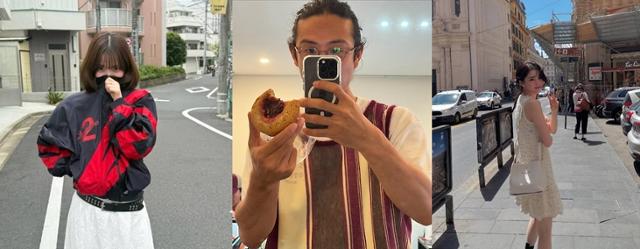
From left, Karina, Beenzino, and Han So-hee / Captured from social media of each
With each election season, South Korea’s entertainment industry finds itself walking a tightrope as stars' social media activity comes under intense scrutiny. In response to the growing sensitivity surrounding political expression, agencies are now taking preemptive steps — including reviewing photos, outfits and even emoji use — to avoid misunderstandings about political leanings.
The most recent controversy unfolded ahead of the presidential early voting period, when Karina of the girl group aespa posted a photo wearing a red jacket bearing the number "2" — a combination associated with the conservative People Power Party. Her post drew praise from party figures, including a spokesperson for the party’s central campaign committee and professor Lee Soo-jung. Karina quickly clarified on a fan platform, saying, “I had absolutely no political intent,” while her agency SM Entertainment also described it as “just a casual photo.”
Other stars have faced similar backlash for seemingly innocuous posts. Actress Han So-hee was criticized for making a "V" hand gesture, while rapper Beenzino came under fire for wearing a red-toned outfit and posting, “Happy World Burgundy Day.” Beenzino later apologized, saying he “hadn’t been careful enough during the early voting period” and recognized how his timing may have caused misunderstanding.
Some celebrities have been more explicit about their political views. Singer Kim Heung-gook and actor Park Hyuk-kwon, for instance, have openly expressed political opinions. However, the heightened public sensitivity has triggered a broader trend of caution, with agencies now issuing what amounts to internal social media advisories to their stars.
Rather than outright banning political expression, most entertainment companies opt for strong recommendations. “Agencies don’t have the right to control an artist’s political beliefs,” said one agency official, “but during election periods, we strongly advise actors to be mindful of everything — from captions and emojis to clothing and accessories — to avoid misinterpretation.” Newcomers in particular are instructed on social media etiquette as early as the contract signing stage, while more experienced actors tend to self-censor.
Still, it’s not a foolproof system. Not all artists share their social media accounts with their agencies or submit posts for prior approval, which leaves room for risk. “Veteran artists are generally more self-aware and capable of avoiding unnecessary controversy,” said another agency source, “but for younger artists, we remain especially vigilant.”
According to an insider from an agency representing older actors, “We give a bit more freedom compared to idol agencies. We haven’t had any major issues so far, but we still advise caution, especially around tense political events or right after big announcements like impeachment motions.”
Some actors, like Lee Dong-wook, Moon So-ri and Kim Eui-sung, have made their political stances public. Lee Dong-wook has repeatedly expressed support on fan platforms for protests calling for the impeachment of former President Yoon Suk Yeol. After the impeachment motion passed, he posted the phrase “Winter has been too long,” hinting at both political sentiment and emotional relief.
K-pop agencies have reportedly gone even further by issuing formal internal guidelines. “We often circulate notices reminding idols not to wear politically suggestive clothing,” said one music industry professional. “That includes avoiding certain colors during public events and even in casual wear.”
Hand gestures representing numbers are also discouraged. “During election season, every piece of content is reviewed more rigorously,” they said. “Political controversy can have a massive impact, so many companies treat it as a high-priority issue. Some large agencies even send formal notices to each department. Since managers and staff can’t monitor the artists 24/7, we repeatedly remind them to be cautious — even subconsciously. Compared to actors, idols face stricter guidelines.”
This article from the Hankook Ilbo, the sister publication of The Korea Times, is translated by a generative AI system and edited by The Korea Times.