No borders in climate cooperation
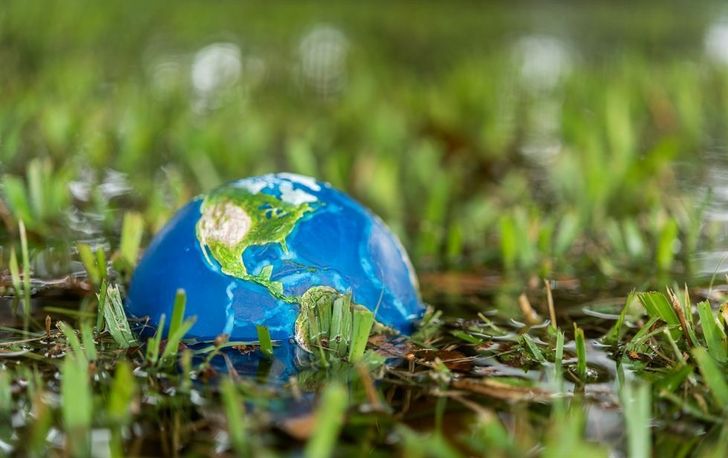
gettyimagesbank
Korea catches up fast in green campaign among OECD members
By Frank Rijsberman
International climate scientists agree that to keep global warming to within 1.5 degrees Celsius, and avoid climate impacts with disastrous consequences, the world needs to reach net zero by 2050. Despite having reached the most far-reaching climate accord in Paris in 2015, the international community has not made much progress towards this goal as recent U.N. reports show.
Frank Rijsberman
The good news is that there has been an avalanche of promises and commitments in the last two years. The Republic of Korea has made rapid and very impressive progress. From a position somewhere at the back of the pack of OECD countries, Korea is catching up with the frontrunners. The National Assembly confirmed Korea's net zero 2050 target into law last August and President Moon Jae-in will formally commit to a more ambitious Nationally Determined Contribution (NDC) at COP26, with an increase of 40 percent. The next step will be to find the solutions that the government ― and the private sector ― can put in place to deliver on these ambitious commitments in the short time that remains before 2030.
The international community will look to Korea on two important fronts. First, the question is whether Korea will be a leader in Asia to help convince other countries in the region to step up climate action. One of the key obstacles to a carbon-neutral world is the use of coal, and Asian economies have increased coal use in recent years. Replacing that coal with clean energy is a top priority and hopefully Korea can lead the way in Asia.
Second, developing countries are looking to advanced economies such as Korea to support their climate action with funding and technology. It is therefore significant that Korea has committed to increase the green share of its official development assistance (ODA). At the Global Green Growth Institute (GGGI), we were also more than pleased when President Moon Jae-in announced at the P4G Summit in Seoul in May, and repeated at the U.N. General Assembly in September, that Korea will establish a Green New Deal Fund at the GGGI to support a green recovery from the pandemic and accelerated climate action in developing countries.
For the green recovery from the COVID-19 pandemic, it is critically important that green investment projects that accelerate climate action, such as renewable energy or reforestation, are also excellent opportunities to create green jobs. A recent study published by the GGGI shows that the implementation of the renewable energy targets in 29 GGGI member country NDCs will create 10 million job years, and the implementation of the forestry-related targets in 14 GGGI member countries will create 35 million ― at a cost far lower than equivalent fossil fuel alternatives.
While Korea therefore has an important international role to play, there are also contributions other countries can make for Korea. The estimates from the Korean government are that it will not be possible to achieve the entire 40 percent greenhouse gas emission reduction by 2030 through domestic reductions alone. However, the Paris Agreement allows countries like Korea to collaborate with other countries to reduce emissions or capture carbon through reforestation to sell these as carbon credits, which Korea is expected to purchase to meet its commitments.
Organizations like the GGGI have been preparing for the new international carbon market under Article 6, expected to be finalized at COP26 in Glasgow next month, by working with developing countries to help them put the right governance, policies and data systems ― monitoring, reporting and verification systems (MRVs) ― in place to be able to make such carbon trades once allowed. The GGGI also is exploring whether it can facilitate such transactions through establishment of a GGGI Carbon Transaction Platform to enable the Korean government and Korean private sector to obtain carbon credits through the GGGI.
In short, the climate crisis is one that affects us all, truly a crisis that does not respect borders, but the solutions also require international collaboration across borders. We are living through a decisive decade for climate action, and our only hope is that countries, governments, the private sector and civil society will learn to work together effectively to accelerate the green transition and radical climate action.
Frank Rijsberman is the director general at Seoul-headquartered Global Green Growth Institute (GGGI).