BOK set to leave benchmark rate unchanged in April
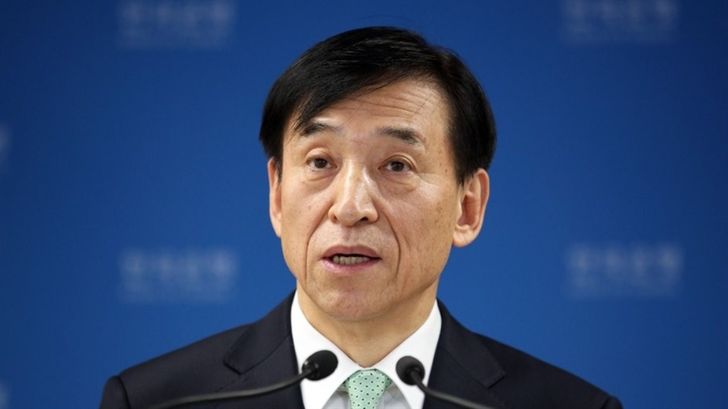
BOK Governor Lee Ju-yeol speaks during a recent meeting with reporters in this file photo taken Mar. 6. Korea Times file
By Kim Yoo-chul
After slashing the key interest rate by 50 basis points at its emergency meeting in March, the country's central bank is likely to leave the key lending rate unchanged at its upcoming monetary policy meeting, analysts and economists said Sunday.
An additional 25 basis point cut is “highly likely,” possibly in the third quarter of this year, but not this month they said. This will be to help address funding and liquidity driven risks that most exporters and securities companies here are suffering from, as slower economic growth and lower interest rates drive investment migration to non-traditional businesses.
“Given the current benchmark rate, which is 0.75 percent, the room for the Bank of Korea (BOK) to additionally reduce its key rate is limited. Considering previous decisions in which the BOK reduced the rate for a fourth straight time after holding a special monetary policy meeting in 2008, there is the chance that the bank could cut the rate. But April is not the best time,” Park Tae-geun, an economist at Samsung Securities, said in a note to clients.
The BOK cut its rate to a record low following other major economies' central banks which are undertaking monetary easing measures to support the global economy hit by the COVID-19 pandemic. At the time, BOK Governor Lee Ju-yeol said the Federal Reserve's “big cut” offered room for the bank to move quite actively. He stressed the central bank “will act in a timely manner” using all available and possible measures.
Regarding the possibility of the BOK taking “additional action,” NH Securities analyst Kang Seung-won said it has time to monitor the effects of its earlier-announced liquidity provision measures.
With the rate cut, the Moon Jae-in administration and Cheong Wa Dae's economic team unveiled a 50 trillion won loan program to help small- and medium-enterprises (SMEs) hit by the pandemic. That came after the National Assembly approved an 11.7 trillion won additional budget.
“I expect an additional rate cut could take place, however, that will only happen after the country checks various economic indices and macro-economic data to justify an additional rate cut,” Shin Dong-soo, an analyst at Eugene Investment, said.
In April, the BOK is expected to announce some details of its liquidity provision plans after it said it will purchase 1.5 trillion won (about $1.2 billion) in government bonds mostly to stabilize markets amid the pandemic, according to analysts.
“The level of the benchmark rate is low enough. It would be more effective to seek specific ways for direct liquidity provision rather than controlling the level of the key rate,” Jung Won-il, an analyst at Yuanta Securities, said.
Now, attention is on whether or not Lee will reveal more about purchasing corporate bonds which is another available option. The cash structure for the country's leading airlines, retailers, builders and automotive companies isn't good as they are not in a position repay their short-term borrowing.
“Calls are high for the BOK to purchase corporate bonds to prevent some cash-stricken companies from a complete credit default,” an industry source said. The BOK lent money to non-banks during the Asian Financial Crisis, back in 1997.
“We will see. But it would be good for us if the BOK decides to purchase new corporate bonds for an extended period,” an official at Doosan Heavy said.