What banks need most is freedom
By Kim Jae-kyoung
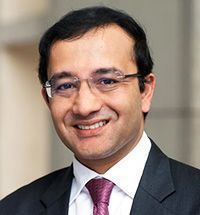
Joydeep Sengupta
SINGAPORE ― The Korean government should give banks more freedom in operations in order to shore up global competitiveness and help them prepare for the future, according to McKinsey & Company.
In an interview with The Korea Times, Joydeep Sengupta, director of McKinsey’s Singapore Office, said that there are three areas which Korean financial policymakers must address with urgency ― regulations, business models and workforce.
Sengupta leads the Asia-Pacific banking practices of the global consulting company.
“First, industry profitability must be restored and players must be allowed the operating freedom to do what it takes to prepare itself for future competitiveness. This will allow them to invest in the future,” he said.
Korea’s financial regulatory scheme is based on a positive system under which new services and businesses should be developed to meet all the requirements stipulated in regulations. This undercuts banks’ efforts to create innovative products and services.
“Second, they must seize the technological advantage that players in other sectors in Korea have done successfully in order to build an innovative, customer-friendly and low-cost business model that can be competitive overseas,” he said. “Finally they should strengthen the inflow of international talent and be flexible in how they participate.”
Sengupta, who has served leading financial institutions across multiple markets in Asia and Europe, said that it is urgent for Korea to create a market-friendly environment through deregulations to ensure stability in the banking system.
“We do believe the time has come for policymakers to build a financial system which not only serves the full needs of all Koreans, but also creates an environment for stronger banks to flourish and for new players to emerge,” he said.
He pointed out that this can only happen if banks are supported in driving down intermediation costs, and there is greater explicit autonomy to banks.
“Fostering an environment where consolidation is encouraged, where board governance norms are significantly strengthened, and where a level playing field is created between banks and non-banks, such an environment will prepare Korean banks better for the new world of banking,” he said.
The veteran consultant recommended three strategic approaches for Korean banks to successfully globalize their organizations. With the domestic market saturated, they are now struggling to expand operations abroad to find new revenue sources.
The first thing Korean banks should do is to follow Korean business interests, according to Sengupta
“Expand the presence in markets where there is substantial Korean business, economic and social interest. This is a tried and tested approach particularly for corporate banking where leveraging home country strengths to offer high quality seamless corporate and transaction banking services may be appropriate,” he said.
Secondly, he suggested that Korean lenders purchase small players in developing countries.
“Korean banks should consider targeted M&A opportunities in high growth markets to build a strong local presence,” he said.
“Then, develop a world-class product and marketing approach to expand digitally into high growth markets and develop an ecosystem of local partner to leverage the strong digital capabilities of Korean companies.”
Sengupta is currently a member of several policymaking groups in Asia, working on financial-sector and capital-market reform issues. He has authored several publications on digital banking, corporate and investment banking and retail banking.