McDonald's committed to Korea for 30 years

By Kang Seung-woo
Ever since McDonald's entered Korea in 1988, the global fast food giant has not only made mouth-watering hamburgers but also many contributions to the community.
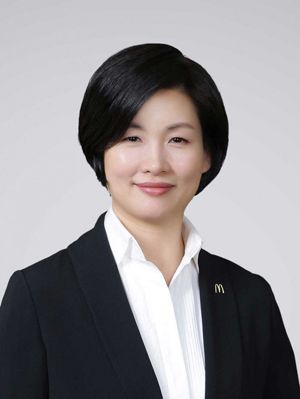
McDonald’s Korea CEO Cho Ju-yeon
Over the past three decades, the Chicago-based company has offered innovative menus and services to meet changing consumer tastes and eventually helped develop the Korean fast food industry. It has also focused on creating jobs and sought a win-win way with subcontractors, leading to improvements in the local economy.
McDonald's Korea's operations have rewritten the history of the nation's food service sector by introducing many new services.
The fast food chain introduced the industry-first drive-thru service, or McDrive, in 1992 and it is also the first company to start 24-hour operations in 2005.
Its bid for innovative services continued in 2006 with the McMorning breakfast menu, followed by McDelivery in 2007 that delivers food to customers' doors.
Its latest inventive effort came in 2016 after the firm launched a new dining model “experience of the future” that features self-ordering, mobile payment and delivery to the table.
McDonald's, globally famous for its double-decker Big Mac and crispy French fries, has also been committed to offering foods suiting Koreans' taste such as bulgogi burgers, McSpicy Shanghai burgers, Signature Burgers and the 1955 burger, which is a re-creation of the original McDonald's burger.
According to McDonald's Korea, Tuesday, some 1.92 billion people visited its stores nationwide over the past 10 years. Currently, five customers stop at McDonald's stores nationwide every second.
McDonald's has employed the largest number of people in the food services industry since its arrival in Korea 30 years ago.
Its Korean unit began its operation with 100 employees, but the number has expanded to 17,000. In addition, it is adopting a recruitment system that removes any and all identification details, so it has hired “older crew" _ 3,952 housewives and 763 senior citizens _ along with 240 disabled workers accounting for 3.5 percent of its total employment. The number is much higher than the government's standard of 2.9 percent.
McDonald's Korea has employed a “three-legged stool” philosophy for mutual growth among relevant players.
The three legs mean an alignment between the company, its franchisees and suppliers, designed for all to grow together as partners.
According to the fast food firm, it is contracting with 30 local food suppliers rather than running its own affiliate, so its success can spread to distribution channels and farms as well as suppliers.
The world's largest fast food chain is also devoted to balancing profit and social responsibility through various corporate social responsibility programs in Korea.
Ronald McDonald's Football Club has drawn 320,000 kids, while it has also donated 200,000 burgers. Plus, it is building the Ronald McDonald House Charities for families of long-stay child patients near Pusan National University Children's Hospital in Yangsan, South Gyeongsang Province.
“McDonald's is set to offer foods and services to meet changing customer needs and lifestyles and concentrate efforts to lead the Korean food service industry in order to show sustainable growth,” said McDonald's Korea CEO Cho Ju-yeon.