Samsung, SK consider establishing new battery joint ventures

Samsung SDI's booth at the International Electric Vehicle Expo, held on Jeju Island, in this file photo. Courtesy of Samsung SDI
By Kim Bo-eun, Kim Yoo-chul
Samsung SDI and SK Innovation (SKI) are considering establishing additional joint ventures with their clients in Europe in a move to provide stable supply sources for electric vehicle (EV) batteries and maintain optimal profit margins, according to multiple industry sources, Monday.
The move by the Korean firms is in line with an ongoing strategic realignment in the global battery industry spearheaded by global leaders, such as China's CATL and LG Energy Solution (LGES), which are bulking up their production might across the globe. They are also seeking to ride on leading automakers' shift toward EVs supported by administrative and financial incentives provided by governments.
For automakers that are seeking to cut their dependency by developing their own batteries, joining hands with the manufacturers is a good option as it will help them assess battery technology and production know-how.
“Nothing has been decided yet, but we are looking into the matter from the mid- to long-term perspective,” a Samsung SDI official said.
Samsung sources said setting up a battery joint venture with BMW was “possible,” but added the decision may have to await the clearing up of legal issues faced by jailed Samsung Vice Chairman Lee Jae-yong.
“In the case of a potential battery recall, who is responsible for the possible problems is a top consideration. Once legal risks are fully addressed, it will be possible for battery makers to establish joint ventures with automakers and I would say that scenario would be applicable for Samsung SDI's long-term plan to set up one with BMW,” said one of the sources.
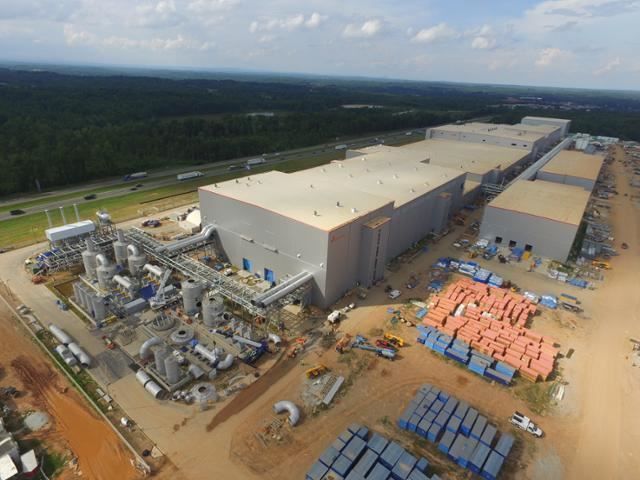
SK Innovation's battery plant in Georgia, United States / Courtesy of SK Innovation
SKI is also in talks with Volkswagen to establish an extra battery venture in Europe with Volkswagen's Chinese partners joining in the investment, according to a high-ranking industry executive.
In a recent “Power Day” event, Volkswagen said it was aiming to increase the portion of “unified cells” to 80 percent by 2030.
Because Volkswagen is floating the possibility of an initial public offering (IPO) for its battery business, the executive said the German car maker was “keen to strengthen partnerships” with top-tier battery manufacturers.
“Citing Volkswagen's move to focus more on unified cell batteries at its recent internal event, some are raising concern over its rapid shift toward such a battery type, however, depending on the market situation, Volkswagen could change this development strategy. The chances are quite high that Volkswagen will choose SKI as its new battery joint venture partner given their long-time relationship,” said another industry executive.
SKI recently announced its plan to create the BlueOvalSK joing venture with Ford of the United States. The U.S. state of Ohio, the home of an LGES battery joint venture is emerging as a candidate for BlueOvalSK's head office.
Samsung SDI and SKI ranked fifth and sixth in the global EV battery market in the first quarter of the year, with a respective 5.3 percent and 5.1 percent share, according to SNE Research. CATL led the market with 31.5 percent, followed by LGES with 20.5 percent.
LGES is set to announce a battery joint venture with Hyundai Motor in Indonesia, this week, after reaching a consensus with the Indonesian government regarding tax benefits, and water and electricity supplies. It already runs joint ventures with GM in the United States and with Chinese carmakers in China.
Another reason behind the battery makers' appetite for stronger ties with automakers is that they are facing dwindling profit margins amid growing signs of market saturation.
Leading brokerages are warning that the battery market could reach saturation earlier than expected, as the entry barrier has been lowered and new players are emerging.
Global investment banks recently projected Korea's major battery makers would underperform in the coming years and lowered their price target. “For batteries, we see relatively limited upside because of a meaningful competitive push from new entrants. We prefer downstream OEMs and charging infrastructure players on relative value and sustainable returns,” said a Morgan Stanley report issued May 30.