Hyundai Mobis to invest in AR HUD
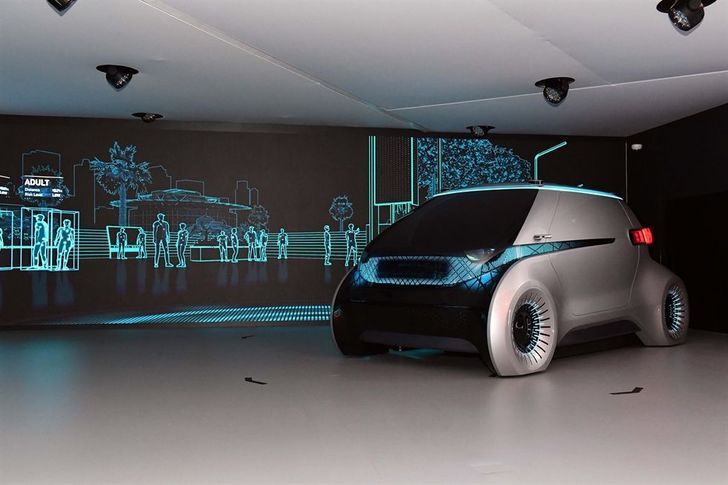
Seen is a concept model of Hyundai Mobis. / Courtesy of Hyundai Mobis
By Baek Byung-yeul

Logo for Hyundai Mobis
Hyundai Mobis has invested in Envisics, a U.K.-based augmented reality head-up display (AR HUD) company as part of its effort to expand into the car infotainment business, the Hyundai Motor Group affiliate said Wednesday.
The car parts maker said it has invested in $25 million in the U.K. firm, which is a global leader in the AR HUD sector. AR HUD is considered as a next generation safety convenience feature that matches driving information with the road ahead in real time and projects it onto the windshield, Hyundai Mobis said.
The company said it has decided to invest in Envisics to jointly develop AR HUD and commence mass production in 2025.
“Hyundai Mobis will jointly develop autonomous driving-specialized AR HUD with Envisics, targeting mass production by 2025,” said Cho Sung-hwan, executive vice president and CTO at Hyundai Mobis. “We will proactively present the next-generation AR HUD solutions to global carmakers for increased safety and convenience to avoid distracting drivers.”
Established in 2010, Envisics is a leading holographic technology company. Acknowledged as a global leader in the field of augmented reality head-up displays, Envisics is the only company with experience in mass-producing HUDs based on dynamic holography, Hyundai Mobis said.
Hyundai Mobis said Envisics' digital holographic technology utilizes the most advanced hologram implementation methods providing a software-defined broad field of view without the need for additional optical devices.
The AR HUD business is currently in the initial market creation stage, but is forecasted to become a major component for car infotainment systems.
“According to multiple global market research companies, the HUD market is expected to grow by at least 12 percent on average every year by 2025, and AR HUD in particular is expected to grow rapidly from the market size of 1 million in 2025 to 12 million in 2030,” Hyundai Mobis said in a statement.
Despite economic challenges amid the COVID-19 pandemic, Hyundai Mobis has been making aggressive investments in future car technologies such as autonomous driving and electrification.
Over the last three years, the company has invested in Velodyne, one of the leading companies developing lidar sensors for self-driving cars, and set up a joint venture named Motional with Ireland-based self-driving tech firm Aptiv. The company also has completed construction of three new electric vehicle parts manufacturing plants in Korea.