Audi, Volkswagen sold no cars in Korea in April

Volkswagen's Arteon / Courtesy of Volkswagen Korea
Import brands blame new certification rule, gov't refutes
By Nam Hyun-woo
Audi and Volkswagen did not sell any vehicles in Korea last month as the brands have yet to receive environmental certifications in and outside of the country, while they are running out of inventory of popular models, according to industry officials Wednesday.
Along with the Volkswagen Group brands, Mercedes-Benz and BMW also saw sharp declines in their sales in the country last month, marking the fourth consecutive month of decreases in the domestic sales of the import brands.
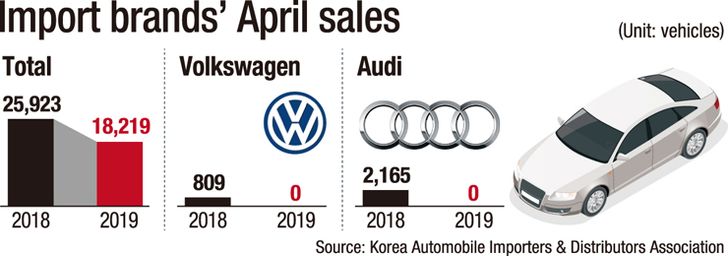
According to Korea Automobile Importers & Distributors Association, no new Audi and Volkswagen vehicles were registered in April. They each sold 2,165 and 809 vehicles in April last year.
In a monthly comparison, the two brands sold 142 and eight vehicles in March, respectively, but the numbers fell to zero last month, recalling the two brands' sales halt amid the "dieselgate" scandal. In the wake of the emissions fraud, Volkswagen did not sell any cars in Korea from November 2016 to February last year while Audi did not sell any from June to October 2017.
The number of sales came after the two brands started “adjusting orders” for new cars due to slow processes in getting environmental certifications.
“Currently, the group is improving its internal process for certifications and ordering, and Audi Volkswagen Korea is adjusting orders depending on the domestic situation on certifications,” an Audi Volkswagen Korea official said.
According to multiple officials of the Korean unit, Volkswagen Group has revamped its own certification system in February and is scrutinizing its vehicles, thus more time was required for the brand to introduce new cars, including the Volkswagen Arteon, in Korea.
Separately, Audi Volkswagen Korea is adjusting the volume of its orders depending on the process of the domestic environment authority's certifications, including the new diesel car certification rule, called the Worldwide Harmonized Light Vehicle Test Procedure (WLTP).
Along with the global introduction of the enhanced rule, Korea also requires diesel cars sold here to receive WLTP certification beginning from Sept. 1 last year.
Since the WLTP also requires older models imported or manufactured before Sept. 1 to renew their certification, import brands claim that car brands flocked to the Ministry of Environment to get the certifications for their vehicles.
“Along with our internal issues, the WLTP is also affecting the ordering process,” the official said.
Other import brands' officials also said their slow sales are in line with the slow process of WLTP certifications.
A total of 18,219 new imported cars were registered in April, down 29.7 percent from 25,923 a year earlier. The aggregated import vehicle sales for the first four months of this year stood at 70,380, down 24.6 percent from 93,328 during the same period a year earlier.
The environment ministry, however, does not agree with importers' arguments.
“WLTP certification does not require extra time or special requirements for car brands,” a ministry official said.
The National Institute of Environmental Research, which conducts the certification, also said it has to publish the result of a car's WLTP certification within 15 days from the application, and it has never missed the deadline.
“We can't agree that car brands' sales are delayed due to the new certifications,” an official at the institute said. “Rather, car brands neglected some of the documentations and data necessary for tests.”