Is death coming for diesel cars?

Hyundai Motor's fourth generation Santa Fe / Courtesy of Hyundai Motor
By Nam Hyun-woo
A growing number of global automakers are ending diesel-engine passenger car production, heralding the death of what was once hyped as a dream fuel.
While it seems inevitable for diesel cars to have a weaker standing in the passenger car market, others say they may fade away but not disappear, given their fuel efficiency
The move to rule out diesel cars from the road is most brisk in Europe. On Feb. 27, Germany’s Federal Administrative Court in Leipzig ruled that Stuttgart and Dusseldorf had the right to impose limited bans that would prevent some diesel cars from driving into the center of the cities.
Stuttgart is the home of Daimler Group, which owns Mercedes-Benz.
The ruling garnered keen attention across the world, as it could spur other regions to implement similar regulations on diesel cars.
On the same day, Rome Mayor Virginia Raggi announced that the city will ban diesel cars in the city center by 2024 to combat air pollution.
Paris has already announced its plan to ban diesel cars by 2024 and other petrol-fueled cars by 2030 in the city’s street. Copenhagen plans to ban diesel cars from 2019 and the U.K. will ban sale of all diesel and petrol cars from 2040.
Seoul is also joining the bandwagon. The city government will launch limited bans on old diesel cars driving in the city from 2020.
Some automakers are responding to the tougher rules. The Financial Times reported last month that Fiat Chrysler plans to phase out diesel engines from its passenger cars by 2022. Fiat Chrysler manufactures Jeep, Dodge, Ram, Chrysler, Maserati, Alfa Romeo and Fiat vehicles.
Japanese giant Toyota is close to killing off its diesel car production. Last year, Didier Leroy, Toyota’s executive vice-president said it was highly unlikely to launch another diesel car.
Porsche also has announced that its production line up will not include diesel vehicles, stopping the productions of Macan S Diesel and Panamera 4S Diesel, just nine years after it introduced its first diesel car.
Volvo has announced that all of its cars produced from 2019 will be electric or hybrid, while Renault was also alleged that it may stop offering diesel engines in most of its cars sold in Europe.
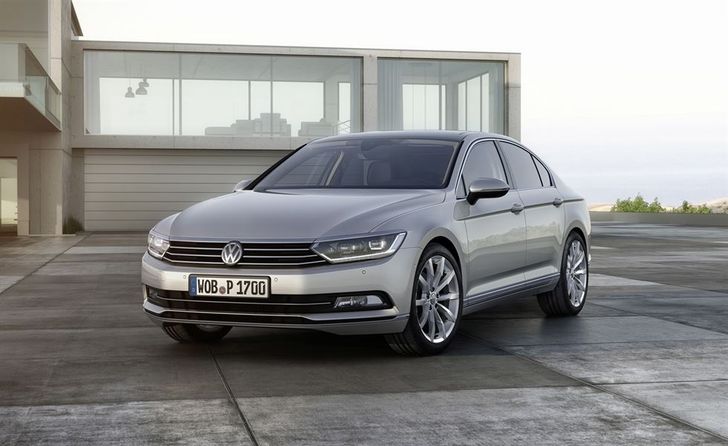
Volkswagen's 2018 Passat GT / Courtesy of Volkswagen
The worldwide move away from diesel is based on the finding that exhaust from diesel engines has harmful effects.
Just two decades ago, diesel was hailed as a wonder fuel more efficient than other fossil fuels and less polluting. Governments across the world encouraged drivers to drive diesel vehicles as they were thought to be emitting less CO2 than other petrol cars.
However, the belief was broken when the World Health Organization’s International Agency for Research on Cancer in 2012 declared that “diesel engine exhaust causes lung cancer in humans.” Nitrogen oxides and dioxides (NOx) and particulate matter contained in diesel exhausts were pinpointed as the main pollutants.
Then came the 2015 Volkswagen “Dieselgate.” In the scandal, the automaker intentionally installed “cheating” software that made its diesel cars’ NOx output meet the U.S. standards during lab tests but emit up to 40 times more pollutants on the road.
Along with fines and sales ban the company faced, consumers also turned their eyes from diesel cars. According to European Automobile Manufacturers Association, the share of new diesel passenger car registrations in 15 European Union nations stood at 56.1 percent in 2011, but quickly dropped to 55.6 percent in 2012, 53.8 percent in 2013, 53.6 percent in 2014, 52.1 percent in 2015 and 49.9 percent in 2016.
Korea is following a similar trajectory. According to the Ministry of Land, Infrastructure and Transport, the share of registered diesel passenger cars in Korea peaked at 44.7 percent in 2015, but quickly plunged to 35.5 percent in 2017 following Dieselgate.
While studies and numbers suggesting that diesel engines are fading away and electric vehicles (EV) are rising as the future of cars, some auto industry insiders say diesel may lose its ground, but will not likely disappear in the near future.
One of the reasons they cite is the fuel efficiency of diesel engines. According to the U.S. Environmental Protection Agency, diesel engines have more low-end torque than similar-sized gasoline engines, while diesel fuel contains about 10 to 15 percent more energy than gasoline, allowing diesel cars can go approximately 20 to 35 percent farther on a gallon (3.78 liters) of fuel.
Unlike the aforementioned companies, there are also a number of companies which are still paying efforts to make fuel-efficient but less polluting diesel cars.
One of them is Mercedes-Benz. On Friday, the company introduced a six-cylinder diesel engine to its X class pick-up range, and a series of its new cars are coming in diesel.
“We are convinced that diesel engines will continue to be a fixed element of the drive-system mix, not least due to their low CO2 emissions,” said Dieter Zetsche, Chairman of the Board of Management of Daimler and Head of Mercedes-Benz Cars, said in a statement.
The company said it is investing 220 million euros ($271 million) to improveme its diesel engines’ NOx emissions.
BMW is also staying committed to diesel technology, with such cars still taking a significant portion of its sales. Volkswagen rolled out its Passat GT with a diesel engine in 2018.
Korea’s Hyundai Motor is also committed to diesel vehicles. Last month, Hyundai launched the fourth generation Santa Fe and 94 percent of 14,000 contracts it signed before the launch were for diesel models. The automaker’s Genesis brand also released a mid-range G80 powered by diesel.