TV producer Lee Wook-jung explores intersection of food, culture

Documentary producer Lee Wook-jung / Courtesy of Tving
New documentary 'Food Chronicle' searches for spiritual significance, forms of food
By Kwak Yeon-soo
Lee Wook-jung is a rare mainstream documentary producer who explores everything related to food ― from the fine dining world to local street food. A trailblazer of food documentary, he explores the intersection of food and culture from an anthropological point of view. He always looks to tell a personal story and studies the origins and cooking styles of each cuisine.
“The foods that captivated the world are plain and simple. I call them 'capsule food' because they can be eaten in one bite. Sandwiches, pizza, dumplings, tacos and sushi are all like that. They are easy to make and easy to eat, and you can enjoy a variety of flavors at once,” he said during a recent interview with The Korea Times.
His new documentary, “Food Chronicle,” currently available on local streaming platform Tving, is an eye-opening food documentary that follows his journey exploring different forms of popular cuisine.
The series features eight different types of food that are divided into three forms: flat, wraps and layers. The foods discussed in the show include dumplings, “ssam” (Korean wrapped food), tacos, pizzas, pancakes, sandwiches, sushi and cakes. Lee and his production team spent about one year traveling some 10 countries to create nine episodes. Each episode has an approximate runtime of around 70-75 minutes.
“I wondered why and how certain types of food are passed down through generations and enjoyed by people all around the world in slightly modified versions. I recognized that many of those popular foods can be eaten with hands. It's quick and satisfying when you use your hands. I think the reason why Arabs and Indians still insist on eating with their hands is that it gives a very different kind of pleasure in itself,” he said.
Asked what drew him to the idea of documenting a rice paper-making village in Can Tho, Vietnam, and a farm that grows perilla leaves in San Francisco, Lee said, “I believe finding a story within a story is important. It was exciting to be able to learn more about the personal journeys of those people. For the second episode on ssam, I wanted to introduce a farmer who grows various leaf vegetables. Kristyn (at the farm in San Francisco) is a Korean adoptee who has never visited her motherland, but discovered Korean cuisine on her own and cultivates Korean crops with seeds sent from Korea. I think discovering such layered characters is what makes the show so exciting to us.”
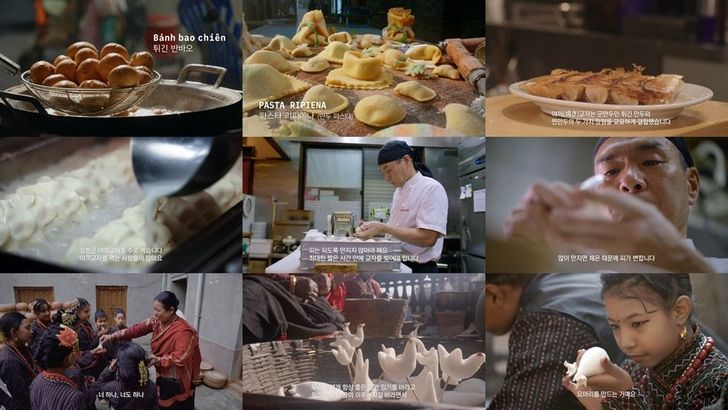
Scenes from Tving's "Food Chronicle" / Courtesy of Tving
Lee recalled that the most challenging part of filming “Food Chronicle” was traveling during the pandemic.
“I've taken so many PCR tests that I got painful sores in my nose. It was not easy to get approval from restaurants because they were very cautious about safety. The entire production team was also careful to make sure we don't come down with COVID-19. We all had it after returning to Korea,” he said.
To make things easier, he coordinated with local researchers in all involved cities to narrow down what to focus on and share it with viewers.
Lee stressed that all his documentaries have subtexts hidden beneath the subject of food. Multi-award-winning docuseries “Noodle Road” (2008) introduces a variety of noodle dishes around the world, and explores the cultural exchange of East and West. “Noodle Road,” which was filmed in 10 countries over a two-year period, won documentary awards at home and abroad, including a Peabody Awards and the ABU prize.
“'Food Chronicle' introduces various types of food that come in different forms, and it also discusses the symbolism and spiritual meanings of such shapes. For instance, in one 'layer' episode, I wanted to show complex human relations in Japanese society through sushi,” he said.
Unlike other local documentaries that are simply narrated by voice actors or celebrities, Lee appears as the show's storyteller. He felt like he was the most qualified person to share his message and travelogue.
“I think a presenter's role in a documentary is very important. A documentary is like an odyssey, and there should always be a traveler who can tell a story based on what they saw, heard and experienced. As a Korean who studied anthropology, underwent culinary training and has a perspective on comparative food cultures, I thought I should stand in front of the camera,” he said.
Lee also shared his thoughts about how the majority of cultural content is concentrated on dramas and reality shows.
“The documentary genre is becoming less and less popular in Korea and I think creators are to blame for its downfall,” he said, adding that creators should adapt to the fast-paced world.
“Like an action scene in an action movie, the cooking scene in a food documentary should be speedy yet precise in order to hold viewers' attention. In order to appeal to younger generations and survive amid overflowing content, we included seven to eight different stories set in five to six different cities around the world in a single episode,” he said.
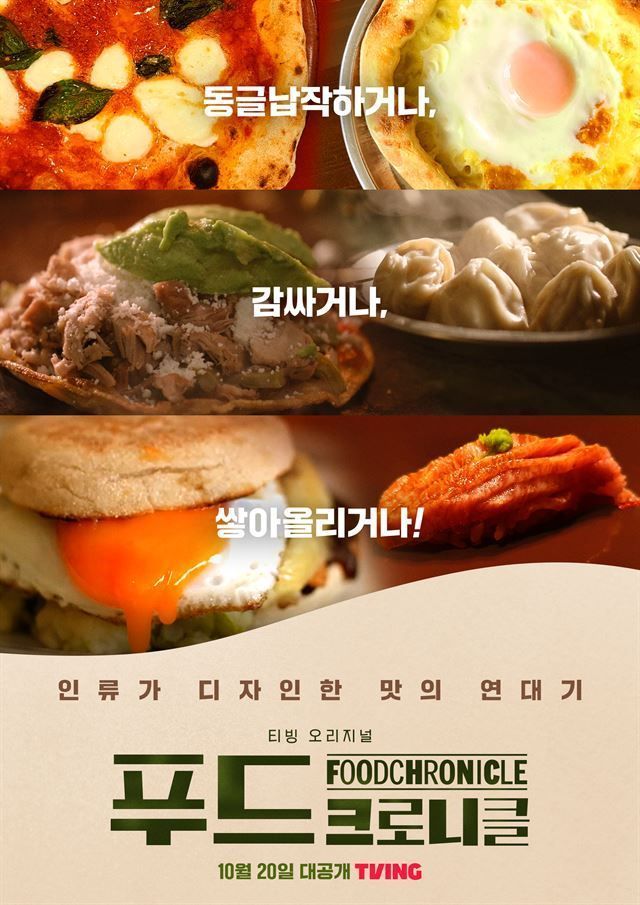
The poster for Tving's "Food Chronicle" / Courtesy of Tving
Lee started his career as a TV producer at KBS in 1994 and has created documentaries on the subject of food around the world, linked to culture and anthropology.
Lee himself took culinary training at Le Cordon Bleu London to dig deeper into the subject of food and better understand the underlying culture and history of food. In 2020, he set up his own production company, Mind at Play.
Asked about his future plans, he said, “In season 2, I want to deal with the theme of rice as it is a staple dish in Korea. I would divide the subject into five categories: gimbap (seaweed rolls), fried rice, bibimbap (rice mixed with assorted vegetables and meat), hot stone pot rice and rice porridge. Also, I'd like to run a three-episode series on tteokbokki (spicy rice cakes). Furthermore, I would like to extend the subject from food to humans. Next year, I will introduce a new documentary titled 'Human Chronicle,' which follows doctors, patients and their loved ones at Severance Hospital. ”