Trump vs. Kim Jong-un: the unpredictable
US president-elect may seek engagement with NK after initial hike in tensions
By Kim Jae-kyoung
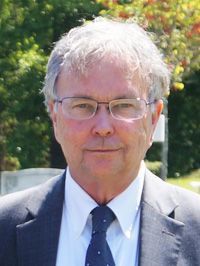
Prof. William Brown
U.S. President-elect Donald Trump may jeopardize stability on the Korean Peninsula if his North Korean counterpart continues to rely on nuclear brinkmanship, according to a North Korea expert based in Washington, D.C.
William Brown, a professor at the Georgetown University School of Foreign Service, said Trump may take immediate countermeasures against any military provocations by North Korea and its unpredictable leader Kim Jong-un.
“Pyongyang has a history of provocations in order to make it feel noticed, and I expect that may happen again,” Brown said. “If so, Trump would respond and might create some kind of crisis.
“Our government would give very clear notice to Pyongyang that any nuclear or conventional provocations will be immediately countered and that better relations can quickly develop if Kim wants to move in that direction and is willing to make some important reforms and changes.”
Brown, a retired U.S. government official, expects that the former billionaire businessman, who will take office in January, will use a combination of “engagement and containment” policies to change North Korea.
“President Trump eventually will want to engage to change the dynamics of the North Korean regime,” he said. “North Korea, especially its economy, is changing on its own and we might be able to hasten that process. We can be pretty sure new thinking will go on in Washington about how to do that.”
Under the new administration, for example, he expects Russia will play a bigger role in controlling North Korea’s nuclear threats.
“Russia might become more important, and China less so,” Brown said. “We should remember that Russia was a key contributor to the North Korean missile and nuclear programs and might be able to play a more constructive role in stopping it.”
Brown, who previously worked for the CIA, the Commerce Department and the National Intelligence Council, believes Trump’s unpredictable, aggressive way of thinking may make Pyongyang more cautious about its military provocations.
“Pyongyang might be more than a little afraid of Trump, whom they don’t know, and they thus might move more cautiously than normal,” he said.
“In the end, though, I think the only thing that will force change in North Korea is fear of not changing, and Trump might be in a good position to present such fears.”
Brown expects that once a policy line is developed, and coordinated with Seoul, the Trump administration will find a way to communicate directly with Pyongyang.
He stressed that to sustain the solid bilateral alliance, South Korea should make more efforts to secure channels not only to the White House but also to the U.S. Congress to tip the policy review process in favor of South Korea.
“We often tend to focus on presidential politics but actually Congress makes most of the rules,” he said.
“Republican congressmen and senators will have a lot of positive things to say about trade and security relations with South Korea and these bode very well for our relations with Seoul.”
Park’s political scandals
Brown expects Trump to call for a complete review of U.S. policies toward Korea.
“In Trump’s way of thinking, it is important for the U.S. to first figure out what is in the U.S. national interest and I'm sure this will be the focus of his review,” he said.
However, he believes the ongoing political scandal surrounding President Park Geun-hye and her friend Choi Soon-sil, accused of meddling in state affairs for her own gains, will negatively affect the review process.
“Unfortunately, the current situation in Seoul will complicate the review process since Trump will want to ensure Seoul and Washington are in general agreement, and this may take time,” Brown said.
“President Park's political problems will give reasons for both Washington and Seoul to delay policy reviews. That would be a big mistake and Seoul needs to try to quickly engage the new administration, telling it that North Korean issues are beyond politics in South Korea.”
Brown, who served as a senior research fellow in the U.S. Embassy in Seoul in the 1980s, said time is very short for the review because the recent North Korean nuclear progress is strong.
“Once they have achieved a solid deterrence, at least in their own minds, our leverage will be lessened,” he said.
“I hope that Trump does not fall into the trap of so called strategic patience, putting North Korea policy on the back-burner as soon as difficulties are encountered.”
Brown called for Korea’s policymakers to come up with strategies for potential changes in advance.
“An up-front willingness to consider major changes in strategy and tactics would be helpful,” he said. “Trump may not yet be aware of how integrated the U.S and South Korean forces have become. Whereas he doesn't like entangling alliances, on inspection, this one works pretty well.”
Regarding trade treaties, such as the Korea-U.S. free trade agreement, Brown believes there won’t be major changes because that agreement has widespread support in Congress, and generally among the public.
“There have been U.S. issues with respect to South Korean adherence to all the rules and these will be likely be emphasized in an effort to improve compliance,” he said.
“But to South Korea's advantage, I'm pretty sure that if a Trump administration were to ever re-renegotiate something like the TPP, it will invite Seoul to join at the outset.”
He emphasized that since Seoul-Washington relations have been so good in recent years, Korea has to be careful to make sure they are not taken for granted.
“Our focus today is Trump but this soon could be applied to politics in Seoul as well,” Brown said.