Trimming grass on graves and 'hyo' (filial piety)
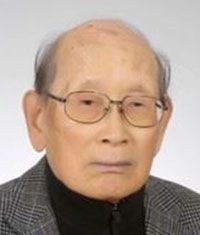
By Yi Woo-won
Chuseok, in a nutshell, is a festivity of the full moon, a gathering of family members, a homage to parents with gifts, the preparation of a sumptuous feast and the performance of ancestral rites at home with the feast before it is served among family members. First and foremost, it's a common courtesy to visit and trim the grass of ancestral graves before the holiday.
Maintaining one's patrilineal ancestors' graves is a manifestation of “hyo” or filial piety to those ancestors. It is part of the spiritual and cultural heritage of Korean people that has been officially practiced since the start of the Joseon Dynasty. I saw my father weeding annually his parents' and grandparents' graves as I was growing up. And, so I did for my parents' graves for over three decades by myself. Now that the task is too tough for my fragile constitution, my son has been doing it for me for over a decade now. I always think I am so lucky to have a son for this reason ― the only son among five children. He seems destined to be my successor.
My patrilineal ancestors' native village where my parents' graves are located is in Buyeon, Changnyeong County, South Gyeongsang Province. It's about an hour and a half's leisurely drive from home in Waegwan, near the city of Daegu. I always enjoyed the outing, admiring the serene countryside, humble villages of rustic charms and verdant farming fields along the roads. Then at the Bugok tollgate, I make a left turn, passing by a charming little town dubbed “Bugok Spa Town,” that my wife and I visited a few times in the past. Buyeon is only 20 minutes further up from there
Leaving the spa town behind, I follow now a typical country road that snakes around the hills and corners of mountains. The cosmos flowers are in full bloom around this time of the year. Bobbing their tender heads in the breeze, they look like so many familiar and friendly faces. I always think that fall in Korea is so much more beautiful and Korea-like with those unsophisticated-looking flowers. Presently, I can see in the distance, the white, arched stone-bridge, the marker of my patrilineal clan ancestors' ancient homes.
My ancestors' farming hamlet is at the foot of the mountain across the stream and rice paddies. There are about a hundred little houses huddled together below the sunny hillside. Until about a few decades ago, there used to be at least a dozen households that carried my patrilineal family name. But shockingly now, there are only two households related to my clan.
While my clan cemetery of my earlier patrilineal ancestors is in the nice lawn at the bottom of the mountain, my parents' graves are about halfway up the steep mountain dense with underbrush. Worse still, arrowroot vines are everywhere entangled with trees and bushes, blocking the path. Honestly, as I have aged, I have never enjoyed climbing this tough mountain even if it was for my dear parents. Sometimes, I resented my geomancer to no avail for his decision to locate the graves at such a high altitude.
Like always, the graves of my parents were completely overgrown with weeds when I visited last time. I felt a pang of guilt when I couldn't make out the contour of the graves. Both my parents had been exceptionally devoted to Buddhism and they wanted to be cremated when they died. My father died shortly before the Korean War when I was a senior in high school. In the turmoil of the war, I managed to scatter his ashes in the river as he had always wished. But when my mother died about two decades later, I couldn't bring myself to do the same to hers into oblivion.
Hastily, during the three-day morning, I bought a piece of burial ground on the mountain from my nephew and buried the earthen jar containing her ashes. The other grave next to hers is my father's, but it's only a symbolic mound because there is nothing but a piece of silk cloth bearing his name. It was my idea because I thought they would be happier and less lonely together.
Yi Woo-won (yiwoowon1988@gmail.com) lives in Waegwan, North Gyeongsang Province, and has been writing since 1986.