The drudgery of laundry in Joseon Korea

Women do laundry in a peaceful setting circa 1900s.
By Robert Neff
In the late 19th century, Joseon Korea was often described in less than flattering ways ― especially in regards to cleanliness. The streets were often described as muddy mires ― contaminated with human and animal waste ― and the homes (the exteriors) as run-down and hovel-like.
Korean clothing, on the other hand, often impressed Western visitors. Koreans spent a lot of money on their clothing and were fastidious in regards to keeping it clean. Not an easy task when a very large part of the population wore brilliant while clothing.
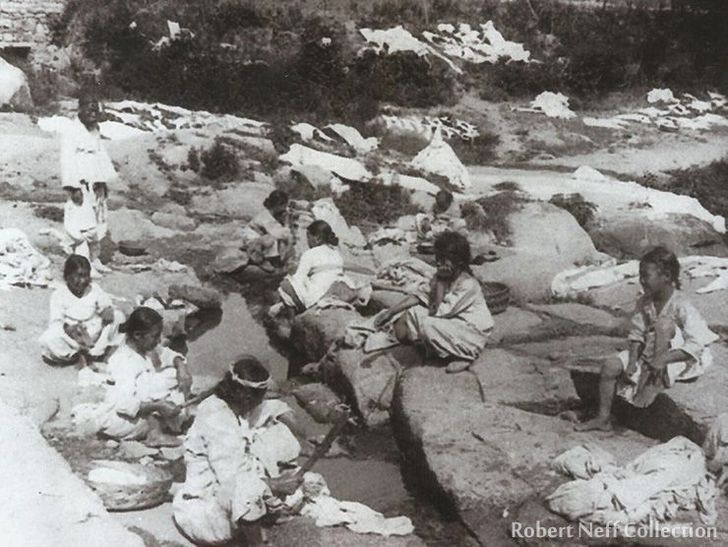
Laundry at a stream circa 1900.
One observer, Horace N. Allen, who arrived in Korea as a missionary doctor in 1884 and eventually went on to become the American Minister to Korea, wrote:
“The washing is done wherever there is a brook and even at the sides of wells, the water sometimes finding its way directly back into the well which it was dipped. All about the cities where there is a little brook or spring, there may be found a company of women with their paddles, pounding clothes on smooth stones in the water. In winter the ice is broken to allow of this cold and disagreeable work, for with white clothes worn by all, washing becomes a most necessary occupation.”
Even with modernization, laundering clothes along rivers and streams was fairly common up until the 1960s.
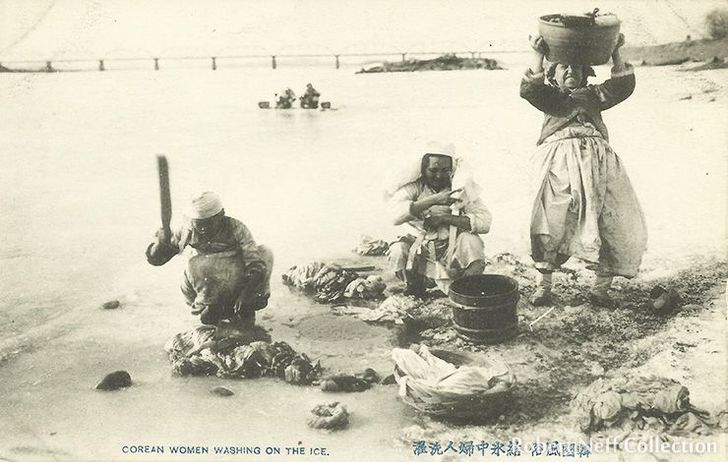
Doing laundry on the frozen Han River circa 1905-1910.
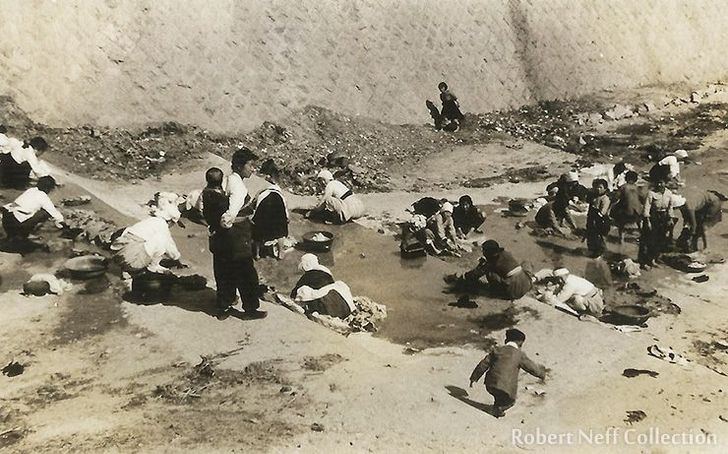
Doing laundry in the late 1950s, early 1960s.
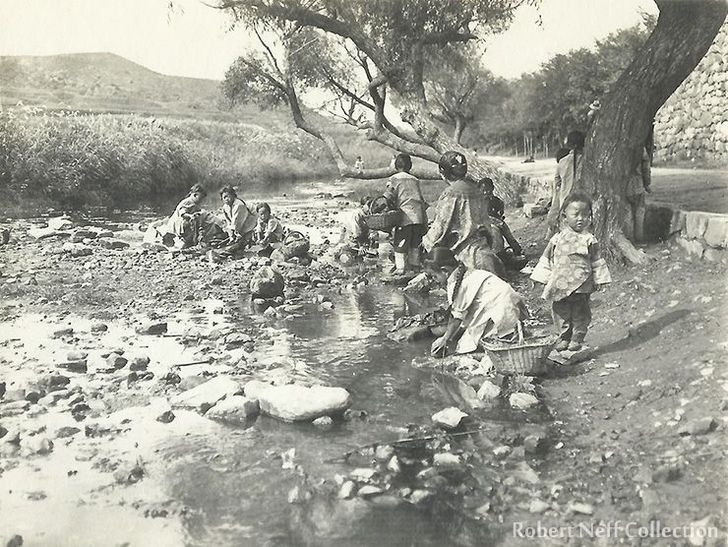
Women in China doing laundry ― very similar to Korea ― circa 1900s.