Life of a Seoul taxi driver

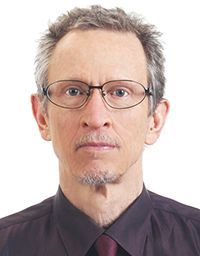
Oh Seung-keun, a veteran of 31 years as a Seoul taxi driver. Photo by Richard Pennington
By Richard Pennington
Rarely did I take a taxi in the five-plus decades I lived in the United States. Things are quite different in Korea. I can walk from my apartment to my office, and Gangnam subway station is two minutes away. Here in Seoul and in my travels to the farthest reaches of the country, I have often availed myself of taxis. This expat has taken at least 350 taxi rides.
Not once have I had a problem or complaint with the drivers of these silver (sometimes orange) vehicles. Invariably, when I climb into the back seat of a taxi I wonder about the man at the wheel. I have not, to my recollection, had a female taxi driver although there are some.
Of Korea's 300,000 taxi drivers, probably more than half are in the Seoul metropolitan area. It's surely fair to say their line of work is not easy. In all kinds of weather, they sit in traffic jams large and small, and Seoul is nothing if not congested. No better example can be given than this: Austin, Texas, the city from which I derive, is geographically larger than Seoul. But Seoul has 11 times as many people!
Taxi drivers are sometimes victims of violence and insults, and must deal with all sorts of “situations.” They are legally required to pick up passengers, no matter how suspicious-looking. As I have told my American friends many times, Seoul is absurdly safe for a big city.
And yet there are bad-natured persons out there who realize that a taxi driver is rather vulnerable. Although taxi drivers are themselves sometimes rude to customers and rip them off, I would venture to say it does not happen often.
Entering the field takes an investment. A man must pay 80 million won ($65,000) for a taxi-driving permit, plus a monthly fee of 148,000 won. An independent driver has to buy his own vehicle. This helps explain why they work such long hours; the profit margin is small.
Disputes between drivers, companies, taxi-drivers' unions and the government are constant and more vehement than ever due to the recent appearance of ride-sharing apps like Kakao Taxi, Tada and Uber. (Things do change. I draw it to your attention that Seoul is expected to start an air taxi service in 2025, with 7 million passengers per year by 2040.)
Three years ago, more than 70,000 taxi drivers went on strike, parked their cars at major intersections, protested at Gwanghwamun and then marched to Cheong Wa Dae. Their livelihoods, they hollered, were in jeopardy.
How serious is it for these hardy Koreans whom I deeply respect? Four have committed suicide in public protests in recent years ― by gunshot and by self-immolation. One happened right in front of the National Assembly building.
Determined to know more, I recently met a long-time taxi driver. Oh Seung-keun and I shared a meal at Gangnam Night Market restaurant. Tall and blessed with a rather distinguished mien, he hails from the city of Gunsan, North Jeolla Province.
“I was a car mechanic and then a bus driver between 1980 and 1990,” Oh said. “I have now been a taxi driver for 31 years. In all that time, I have had no accidents. A few scrapes, but no accidents. I drive in every part of Seoul but I stop at the border of Gyeonggi Province.”
He had some interesting stories to relate, such as how he began with a stick-shift Daewoo and how the cars today are far better engineered and built than before. Oh has had six cars in his taxi-driving career. When one gets old, he sells it and buys another. Sometimes, especially late at night, he has to deal with inebriated and belligerent customers. But he has experience and can handle whoever sets foot in his Hyundai.
“There are a thousand issues to cope with,” he said. “Some customers refuse to wear a mask, some insist on smoking, some give directions even though I know exactly where to go, and so on. Things really changed about 15 years ago when we started using navigation devices. But I'll tell you something ― they are right only 80 percent of the time. I know this because I know Seoul and have been driving for so long.”
Oh is deeply involved in this industry, including its politics. He has published the bi-monthly Taxi Driver magazine (originally hard copy, now online) for almost 20 years and served as the president of one of Seoul's biggest taxi drivers' unions.
“I am 68 years old and in good health, so I plan to keep on driving for at least five more years,” Oh said. “Considering that I do not have much education, this has been a stable job for me and a good career. It has allowed me to raise two sons and put them through school.”
Richard Pennington (raput76@gmail.com), a native of Texas in the U.S., works as an editor at a law firm in southern Seoul. He is the author of 23 nonfiction books. The most recent is “Travels of an American-Korean, 2014-2020,” published by JisikGonggam.