Meoseumnal: Servants' Day

Farmers at work threshing in the early 1900s. Courtesy of Diane Nars Collection
By Robert Neff
In the past, the first day of the 2nd lunar month (March 13 in 2021) would have been a day of great celebration ― especially for farm laborers ― as it was known as Meoseumnal or Servants' Day.
A large feast was organized and servants and farm laborers were given the day off in anticipation of the hard work that would soon follow in planting seeds, weeding and watering, and then harvesting the crops over the months to come.
It may seem strange but the food and drink were all prepared by the boys. The older boys, who were on the verge of manhood, prepared and served alcohol to the adults.
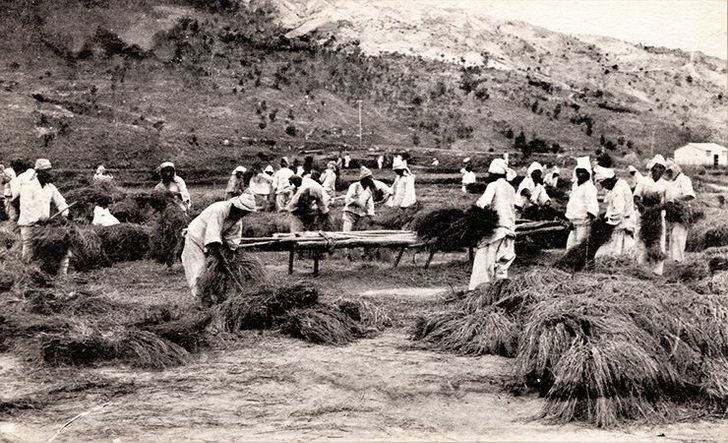
Farmers working in the fields in the early 1900s. Courtesy of Diane Nars Collection
This simple act was considered a rite of passage and the boys were recognized as joining the ranks of the adults.
Most boys probably welcomed the opportunity to be considered an adult but it came with some negative baggage ― from this point on they were expected to do an adult's amount of work in the fields.
Of course, if they were unmarried they were still considered to be nothing more than boys ― regardless of their age ― and gained no real benefit except harder work and more responsibilities.
In honor of this festival of the past, here are some images of farm life in the late 19th and early 20th centuries.

Gathering the sheaths in the early 1900s. Robert Neff Collection

Winnowing the grain in the early 1900s. Robert Neff Collection

A well-deserved rest in the fields in the late 1890s or early 1900s. Robert Neff Collection
Robert Neff has authored and co-authored several books including, Letters from Joseon, Korea Through Western Eyes and Brief Encounters.