Resume dialogue with North Korea
This is the third in a “Letter to President Biden” series aimed at conveying policy recommendations in an open letter from politicians, scholars and experts to the new U.S. president following his Jan. 20 inauguration. ― ED.
By Yang Moo-jin
Dear Mr. President,
I would like to extend my sincere congratulations to you on your inauguration as the 46th President of the United States of America.
Many countries are looking forward to the new era that President Biden will open. The Korean government, an ally and friend, appears to be busy preparing to share the incoming Biden era. The denuclearization and the establishment of a peace regime on the Korean Peninsula, and the future of lasting peace and prosperity in Northeast Asia would be much anticipated.
As a scholar who has been studying North Korea for a long time, I would like to give a few words in the hope of it being helpful to you and your security team in establishing a policy toward the North.
Pyongyang recently held the 8th Workers' Party Congress, and there are two notable points. First, Chairman Kim Jong-un emphasized that the most important goal he pursues is to improve people's lives through economic development. At this party congress, the politics of prioritizing people was brought to the fore as a fundamental issue that determines the success or failure of socialism, and this was reflected in a revision to the party's rules.
I think it showed Kim's hope for creating a prosperous normal state where people are making a good living. In addition, Kim said, “The five-year economic development plan fell far short of goal since 2016, but it has laid a valuable foundation for future economic development.” This clearly means that there is a need for economic development.
North Korea's economic development requires normalizing relations with the U.S. and easing sanctions. To this end, Kim shifted the national strategic route from nuclear weapon development to concentrated economic development in 2018, and had talks with the Trump administration.
However, he is now in a difficult situation as negotiations remain deadlocked. That is why North Korea chose the path of self-reliance. Chairman Kim would want to feed people well and would not want them to tighten their belts. However, in reality, that couldn't be realized and I think he unavoidably chose the path of self-reliance.
Second, Kim hopes that the new U.S. government will not repeat 'strategic patience,' and that negotiations will be resumed as soon as possible. North Korea announced that it would improve the precision of its ICBM which places the entire U.S. mainland within range, and confront the U.S. on the principle of “strength-for-strength and goodwill-for-goodwill.”
On the surface, North Korea seems to have a very strong stance toward the U.S., but I think its genuine intention is different from its superficial stance.
The only thing that Kim can use as a bargaining chip in his talks with the U.S. is nuclear weapons, but it will be difficult for him to use the denuclearization card rashly with no knowledge about the new U.S. government's policy toward the North.
Therefore, it is assessed that North Korea attempted to get an upper hand in preparations for the future talks with U.S. by listing the goals of developing various strategic weapons including nuclear weapons.
This is not a threat, but a call for dialogue, and is part of an effort to place the North Korean issue high on the list of the foreign policies of the new U.S. administration. I think it is important not to overstate or exaggerate North Korea's radical expressions, but to carefully read between the lines of their messages based on an accurate assessment of the situation in North Korea.
North Korea might have considered high-profile provocations as it did when the Obama administration was inaugurated in 2009. However, it would have been quite difficult for North Korea to choose the path of provocation because the North fears a breakdown in possible negotiations with the U.S.
Therefore, North Korea chose to announce the plan of developing nuclear technology to a higher level during the party congress. Chairman Kim probably wants to have a good relationship with President Biden from the beginning and find out his way. However, as the current conditions are uncertain, he would have offered this message after conducting a thorough analysis of the situation.
As North Korea expressed its wait-and-see position about the U.S., it seems that the key lies on creating conditions in the future to bring North Korea to negotiations through cooperation between South Korea and the U.S.
I have been respecting your consistent and active position regarding North Korean nuclear issues.
Your administration is expected not to conduct impromptu events for the public, but to systematically establish a policy on North Korea through close coordination with allies and an exchange of opinions with the U.S. Congress and think tanks.
Your administration needs to listen to South Korea, a U.S. ally, and respect the agreements made so far between the U.S. and North Korea, and resolve the North Korea nuclear issues through dialogue and trust-building.
Also, you are known to have a great interest in the livelihood of the North Korean people. If humanitarian aid is offered to North Korea as soon as possible, it would not only help improve the livelihoods of a people who are suffering difficulties due to international sanctions and the COVID-19 pandemic, but also contribute to creating an atmosphere for dialogue.
Admittedly, negotiations with North Korea are not easy. However, when the U.S. and North Korea had dialogue, military tension on the Korean Peninsula was eased, and satisfactory diplomatic achievements were made as seen in the “U.S.-DPRK Joint Communique in 2000 and Joint Statement of the Six Party Talks on Sept. 19, 2005.”
President Obama said, “We will extend a hand if you are willing to unclench your fist,” and succeeded in improving relations with adversaries such as Iran and Cuba. As this case indicates, I am confident that if you hold out your hand first to North Korea, Chairman Kim would also react amicably.
As you said in your victory speech, “We lead not by the example of our power, but by the power of our example” to make America respected around the world again, I sincerely hope that you will show your leadership for peace and prosperity around the world and the Korean Peninsula and in Northeast Asia.
Sincerely,
Yang Moo-jin
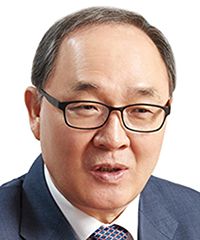
Yang Moo-jin (yangmj@kyungnam.ac.kr) is professor at the University of North Korean Studies and vice chairman of Korean Association of North Korean Studies. He is also standing committee member of the National Unification Advisory Council and policy consultant at the Ministry of Unification.