INTERVIEW Italian envoy sees Korea as ideal partner for culinary campaign

Italian Ambassador to Korea Federico Failla, fourth from right; Korean Food Promotion Institute (KFPI) President Sunjae Mayul, fifth from right; Italian chef Palma D’Onofrio, second from right; and Korean chef Lee Jong-kuk, second from left; stand with other dignitaries during the “2019 Italian and Korean cuisine and culture exchange week” at the Korean Cuisine Culture Center in Seoul, Nov. 19. / Korean Food Promotion Institute
By Yi Whan-woo
Food is a part of Italian culture and tradition that the government seeks to preserve and protect, helping to maintain the nation’s reputation as one of the world’s top gastronomic countries.
“And we see Korea as an ideal partner,” Italian Ambassador to Korea Federico Failla told The Korea Times when asked about why the “2019 Italian and Korean cuisine and culture exchange week” was organized in Seoul, Nov. 19.
The program, which introduced risotto and other rice dishes, was held at the Korean Cuisine Culture Center as a part of “The week of Italian cuisine in the world.”
This is an international campaign held every year since 2016 to promote quality Italian cuisine and farm products.
The fourth edition ran from Nov. 18 to 24 in major cities around the globe under the theme “Food education: the Culture of taste.”
Depending on the countries they serve, the diplomatic missions and Italian cultural institutes ran various activities that ranged from seminars and conferences, to meetings with chefs, cooking courses, tastings and dinners.
The Korea campaign was joined by the Ministry of Agriculture, Food and Rural Affairs and the Korean Food Promotion Institute (KFPI), which operates under the ministry’s wing.
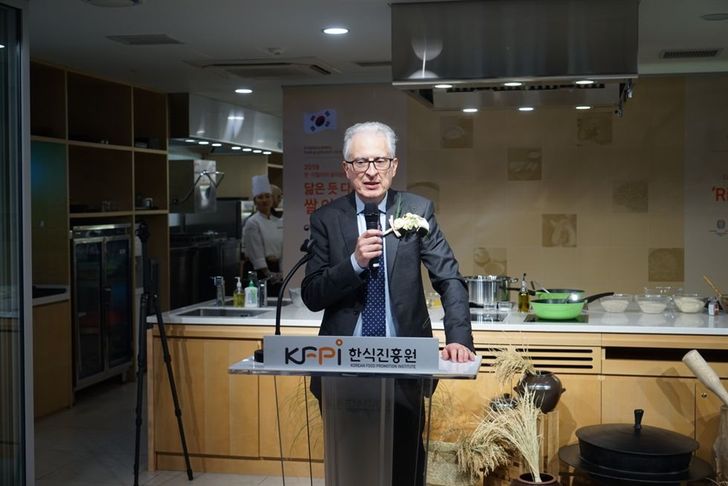
Italian Ambassador to Korea Federico Failla speaks during the opening ceremony. / Korean Food Promotion Institute
“For us, food represents cultural identity and we are engaged to explain how our cuisine is deeply rooted in our cultural tradition. Besides, there is much scientific and technological research behind the Italian food products, to ensure that they contribute to the wellbeing of people,” Failla said.
He noticed, after beginning his tenure here in March, that the diets of the two countries are similar, in that they are healthy, nutritious, balanced and tasty.
KFPI President Sunjae Mayul, who accompanied Failla during the interview, agreed.
She referred to Italy as the home of the slow-food movement that began in the 1980s and that Korea shares the same spirit by valuing locally grown fresh food and traditional cooking.
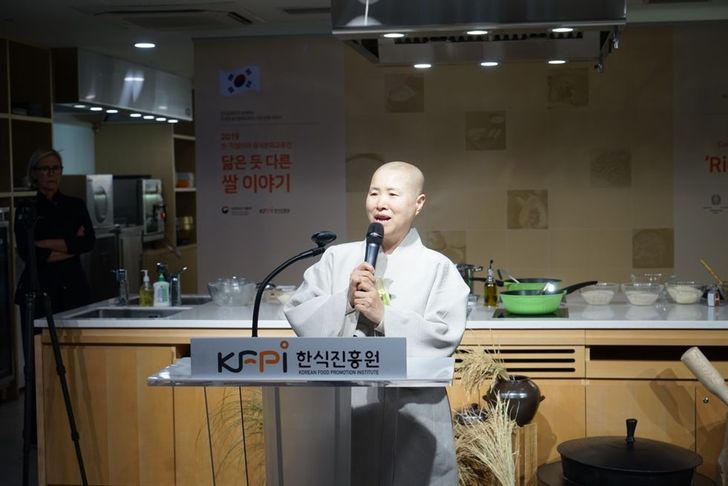
Korean Food Promotion Institute President Sunjae Mayul gives a speech during the opening ceremony. / Korean Food Promotion Institute
“Throughout centuries of history, Koreans have believed that food made of natural ingredients can make a healthy body and mind,” she said. “In that sense, it can be said we have practiced slow food naturally.”
Such a practice, according to Sunjae, is best witnessed in fermented food because it requires time to prepare and to wait for the fermentation process to take place. They include kimchi and jang — a range of pastes and sauces made of soybean or red chill that are used to season food.
Failla called Italian gastronomic delights “the product of imagination,” with new recipes being developed over time and in accordance with the environment.
He said these characteristics have seen Italian cuisine successfully adopted in other countries and therefore loved in every corner of the world.
“Italian dishes are natural, simple and not too elaborate and you don’t have to be a chef to cook them,” Failla said. “At the same time, its ingredients can be combined in many different ways.”
Sunjae speculated that Korean cuisine has potential to be as successful as Italy’s, saying: “The two countries share an idea of trying to use traditional recipes while experimenting with new methods to be more creative.”
Some of the food and beverages featured at the culinary exchange program, such as sikhye (sweet rice punch) and gangjeong (deep-fried rice puffs coated with rice syrup), have similar fermentation recipes that developed from one another.
The week of Italian cuisine in the world is organized by the Ministry of Foreign Affairs and International Cooperation, and involves a working group comprised of various Italian government bodies. Among them are the Ministry of Economic Development; the Ministry of Agricultural, Food and Forestry Policies; the Ministry of Education, University and Research; and the Ministry of Cultural Heritage and Activities and Tourism.
Taking this into account, Failla said food “embraces many sectors” and it can help people of the two countries learn more about each other.
He noted this was why rice was chosen as the main focus for this year’s culinary exchange program.
Italy is Europe’s largest rice producer, with 1.44 million tons produced annually.
The rice varieties grown in Italy are different from Korea’s. Italy’s most notable varieties are Carnaroli, Arborio and Ribe.
“Since my arrival, I have seen that Italian food is very popular in Korea but there is still more room to make our cuisine better known,” he said, adding many people here think of pasta and pizza when it comes to Italian food. “Rice is also usually associated with Asian food and this is why we decided to promote rice.”
Chefs Palma D’Onofrio of Italy and Lee Jong-kuk of Korea demonstrated how to cook their respective country’s rice dishes for over 80 guests.
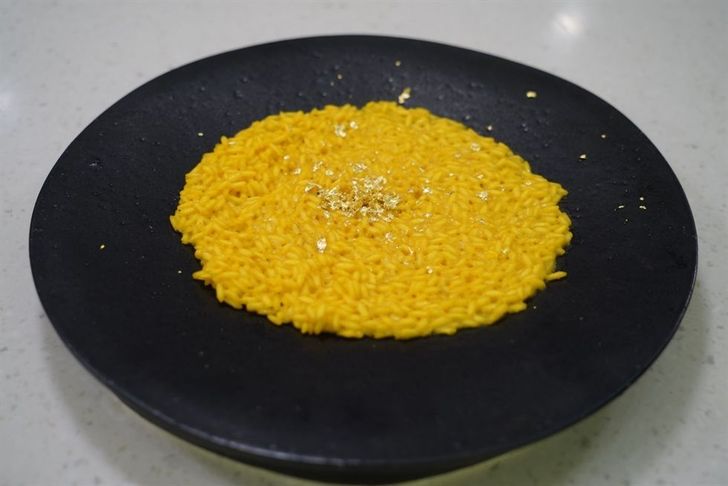
Risotto omaggio, cooked by Italian chef Palma D'Onofrio. / Korean Food Promotion Institute
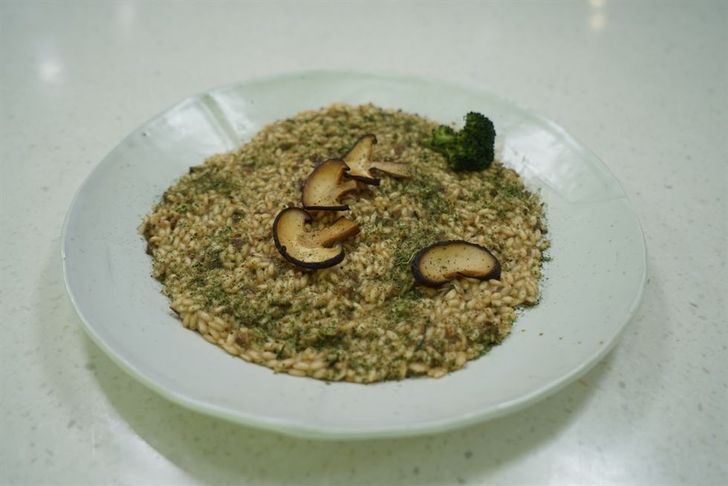
Mushroom risotto, cooked by Italian chef Palma D'Onofrio. / Korean Food Promotion Institute
Among them were two types of risotto — mushroom risotto and risotto omaggio.
A small exhibition at the event showcased fermented products from Italy and Korea.
The Italian section was filled with cheese and other dairy products; the Korean section with rice products.
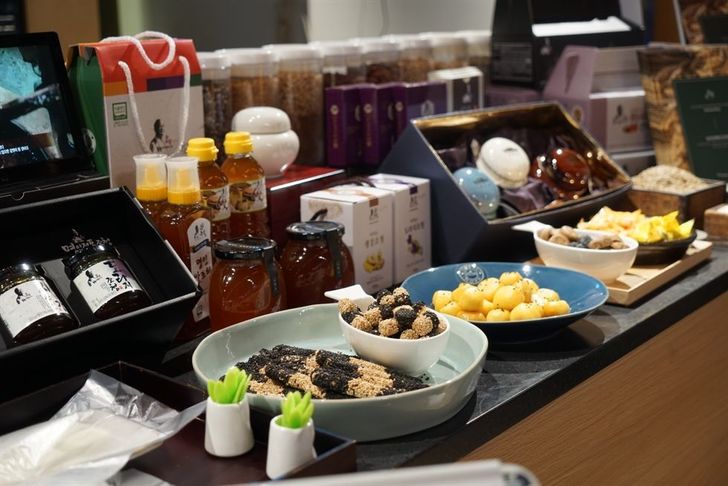
Sikhye, gangjeong and other rice products made through fermentation are displayed. / Korean Food Promotion Institute
Failla, a Sicily native, said he likes “the balance of sweet and spicy tastes of Korean dishes” and that other Italians, who increasingly enjoy hallyu (the Korean cultural wave), will have more chances to appreciate Korean food like he does.
Sunjae, as a vegetarian, said she always found Italian restaurants the “right places to eat out.”