Saving Venezuela
By Enrique ter Horst and Hugo Palma
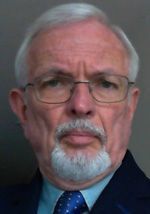
Enrique ter Horst

Hugo Palma
CARACAS/LIMA ― On December 6, 1998, Hugo Chavez was elected president of Venezuela. The effects of that vote ― which most agree was the last free and fair vote in that country ― are still being felt.
Upon securing the presidency, Chavez wasted no time selling Venezuela's sovereignty to Cuban interests. Every attempt to counter the regime's brutality was met with repression, imprisonment, starvation, and forced exile. From the judiciary to the electoral commission, the regime's control of the state became total and uncompromising ― an outcome that Venezuela's Latin American neighbors did nothing to resist.
When oil prices skyrocketed, the windfall was stolen and squandered. By the time the bonanza ended, Chavez's handpicked successor, Nicolas Maduro, was in charge. Less cunning than his mentor, he has maintained his grip on power by becoming a dictator, subjecting the country to his will and that of the ruling elite. Maduro's regime has bankrupted the economy, destroyed the oil industry, and impoverished everyone except himself and his cronies.
The cynicism of the Venezuelan regime knows no bounds.
As Venezuelans rummage through garbage looking for food, the regime flouts its international obligations and threatens its neighbors by undermining their own democratic institutions and processes. And, not surprisingly, despite the Maduro regime's increasing ― and increasingly well-documented ― brutality, not a single politician, soldier, police officer, militia member, or paramilitary “enforcer” has been indicted, tried, or sentenced for any crime.
Dictators who order their own people shot will cling to power tightly; they know that being overthrown means either death or permanent exile (in Maduro's case, in Cuba or Russia). That is why no one should be fooled by the regime's periodic “democratic overtures.”
Next month's presidential election, for example, is but a charade intended to restore international legitimacy and support; challengers have been allowed to run, but none is considered a threat to Maduro. The same goes for the regime's appeal to negotiations: the “dialogue” between the government and the opposition serves only to buy time, divide the opposition, and demoralize the public.
Clearly, the regime is not interested in entertaining opposing views. Instead, with polls suggesting that 80 percent of the electorate disapproves of Maduro's leadership, the government is chasing out its foes and slamming the door. Some 550,000 Venezuelans have fled to neighboring Colombia. Hundreds of thousands have also fled to Argentina, Chile, Brazil, Peru, and others, creating serious humanitarian challenges. No one has left for Cuba, and very few to Bolivia or Nicaragua.
For the most vocal activists who won't leave, detention awaits. Venezuela's incarnation of “socialism of the 21st century” includes more than 230 political prisoners.
If there is a silver lining, it is that self-inflicted wounds are beginning to threaten the regime and its leaders. Venezuelans have lost 96 percent of their purchasing power since Maduro became president in April 2013, and an incensed public could explode into full-fledged revolt at any time.
Sanctions imposed by Canada, the European Union, the U.S., and Panama are also beginning to bite, and an investigation by the International Criminal Court into allegations of crimes against humanity should serve as a reminder to the regime that the world has not forgotten it.
And yet the pain that Venezuelans are suffering after a generation of Chavista rule will remain. Borrowing from the Castro brothers' playbook in Cuba, the Maduro regime is proceeding under the assumption that the only way to survive is by crushing the will of the people. If it succeeds, Venezuelan democracy won't be the only victim.
China, Iran, Russia, and North Korea ― countries that have long supported Venezuela economically and militarily ― would likely make deeper inroads in the region, posing a permanent source of strategic tension that could even open the door to terrorism and nuclear proliferation.
The leaders of the Americas now have an opportunity to challenge Maduro's impunity and restore regional stability and security. At the Summit of the Americas in Lima on April 13-14, the situation in Venezuela topped the agenda.
There is no longer any excuse for silence. Maduro's rigid adherence to Chavismo is a significant threat to regional stability. Call it enlightened self-interest or political realism: for Latin America, the only way to stop the humanitarian tragedy and prevent its spillover is to bury Chavez's ghost, once and for all.
Enrique ter Horst, a former special representative of the U.N. secretary-general in El Salvador and Haiti, was U.N. deputy high commissioner for human rights. Hugo Palma, a former vice minister of foreign affairs of Peru, is president of the Peruvian Council of International Relations. Copyright belongs to Project Syndicate (www.project-syndicate.org).