'Car black boxes' market booming

Video data recorders for cars, better known as “black boxes,” provide proof of who is to blame in traffic accidents.
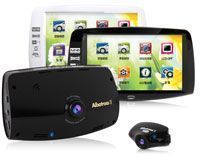
Dooco’s Urive Albatross II
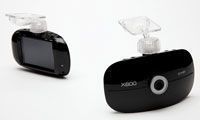
Iriver’s X600 are some of popular models available on the market.
By Kim Tae-jong
Demand for video recording devices for cars or better known as “car black boxes” here has been significantly growing over the past few years.
An increasing number of motorists seem to believe that they can provide evidence of who is at fault so that they can easily report accidents to police and insurance companies, as the devices record footage in high definition.
According to industry data, about 1.5 million car black boxes were sold last year, which is expected to jump to 2 million this year. The value of the market for car black boxes is estimated at 300 billion won.
But it is also true that there are too many products on the market and many of them disappoint drivers due to poor quality. Now, about 350 firms manufacture car black boxes.
The rapid expansion of market is also attributed to the fact that most car insurance companies offer up to a 5 percent discount on insurance for cars equipped with black boxes.
Insurers are encouraging drivers to install them in their vehicle as the devices help lower the loss ratio for them by reducing car accidents, providing evidence in case of accidents and preventing insurance fraud.
According to the Ministry of Land, Transport and Maritime Affairs, the number of registered passenger cars stood at 14.01 million last year and 13.4 million drivers had car insurance.
About 10 percent of them or 1.32 million had their insurance premium discounted after installing a black box to their vehicle. This is a drastic increase given that the sales of such devices increased from some 50,000 in 2009, 130,000 in 2010 and 300,000 in 2011.
Currently, the devices are optional, but the installation of black boxes may be mandatory in the next couple of years, as the government is pushing forward a policy for it.
“The installation of the black box will be mandatory in all vehicles in two to three years,” said Kim Pil-soo, a professor at Daelim College. He serves as the chairman of a special government committee that supervises black box and related policies.
“Of course, there are privacy concerns, but there are much more advantages,” he said. “We will first come up with a set of industrial standards for the devices in March, and we are also working on improving their credibility and confidentiality so that they can be more faithful to their original purpose.”
Based on this, market insiders believe that the car black box market has much room for growth, as about 12 million drivers can be their potential customers, and it has attracted small- and medium-sized information technology firms to join the market.
GPS navigation device makers such as Thinkware and Find Digital and MP3 player makers such as Iriver have also entered the black box business, as the demand for their original products have been on a downward trend.
Getting sophisticated
Unlike black boxes for planes, car black boxes are aftermarket devices, meaning drivers voluntarily install them, usually on the windshield. The system for car black boxes is simple. They record what is going on in the front and back of the vehicle, collect other data such as speed and location and automatically store the data in a secure digital (SD) card similar to those that are used in digital cameras. Drivers can review it on a computer.
The retail price of a black box for cars is between 150,000 and 200,000 won.
But they are becoming smarter with various functions, and some firms produce high-end devices.
The most obvious change is that they provide ultra high resolution images and record images from a wider angle.
Previously, the display resolution for most black boxes consisted of 640×480 pixels, which made it difficult to recognize license plates in recorded images or detect objects when in poor light.
But now, many of them offer high quality resolution of 1,280x720 pixels or 1,920x1080 pixels.
Another new trend is that drivers choose devices with dual cameras, so they can record what is going on in the front and back of the vehicle.
Many high-end devices have also hit the market.
For example, Pittasoft launched the Black Vue models in October, which support a Wifi function for the first time among black box makers so that drivers can check on images stored on the device through smartphones.
Dooco now sells the Urive Albatross II, equipped with an LCD touch screen for the first time. It has the "Air Touch" feature that permits power on or off with a simple hand gesture.
“The trend in the car black box market is that two-channel devices with high resolution are replacing low quality, low priced products, and customers want to have more high-end devices with various convenient features,” an official from Dooco said.
Customers who are overwhelmed by too many products to choose from are also seeking help from online communities as members share information on devices.
“The biggest problem is there are too many products by too many firms, whose quality is not properly guaranteed,” said Park yun-sang, the manager of an online community for black box users at Naver (cafe.naver.com/blackboxclub). “The most frequently-asked question is which product is reliable, and it is always difficult to pick and choose from hundreds of devices.”
He recommended two-channel black box devices providing high resolution images and also said that it is more important for drivers to regularly check on the devices.
“Of course, there should be soon industrial standards for black boxes. But drivers also need to check whether their device works properly on a regular basis, as a malfunction is not easily detected and the devices then become useless in traffic accidents,” he said.