'Japan should apologize to Korean forced labor victims'
By Kim Hyo-jin
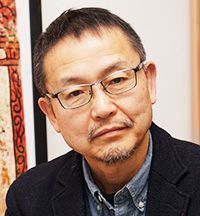
Activist Yano Hideki
.jpg)
On July 5, UNESCO granted World Heritage status to 23 Japanese industrial sites including shipyards, coalmines and steelworks which helped the country to become a modern economy.
They include seven sites where about 57,900 Koreans were forced into labor to help the Japanese army make warships, weapons and other military supplies during World War II.
According to a Japanese activist, it is now time for the Japanese government to start efforts to compensate Korean forced labor victims.
“It is encouraging to see the wartime wrongdoing acknowledged. I hope the compensation to victims of forced labor at those sites will come next and these reconciliatory moves should be carried on with continued action,” Yano Hideki, secretary general of the Japanese Committee of the Korea-Japan Solidarity Recovery Campaign 2015, told The Korea Times.
Tokyo acknowledged in a UNESCO session that Koreans were forced to work at some of those sites before and during World War II.
Japan’s Ambassador to UNESCO Kuni Sato said during a World Heritage Committee session, “There were a large number of Koreans and others who were brought against their will and forced to work under harsh conditions in the 1940s at some of the sites.”
Japan’s Mitsubishi Materials Corp. apologized to U.S. prisoners of war who were used as slave labor during World War II and indicated a willingness to apologize to former British, Dutch and Australian victims. However, it is reluctant to do the same for Korean victims.
The activist said the Japanese government should take measures to help people understand the historical wounds of Korea.
He said an investigation into Korean forced labor at the UNESCO sites is the one way to do so.
“It is because both the bright and dark sides should be clearly stated,” he said.
“Sites like the Mitsubishi Nagasaki shipyard facilities, Yawata steel works and Hashima coalmine need to have a statement describing how many Koreans and Chinese victims of forced labor died there,” he said, citing the Zollverein Coal Mine Industrial Complex as a good example.
The site earned World Heritage status in 2001 after Germany acknowledged its history of forced labor.
Germany squarely faced the injustices it had committed during the war by setting up a commemorative building for Jewish laborers who were forced to work and died there. Before the listing, former victims were offered compensation, he noted.
Yano is a dedicated activist who has supported Korean wartime laborers and soldiers over two decades. He filed lawsuits demanding the compensation for victims and the cancellation of certain enshrinements in the Yasukuni Shrine.
Inspired by former comfort woman Kim Hak-sun, who in 1991 began talking publicly about her experience of sexual slavery, he started a campaign in Japan to raise awareness for the victims of Japan’s wartime wrongdoings.
The Korea-Japan Solidarity Recovery Campaign 2015 has engaged in research about the 1965 Korea-Japan Claims Agreement, which Japan believes settled all compensation issues arising from the war with an $800 million reparations package agreed when the two countries normalized ties in 1965.
Based on victims’ testimony and documents, the NGO seeks to clarify how the Japanese government has dealt with war crimes.
“We need a new stage for the two countries in 2015. Our campaign aims to resolve the remaining issues of colonialism through further exchanges, thereby establishing trust-based relations,” he said.
He believes what eventually solidarity between Korean and Japanese citizens can happen.
“Unless there was no joint action with Korean NGOs and citizens, our campaign for wartime victims and the fight against the move to dilute history wouldn’t have reached this far,” he said.
“The civilians’ role is critical in facing history squarely,” he added, quoting the preamble to UNESCO’s Constitution.
“A peace based exclusively upon the political and economic arrangements of governments is not a peace which could secure the unanimous, lasting and sincere support of the people of the world. Peace must be founded upon the intellectual and moral solidarity of mankind.”