Moon needs 'carrot and stick' for N. Korea
This is the sixth in a series of interviews with international experts on Korea giving advice to President Moon Jae-in on how to overcome challenges and create a better future for the Korean people. ― ED.
By Kim Jae-kyoung
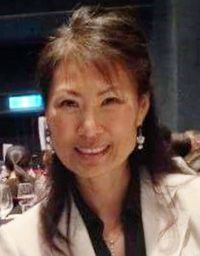
Tara O
President Moon Jae-in should utilize the right balance of “carrot and stick” to make North Korea behave, according to Tara O, an adjunct fellow at the Pacific Forum CSIS (Center for Strategic and International Studies).
She said that besides carrots, the new President needs some sticks for his policy options to secure flexibility in his approach to North Korea and prompt the reclusive country to abandon its nuclear program.
“Like any president looking out for national security and the welfare of his or her own country and its citizens, Moon should consider all options,” O said in an interview.
She pointed out that Moon’s stated position up to now focuses on rewards only, citing his campaign pledges of the reopening of the Gaeseong Industrial Complex and the forming of a federation with North Korea.
“All of these policies focus on rewarding the North Korean regime, but none of them will hold Kim Jong-un accountable for its continued Weapons of Mass Destruction (WMD) development or suppression of human rights in North Korea,” she said.
“For its North Korea policy, the Moon administration should consider all policy options, not just carrots,” she added.
O said that returning to the Sunshine Policy of the Kim Dae-jung and Roh Moo-hyun administrations won’t be the solution to the North Korean nuclear issue.
In the 1990s and the 2000s, despite the South’s unconditional financial aid to the North, Pyongyang criticized the pro-North Korea approach as Seoul’s effort to unify Korea through absorption, and made far more progress on its nuclear and missiles development.
“So to go back to that policy doesn’t seem promising as a way to tackle North Korea’s nuclear threat,” she said.
O is a retired U.S. Air Force officer. She worked on numerous assignments in Asia, Europe, and the U.S., including the Pentagon and U.S.-South Korea Combined Forces Command.
To come up with effective options, O suggests that Moon “conduct a careful review of the sanctions implication of reopening the Gaeseong Industrial Complex and apply the lessons learned, including emphasis on reciprocity, transparency, and accountability on both sides of the DMZ.”
According to O, what is important in these efforts is to ensure a merit-focused staffing based on expertise on the UN and U.S. sanctions as well as relations with them.
She also said that it is important to take a coordinated approach with the U.S. to enhance policy effectiveness, and emphasize the strong alliance with the U.S. to work from a position of strength and credibility.
“This is important for national security as well as maintaining investor confidence in South Korea,” she said.
Finding common ground
O, the author of “Collapse of North Korea: Challenges, Planning and Geopolitics of Korean Unification,” said that Moon should try to find common ground that enhances the interest of both countries when handling North Korea’s nuclear weapons and missile program.
“One key difference from the past that the Moon administration should understand is that as North Korea gets closer to developing intercontinental ballistic missiles that can carry nuclear warheads, it becomes an existential threat to the U.S.,” she said.
“That puts the U.S. president in a situation in which he has to take active measures to eliminate that threat, and he is considering a full range of options. It is important to communicate frequently with the U.S. and coordinate approaches.”
She also advised Moon to take a fresh look at the deployment of the Terminal High Altitude Area Defense (THAAD) system and adopt a more careful approach.
She pointed out that since THAAD can shoot down North Korea’s SCUD and Rodong missiles, which can target South Korea, but not the U.S., it is important for the security of South Korea, and Japan as well.
“It is the U.S. bases in Japan that will provide military support should the need arise, so protecting Japan is also essential to protecting South Korea,” she said.
“THAAD defends South Korea against North Korea’s missile threat. China does not address this real missile threat to South Korea, when it only focuses on punishing South Korea for the THAAD deployment, which China opposes,” she added. “This fact should be explained to the people, instead of China’s pressure dominating the debate.”
As for the Korea-U.S. Free Trade Agreement renegotiation issue, O, who serves on the board of directors of the International Council on Korean Studies, said that importing shale gas from the U.S could be an alternative solution.
“Trump wants to reduce the trade deficit, bring more jobs to the U.S., and would like its allies to contribute more to defense cost sharing,” she said.
“South Korea is already importing energy, and buying from the U.S. would be a win-win situation,” she added. “It is important to find mutually beneficial situations that boost the national interests of both countries and to strengthen the blood-forged alliance relationship.”