Somber history hidden behind Valentine's Day
By Rachel Lee
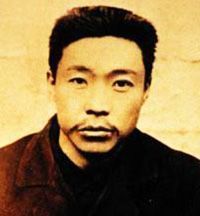
Ahn Jung-geun
Valentine’s Day, which falls tomorrow on Feb.14, is a romantic holiday popular among lovers, young and old.
This holiday often draws fire for being overly commercialized by companies that try to boost their sales of chocolate, candy, or other gifts. Some detractors even say it is a bad influence from Japan.
There is another fact about the date that is associated with Japan.
Overshadowed by sweets, flowers and red hearts is something that harkens back to the tumultuous past of Korea and Japan.
Feb. 14 has great historical significance here in that it marks the day independence fighter and peace activist Ahn Jung-geun (1879-1910) was sentenced to death in 1910 after he shot Hirobumi Ito, the four-time prime minister of Japan, dead.
Ahn is celebrated as a hero in both Korea and China for killing the first resident governor of Japanese-run Korea who masterminded the Imperial Army’s advance into northern Chinese territory. Decades after Ahn’s death, he was awarded a civil decoration in Korea for his efforts fighting for the country’s independence, and there are many memorials across the country dedicated to him.
This depiction of Ahn is, not surprisingly, different in Japan where he is branded as a “terrorist,” a feeling that intensified after a Chinese-Korean memorial hall to him opened in China’s Harbin, where Ito was shot.
To commemorate the anniversary of the sentencing, government agencies and local firms hold different events. The Seoul Metropolitan office of Education led a reading campaign on Feb. 13 and 14 last year to raise awareness of the true nature of Ahn, who was fond of literature. Casual wear brand Basic House also holds an exhibition dedicated to the activist for one month at its flagship store in Seoul, starting Feb.14.
For the rest of the world, and indeed here in Korea, the exact origins of Valentine’s Day are something of a mystery.
It contains vestiges of Christian and ancient Roman tradition. The Catholic Church recognized several saints named Valentine or Valentinu, all of whom were martyred. While nearly everyone has heard the legend of the Christian saint who supposedly married star-crossed couples in secret at a time when that religion was banned in Rome, it is unclear which martyr this was.
Other stories suggest that the origins are closely related to the Roman festival of Lupercalia, that had rites connected to fertility and early spring. But there is little evidence for this.
Whatever its origins, Valentine’s Day is a well-established tradition and a lovely day for couples.
In Korea, it was first brought over during the 1980s by Japan, which commercialized the Western import from 1950s. Since then Valentine’s Day has been set in Korea on Feb. 14, followed by the similarly themed “White Day” on March 14. Females present gifts to their men on the former, and the favor is returned to ladies on the latter.
Over the past few months, there have been ill-founded rumors about Japan bringing Valentine’s Day here to prevent the tragic historical facts about Ahn spreading and causing anger and fury among Koreans.
Experts say this is far from the truth, however. “Valentine’s Day was commercialized in Korea by a Japanese confectioner and it was just a small event back then,” said Ha Jae-geun, a popular culture critic. “These days Valentine’s Day is over-rated as there is pressure to find the perfect gift and date. This is not what love is all about.”