Korea-US alliance serves as 'compass for freedom'

Panelists engage in discussions during a session of the 2023 Korea Times Forum themed “Korea-U.S. Alliance: Security & Space Cooperation,” at the Korea Chamber of Commerce and Industry in central Seoul, Tuesday. Korea Times photo by Choi Won-suk
Forged in war 70 years ago, deep ties expand into space
By Jung Min-ho
Forged in battle seven decades ago to protect the values of freedom and democracy, the Korea-U.S. alliance today seeks to set an example of liberty and peace for countries that support the same principles, top-level government officials in Seoul said Tuesday.
What began as a military treaty has strengthened and expanded into a wide scope of sectors, ranging from the environment to space, as the two countries celebrate the 70th anniversary of their special partnership and bond this year.
At the 2023 Korea Times Forum, themed “Korea-U.S. Alliance: Security & Space Cooperation,” policymakers and experts from different fields shared their views on how the alliance has not just survived, but thrived despite major challenges over the past decades. They also noted the potential geopolitical risks that are poised to test the alliance further in the coming years.
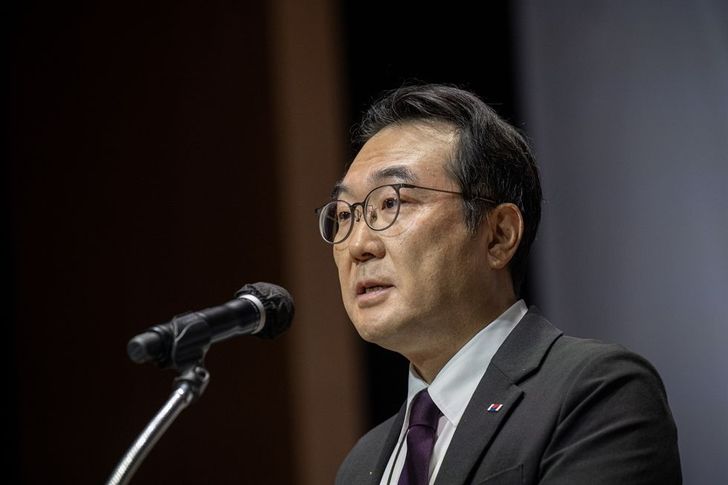
Second Vice Foreign Minister Lee Do-hoon speaks during his keynote speech at the 2023 Korea Times Forum themed “Korea-U.S. Alliance: Security & Space Cooperation" at the Korea Chamber of Commerce and Industry in central Seoul, Tuesday. Korea Times photo by Shim Hyun-chul
Reiterating that vision, laid out by President Yoon Suk Yeol in front of the U.S. Congress in April, Second Vice Foreign Minister Lee Do-hoon said that Korea, along with the U.S., will play a role as a “compass for freedom” in spreading the vision to other countries.
“The value that gave birth to the Korea-U.S. alliance 70 years ago still binds them firmly,” he said during his keynote speech for the forum at the Korea Chamber of Commerce and Industry in central Seoul. “Our alliance will lead the way for the free world and grow into a righteous one that will contribute to the peace and prosperity of the world.”
Lee said the alliance has been successful, because it is based on shared values rather than short-term economic interests.
“The power of the Korea-U.S. alliance stems from our key shared values: freedom, human rights and the rule of law,” he said. “If (the two countries) sought transactional, convenient benefits, it would have been impossible to develop the alliance into what it is today.”
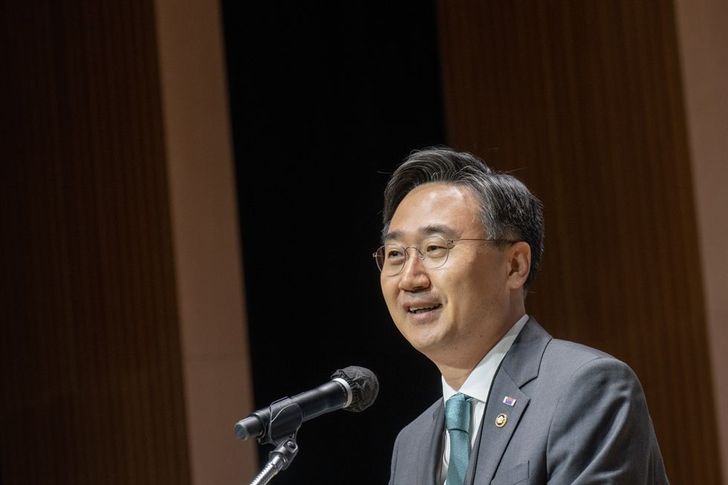
Vice Defense Minister Shin Beom-chul speaks during his keynote speech at the 2023 Korea Times Forum themed “Korea-U.S. Alliance: Security & Space Cooperation" at the Korea Chamber of Commerce and Industry in central Seoul, Tuesday. Korea Times photo by Shim Hyun-chul
The improvement in bilateral relations has been especially noticeable in the area of defense, Vice Defense Minister Shin Beom-chul said.
“The two countries have been working together to reinforce extended deterrence since the Korea-U.S. summit in May last year, which produced results with the Washington Declaration in April this year,” Shin said in his keynote speech, in reference to the bilateral agreement that opened their communication channel regarding the use of Washington's nuclear arsenal against potential threats to Seoul.
He said the cooperation is now expanding into space, which has become increasingly critical for future technologies.
“Korea and the U.S. will continue to strengthen security ties in space,” he said. “It would be the crucial component of their renewed 70-year alliance in the economy as well as security.”
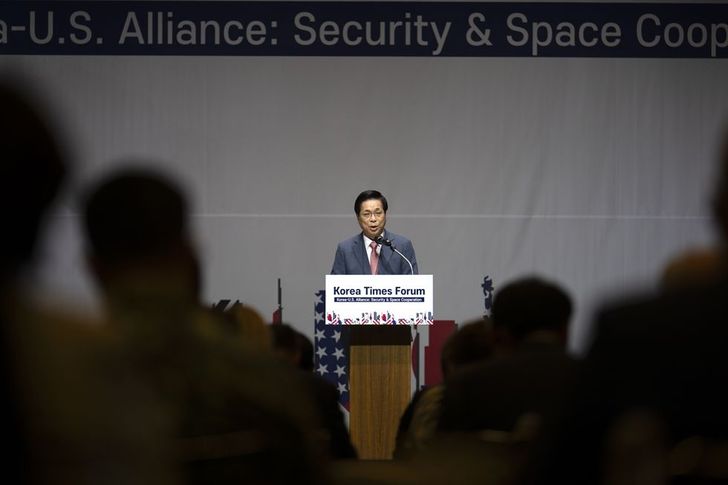
Lee Young-hoon, senior pastor at Yoido Full Gospel Church, speaks during his speech at the 2023 Korea Times Forum themed “Korea-U.S. Alliance: Security & Space Cooperation" at the Korea Chamber of Commerce and Industry in central Seoul, Tuesday. Korea Times photo by Choi Won-suk
The alliance of the two countries may have started as a result of the 1950-53 Korean War, but personal relationships among citizens began far earlier with American missionaries, who built schools and hospitals here to spread the gospel, Yoido Full Gospel Church Senior Pastor Lee Young-hoon said.
“The seeds of the gospel were the cornerstones of the alliance,” he said.
Yet the rapidly shifting geopolitical situation, where the Washington-Beijing competition for hegemony continues to intensify, presents new challenges to that partnership, said Seung Myung-ho, chairman of The Korea Times and its sister publication, The Hankook Ilbo.
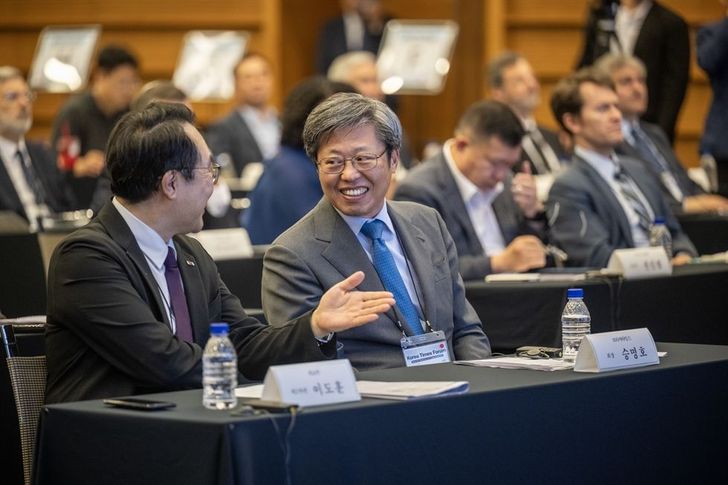
Seung Myung-ho, second from left, chairman of The Korea Times and its sister publication, The Hankook Ilbo, smiles as he speaks with Second Vice Foreign Minister Lee Do-hoon at the 2023 Korea Times Forum themed “Korea-U.S. Alliance: Security & Space Cooperation" at the Korea Chamber of Commerce and Industry in central Seoul, Tuesday. Korea Times photo by Shim Hyun-chul
In the first session, moderated by Go Myong-hyun, a senior researcher of the Asian Institute for Policy Studies, experts discussed how the Sino-U.S. rivalry and risk factors, such as armed conflict over Taiwan between the two superpowers, could test the alliance.
In the following session, moderated by Park Si-soo, SpaceNews Asia correspondent and CEO of Spaceradar, the panelists talked about the potential that space exploration offers to the two countries' relationship.
Some 100 figures, including foreign ambassadors and diplomats in Korea, CEOs and other heads of companies and financial groups, attended the forum.