Refugees' rights under threat in Korea amid World Refugee Day 2023

Refugee rights activists in Korea / Courtesy of Bereket Alemayehu
By Bereket Alemayehu
June 20 was declared in 2001 as World Refugee Day, a day to celebrate and honor refugees everywhere, in recognition of the 50th anniversary of the 1951 Convention Relating to the Status of Refugees. But refugee rights advocates and activists in Korea are fighting back against the Refugee Amendment Bill, introduced by the Ministry of Justice in 2021 to amend the current Refugee Act.
“The bill, which was initiated in 2018 as an answer to the xenophobic sentiments of those who were unfamiliar with Yemeni refugees, has been opposed by refugees and civil society organizations, as well as the National Human Rights Commission of Korea (NHRCK), UNHCR and lawyers' groups, including the Korean Bar Association and the Lawyers for a Democratic Society,” the Korean Refugee Rights Network said in a recent press release. “The Ministry of Justice went ahead with the proposal despite opposition and is now trying to force it through the National Assembly. The Refugee Amendment Bill is aimed at providing a legal basis for deportation of refugees which is already prevalent, and stigmatizing asylum seekers as 'abusive applicants' to reject their applications.”
According to the group, the key provision of the bill is the introduction of the "inadmissibility determination" procedure, which prevents asylum-seekers from being reviewed and interviewed properly. If passed, the group said, it is likely to result in the deportation of all refugees who have so far failed to prove their cases because they had not been subject to any assistance.
Despite such a huge challenge ahead, organizations and rights activists have been busy preparing various public events, such as the Korea Refugee Film Festival (KOREFF) which started on June 17 with the theme “Faces of Us” at Megabox Seongsu cinema.
Earlier this year, there was a screening at The Plaza Seoul hotel of the documentary film “Dodomu.” Meaning "home" or "homeward bound" in Ukrainian, it was directed by Neil P. George in collaboration with Musab Darwish, an Egyptian refugee as well as assistant director and cinematographer, and narrated by actor Jung Woo-sung, the first Korean UNHCR Goodwill Ambassador.
The organizers mentioned that “Dodomu'' is a poignant documentary that follows the journey of three Ukrainian refugees in Poland as they navigate the challenges of starting anew in a foreign land. The film reveals their struggles to rebuild their lives and their hopes for the future. Through candid interviews and cinematic storytelling, the movie exposes the complexities of refugee matters and the difficult decisions that the Ukrainians had to make in the face of conflict. The film examines the global plight of refugees and offers a call to action for viewers to empathize with their struggle and support those in need.
One of the leading figures advocating for refugee rights is attorney Il Lee, chair of the Korea Refugee Rights Network, who has highlighted the current plight of refugees in Korea.
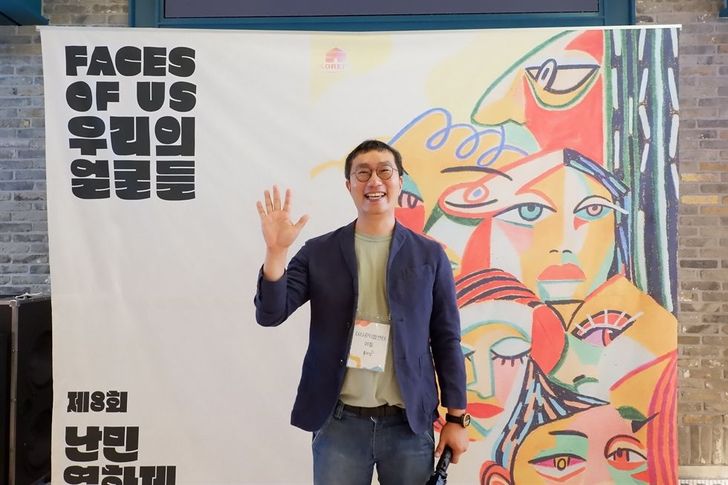
Attorney Il Lee, chair of the Korea Refugee Rights Network / Courtesy of Bereket Alemayehu
“Korea is not a country that has nothing to do with refugees,” he said. “It is a country that has a legal system, but refugees who seek protection are unfairly rejected. Numerous unfair detentions occurred during a recent three-month intensive joint crackdown. At the border, refugees are repatriated without ever getting a chance to apply for asylum. The Korean government repatriates Russian refugees who oppose the war, at the same time as saying it opposes the Russian war. Uyghur refugees also are rejected. The victims of forced marriage and honor killings are repatriated because it is difficult to verify their claims.”
He added that there are attempts in Korea to pass legislation to make refugee laws and support systems more regressive.
“Things like this are happening not only in Korea but also across the sea in Japan, with a focus on refugee deportation,” he said. “There is also hostility towards refugees. As seen in the clear hatred of minorities in the Muslim mosque in Daegu, hatred and attacks on refugees, foreigners and people of other faiths continue to occur in unacceptable ways in the public sphere.”
But he added that there are also signs of improvement.
“It is also true that Korean society is talking more about refugees than in the past,” he said. “There are more events, lectures and coverage. Refugee rights as part of universal human rights are easy to talk about for groups familiar with it, but it is often too far-fetched for many citizens. Rather than being understood as 'we who will join hands together' in Korean society, refugees feel far away. For refugees who already live in Korean society, being treated as invisible people without rights is the biggest pain in the long run.”
Korean refugee rights activist Yuri Yu called for more action. “World Refugee Day is approaching, and many call for celebration. But can't we do more than platitudes about honoring refugees' courage and affirming their resilience?” Yu said. “Let's look at the recent events that unfolded off Greece's west coast, where the capsizing of a refugee-filled vessel resulted in numerous deaths and disappearances. It, again, highlights the ongoing tragedy faced by refugees every day. 2013 onwards, we have witnessed countless similar incidents and the recurring nature of forced movement of people fleeing all year round, from Ethiopia, Egypt, Congo and Palestine, to name a few. The grim reminder raises the question about the significance of celebrating World Refugee Day when the plight of countless individuals persists daily, enduring unsafe journeys in search of safety.”
During KOREFF, a few pieces of art were on display for public view by Syrian artist Abdul Bashir Tarun, who is currently living in Turkey as a refugee. Twenty-one of his artworks were brought to Korea for a special exhibition to help Syrian refugees who are affected by the earthquake. The Promise, an international development relief organization based in Korea, organized the exhibition at Hey Ground gallery in Seoul. Park Ju-hyun, communication team manager at The Promise, told The Korea Times that all proceeds from the sales of the art will be donated to earthquake-stricken Syrians in accordance with the artist's wishes. The exhibition will run until June 27.
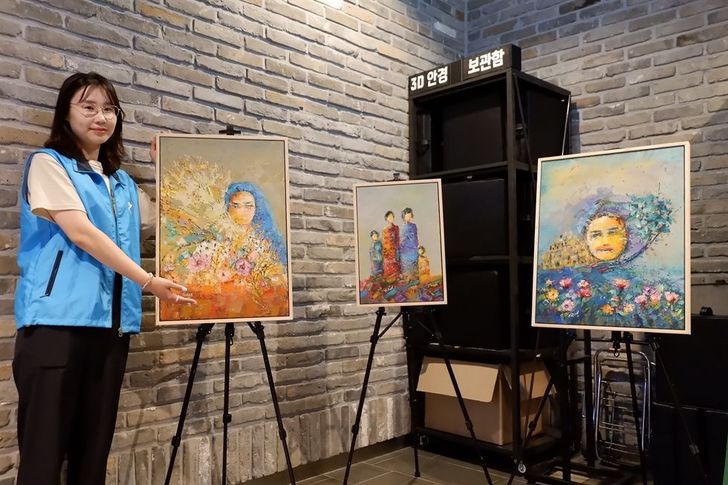
Park Ju-hyun, communication team manager at The Promise / Courtesy of Bereket Alemayehu
Bereket Alemayehu is an Ethiopian refugee who works as a photo artist, social activist and writer based in Seoul. He's also a co-founder of a social initiative called Hanokers and freelance contributor for Pressenza Press Agency. Visit
for more information.