Cash-strapped NK guest workers juggle two jobs

North Korean defector identified only by his surname Park looks out in this still photo of “Dollar Heroes.” Park, who now lives in South Korea, was a former North Korean guest worker in Russia and he worked as a lumberjack there in the 1980s. / Photo from Sebastian Weis
'Dollar Heroes' zooms in on state-sponsored modern-day slavery
By Kang Hyun-kyung
In the small Gulf country of Kuwait, North Korean guest workers have occasionally become unwanted newsmakers: some have been caught brewing or selling liquor against the local law.
Once arrested, they are ordered to leave Kuwait.
North Koreans' repeated violations of local laws and subsequent deportations have caused those who are familiar with the issue to be critical of their “short-sightedness.” They wonder why the North Koreans risk their “careers” and return home with shattered dreams.
The 2018 documentary “North Korea's Secret Slaves: Dollar Heroes” gives insight into North Korean guest workers juggling two jobs.
According to the film, they are modern-day slaves, working long hours without proper rest but earning almost nothing for themselves. Their salaries go directly to the North Korean agency, leaving the guest workers with little money so they struggle to lead basic lives. To earn money for their families left behind in North Korea, some work two jobs.
Directed by Carl Gierstorfer and Sebastian Weis, the 52-minute film gives its audiences a rare peek into the North Korean laborers overseas and their appalling living conditions.
“North Korean workers work in slave-like conditions, depending on the countries they are based in,” Remco Breuker, a professor of Korean Studies at Leiden University in the Netherlands, said in an email interview with The Korea Times. “They work, eat, sleep and live with fellow North Korean workers and are prohibited from socializing with guest workers from other countries. The North Koreans are not allowed to say no when their captain or foreman asks them to work. They work long hours in dangerous circumstances without safety gear. The worst part is they are not getting paid.”
Breuker played a part in the making of the film, working with 15 international journalists and academics for three years on “Dollar Heroes.”
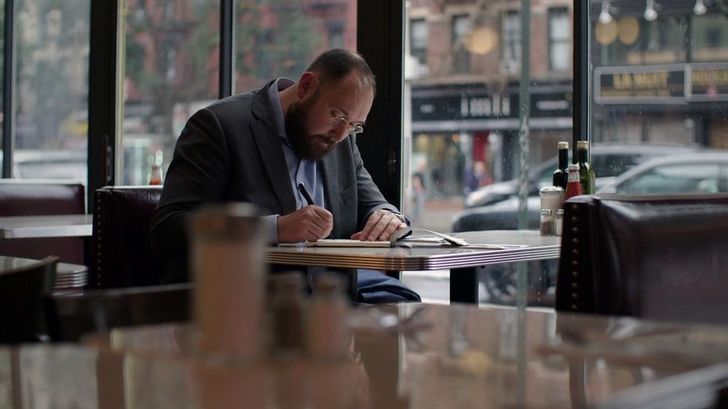
This still from the “Dollar Heroes” documentary shows Remco Breuker, a professor of Korean Studies at Leiden University in the Netherlands. The feature-length documentary delves into the harsh lives of North Korean guest workers in Russia, China, and Poland. “Dollar Heroes” opened the 9th North Korean Human Rights International Film Festival in Seoul which wrapped up on Sunday after a three-day run. / Photo from Sebastian Weis
The film opened the 9th North Korean Human Rights International Film Festival in Seoul. Starting Friday, the film festival continued until Sunday. Fourteen films from six countries had been screened during its three-day run.
“Dollar Heroes” is a rare film that zoomed in on North Korean workers overseas.
Within the North, they are portrayed as “heroes” because the foreign currency they earn is sent home, where it is critical to sustaining the crippled economy, particularly after the country came under layered sanctions for violations of U.N. Security Council resolutions with its repeated test-firing of missiles and testing nuclear bombs.
Overseas, North Korean guest workers lead lives far from what is described at home.
As Breuker puts it, they are contemporary slaves forced to work in inhumane conditions. Many of them are employed in labor-intensive fields, such as shipyards, agriculture or construction sites. They were part of the work force that built the World Cup stadium in Qatar. Some 100,000 North Koreans are working in several countries, including Russia, China, European Union and the Middle East.
“We were treated like cows or horses,” a former North Korean guest worker, who worked as a lumberjack in the Russian Far East in the 1980s, said in the documentary. “People were not treated as humans there. The intensity of the work was outrageous.”
The North Korean laborers work under surveillance. They are constantly watched by captains, foremen or other North Koreans. They are obligated to pay a considerable portion of their salaries to their country in the name of “party duty” or “revolutionary duty.”
For laborers in Russia, for example, it was about 15,000 rubles a month about 10 years ago and it has since continued to increase. Now the party duty fee is almost 50,000, which is equivalent to one and a half times the average monthly wage of a foreign worker in Russia.
The “insane” financial obligation pushed some of them into bankruptcy. Some return to North Korea in debt.
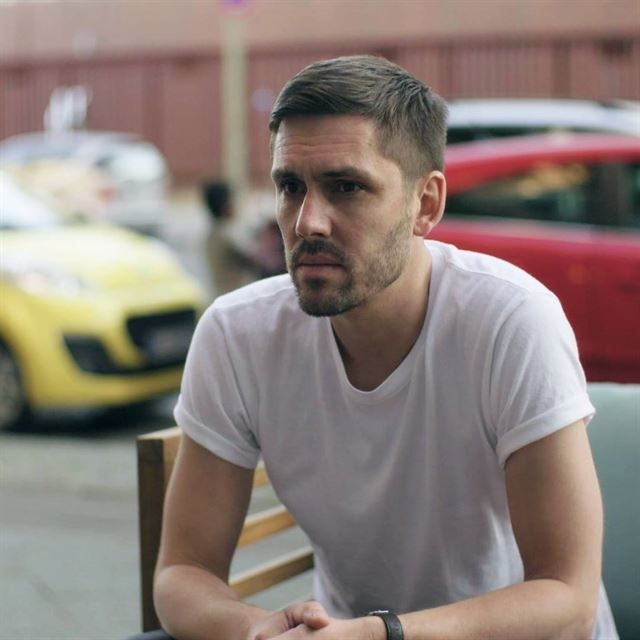
Sebastian Weis, a journalist based in Berlin, co-directed “Dollar Heroes.”/ Courtesy of Sebastian Weis
Like the North Korean workers in Kuwait, some workers work two jobs to pay the party duty.
“In Vladivostok, many North Korean workers have second jobs after their shifts in order to pay off their debt to the regime,” Breuker said. “Workers in St. Petersburg were locked up in shipping containers surrounded by barbed wire when they were not working…. Exploitation by the North Korean government is identical.”
Filmed in South Korea, Poland, China, Russia, the Netherlands and the United States, “Dollar Heroes” untangles the mystery of how North Korean leader Kim Jong-un can possibly live a luxurious life and continue to pursue his nuclear ambitions, despite layered sanctions.
Based on extensive interviews with people from all walks of life, including former North Korean guest workers, academics and former North Korean diplomat Thae Young-ho, the documentary traces money flow. It concludes the foreign currency North Korean workers earned is changed into U.S. dollars and North Korean diplomats take it to Pyongyang.
The documentary is the product of years-long cooperation among like-minded international journalists and academics.
German journalist and filmmaker Sebastian Weis, one of two co-directors of “Dollar Heroes,” teamed up with Breuker years ago for the documentary “Cash for Kim,” an investigative report looking into the tragic death of a North Korean welder at Crist Shipyard in Gdansky, Poland. The 41-year-old North Korean welder was working without protective gear on a sizzling summer day on Aug. 24, 2014 and was the victim of a fatal industrial accident. He was brought to the hospital after his entire body had been burnt but died a day later.
His tragic death drew specific attention from the European media because of his nationality.
After the report, Weis was contacted by two film producers ― Tristan Chytroscheck and Bae Won-jung ― who were planning to make a film about North Korean overseas laborers.
“They saw 'Cash for Kim' and decided to work with us on 'Dollar Heroes' as part of their slavery documentary series,” said Weis.
He said the multinational film project was full of daunting experiences from the get-go. “It was hard to find places where they actually work… So we had to find trusted journalists in Poland, China and Russia who helped us find them,” he said. “The most challenging part was to find the workers and then interview them in a quite safe environment. This is why we sometimes decided to interview them with hidden cameras and we always blurred their faces and changed their voices to protect their identities.”
Prior to “Dollar Heroes,” there were a few documentaries about North Korean guest workers.
VICE covered North Korean workers in Russia in a 2011 video. Together with China, Russia is the country hosting the largest number of North Korean guest workers.
Depending on years, some 40,000 North Koreans are working in Russia, mostly in the Russian Far East region. North Koreans work in construction sites or shipyards, two areas in which Russia is grappling with labor shortages.
“Cash for Kim” and a few other documentaries revolving around North Koreans prioritize their human rights, describing them as modern day slaves.