Wrongfully convicted pastor passes away

Rev. Jung Won-sup, center, smiles after the Chuncheon District Court cleared him in 2008, over three decades after he was wrongfully convicted in a rape and murder case in 1972. Korea Times file
Rev. Jung Won-sup was cleared four decades after wrongful conviction for rape and murder but his request for gov't compensation was dismissed over procedural flaw
By Kang Hyun-kyung
Rev. Jung Won-sup, the pastor of Chungjeol Church in the southwestern city of Namwon, passed away Sunday, several years after he suffered a stroke. He was 87.
His death has saddened the people across the country because his decades-long fight for justice after he was wrongfully convicted in a rape and murder case that has remained only half resolved. The court overturned the 1972 conviction, but didn't recognize his claim for compensation from the government due to a procedural flaw.
In his 20s through to his mid-30s, he was a normal divinity school graduate dreaming of opening a church following Saint Paul's ministry model of “tentmaking.” Under the plan, church leaders don't rely on tithes or other financial offerings from church members, and instead they perform regular work to earn an income to support themselves and serve those in need.
His dream was put to the test after he lost his first son in an unspecified accident. He went back to his hometown, Chuncheon, Gangwon Province, and opened a comic rental store to make a living.
Then his life fell into turmoil in 1972 when he was 38.
An 11-year-old girl was found dead near his store.
The girl's father was then a police chief of the region and a massive search mission was launched to find the killer. The little girl's tragic death was reported to then President Park Chung-hee. It drew Park's rage and he directed his subordinates to find the criminal within 10 days. If the law enforcement authorities failed to arrest someone within this extremely short timeframe, the president warned they themselves would face punishment.
Jung's name emerged as a key suspect as a ticket of his comic store was found in the pocket of the victim. He denied the allegation, pleading not guilty.
Feeling extreme pressure of the impending deadline, the police tortured him, fabricated evidence and framed him as the murderer. He initially pleaded guilty but later reversed his testimony on appeal, saying he was tortured and forced to testify that he committed the crime.
But his voice was went unheard. He was jailed and served 15 years.
After he was released in 1987, he settled in Namwon, North Jeolla Province and established the Chungjeol Church in 1991 to fulfill his postponed mission to serve a congregation. He then served as pastor there until his death.
While serving his church members, Jung also simultaneously fought for justice in the hope of proving his innocence and clearing his name.
From the early 1990s, he met with lawyers to prepare for a lawsuit against the government for his wrongful conviction. In 1999, he filed the suit and submitted relevant documents that could prove his innocence to the Seoul High Court. But his request was dismissed.
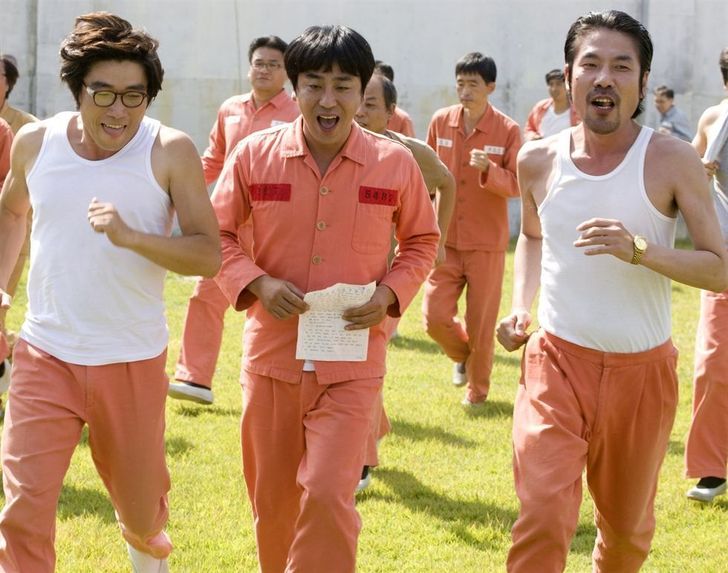
A scene from the 2013 box office hit “Miracle in Cell No. 7” based on Rev. Jung's story / Korea Times file
Jung didn't give up.
In 2007, he took his case to the now defunct Truth and Reconciliation Commission which was set up during the Roh Moo-hyun government. After investigation, the commission ruled in his favor, recommending the courts review his case. In 2011, the Supreme Court confirmed a lower court's decision that cleared Jung.
When the judge uttered the prosecution's appeal was dismissed and sided with the lower court, Jung was in disbelief and asked his lawyers to confirm what he had just heard: “The justice said just now that the prosecution's appeal was denied, didn't he? Is what I heard correct?”
Following the Supreme Court's decision, Jung filed for compensation from the government as well as three police officers who had tortured him and forced him to confess. The district court approved his request for financial compensation from three police officers, ordering them to pay 2.4 billion won. But the court rejected compensation from the government on the grounds of a procedural flaw. Jung failed to file for the compensation suit within six months after the court confirmed his innocence. His submission came 10 days after the legal guideline.
When asked what he was fighting for, he told reporters that he was fighting in the name of God to forgive the people who interrogated and tortured him.
His heart-felt story was made into film in 2013.
Director Lee Hwan-kyung's box office hit movie “Miracle in Cell No. 7” was based on Jung's story. Over 12 million tickets were sold, making it one of the most commercially successful movies in Korean history.
Jung is survived by his son Jae-ho.