INTERVIEW Italian director aims to express Korean sentiment 'han' in opera 'Nabucco'

A scene from the opera “Nabucco” / Courtesy of Korea National Opera
By Park Ji-won
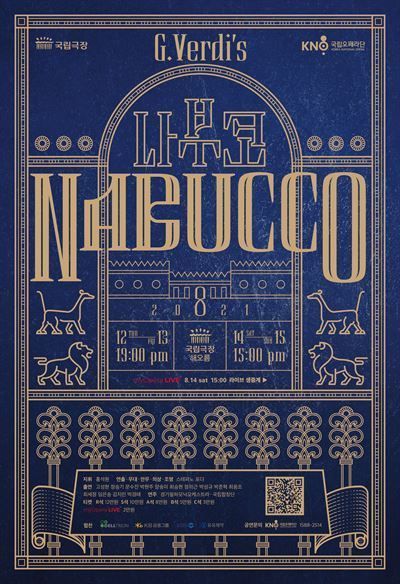
A poster for the opera “Nabucco” by the Korea National Opera (KNO) / Courtesy of KNP
“Nabucco,” an Italian-language classic opera composed by Giuseppe Verdi in 1841, will be presented by the Korea National Opera (KNO) at the renovated Haeoreum Grand Theater of the National Theater of Korea from Aug. 12 to 15 with a fresh interpretation by Italian director Stefano Poda.
This will be the first time for the troupe to present the full opera in 16 years, since the last production in 2005, especially on the nation's liberation day which falls on Aug. 15. Also, it will be the director's third direction with the art troupe following “Andrea Chenier” (2015) and “Boris Godunov” (2017).
The veteran director will be highlighting the Korean concept of “han,” which is often described as an internalized feeling of regret, sorrow, anger or a mixture of those in the romance and political story through various objects and symbolic figures such as the statue of a girl, symbolizing the existence of “comfort women” under the Japanese colonial period.
“Nabucco,” is the composer's early piece that made him famous. It starts with Nabucco, the king of Babylon, taking over Jerusalem through a war against the Israelites, but his daughter Fenena ends up falling in love with the Israelite Ismaele. She releases their prisoners, leading her vengeful half-sister Abigaille to plot to take power. Nabucco coerces worship from the people, claiming to be God himself, a sudden bolt of lightning from the sky strikes Nabucco.
Fenena's half-sister Abigaile takes advantage of the situation and fills the seat. Despite Nabucco's begging for Fenena's life, Abigaile puts Nabucco behind bars. As Nabucco prays to the Jewish God of Israel, his sanity is restored and he saves the prisoners from death. Meanwhile, Abigaille asks Fenena for forgiveness and dies. “Chorus of the Hebrew Slaves,” a chorus often regarded as the highlight of the show will be sung by the National Chorus of Korea.
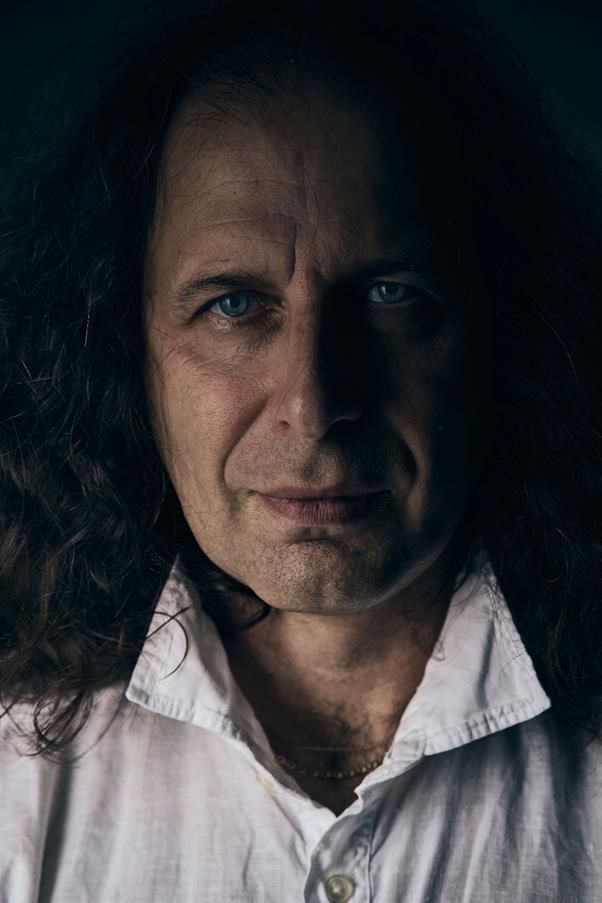
Director Stefano Poda / Courtesy of Korea National Opera
The veteran director eyed the similarity in the emotions described in “han” and the people under suppression such as Italians under the rule of Austria and in the 180-minute opera.
“When I first came to Korea, I learned about its history and the concept of 'han' which is a feeling of sorrow hurting inside and remaining unresolved. But it is something that should be respected. I found that other people in the world, even though they lived in different times and histories, shared similar experiences and had such feelings. When Verdi composed the piece, Northern Italy was under the control of Austria. Italy was not able to rebel. I thought 'han' could be the sentiment of 'Nabucco,'” director Stefano Poda said during a roundtable interview with The Korea Times, Thursday.
He is planning to display the word “han” in Korean on the stage as part of the set design while adapting references from Korean culture so to come up with original stage costumes and sets. Some of the costumes are inspired by hanbok, Korea's traditional costume and used silk organza, which is often used for the traditional garment while decorating the stage with a limited number of colors. The girl's statue will be displayed, but he did not elaborate further on its meaning and expressed hope that people will come and enjoy the stage set.
However, he thinks “han” can include painful memories, serving as an accelerator to create hope and comradely.
“I wanted to talk about the dualism embedded in various things … I think the structure of the ruler and the governed will not disappear. It could be applied to the supply of vaccines as well. But there are no good people and bad people. Perhaps the broken heart remains as a scar in history, but painful feelings prompted many to do their best to overcome it. It would later build companionship among us.”
“Nabucco” will open at the Haeoreum Grand Theater of the National Theater of Korea Aug. 12. The show on Aug. 14 will be live streamed.