INTERVIEW Childhood wound is still fresh for Tina Turner

Filmmaker Dan Lindsay poses before an interview with The Korea Times at Jecheon International Music and Film Festival, Friday. Courtesy of JIMFF
Filmmaker Dan Lindsay speaks about capturing Tina Turner's turbulent life, enduring legacy in latest documentary
By Kwak Yeon-soo
JECHEON, North Chungcheong Province ― As a filmmaker, Dan Lindsay said he is naturally drawn to films that have emotional resonance ― whether it be something of triumph, failure or loneliness.
His Oscar-winning sports documentary “Undefeated” (2011), a collaboration with T.J. Martin, told the story of an inner-city high school football team and its coach that try to win a season after years of losses.
The duo's Emmy-winning film “LA 92” (2017) followed the days of violence, looting and arson during the Los Angeles Riots of 1992.
Their latest film, “Tina,” premiered on HBO in 2021. It is perhaps their most glamorous film yet, centering on Tina Turner, the “Queen of Rock 'n' Roll.” But far from telling a sensational story, Lindsay and Martin instead captured the superstar's various struggles (dealing with lack of parental love and leaving her toxic marriage).
Lindsay and Martin, who initially were hesitant about making the film because Turner's story had been already explored in other mediums, were blown away by her epic, untold life story.
“There was something so intriguing about this person who has always been put up as a symbol of resilience and strength to talk about her vulnerabilities,” Lindsay said during an interview with The Korea Times, Friday.
From Turner's childhood in her church choir and her rise to fame as half of Ike & Tina Turner, to her escape from an abusive marriage as well as her struggle establishing herself as a solo artist, Turner's turbulent life story has been told numerous times ― first in her 1986 memoir “I, Tina,” then in the 1993 feature film “What's Love Got to Do With It” and most recently Tony-nominated “Tina: The Tina Turner Musical.”
The filmmakers thought the documentary form would be the most powerful way to tell her story because the audience can hear it from Turner herself.
Lindsay, whose new film “Tina” was selected as the opening film of this year's Jecheon International Music and Film Festival, spoke to The Korea Times about the documentary and how they avoided having Turner relive trauma all over again.
Below is an excerpt of the interview. It has been edited for clarity and readability.
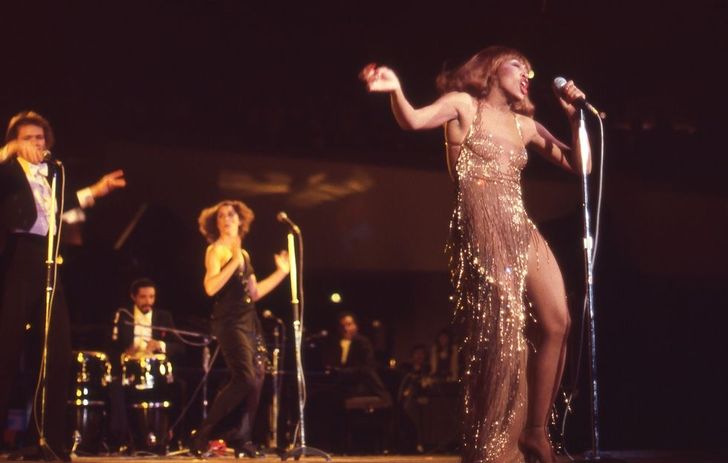
A scene from “Tina” / Courtesy of JIMFF
Q. It seems like putting together this story would have been difficult because everyone knows about her. People may think they know who Tina Turner is. Your previous film “Undefeated” was about people who weren't celebrities. Could you compare the two films? Did you have any sort of pressure that you had to do something different when you worked on the documentary about the iconic musical performer?
“Tina” was different because it's a biopic about a well-known person. “Undefeated” was a verite-style documentary and “LA 92” was only made out of archival material. Actually, we've been approached a lot to make films about famous people. But in our opinion, those films are the way to leverage someone's reputation and, in the case of musicians, play their music in the film. We've never been interested in doing that. But Tina's life story is truly an epic saga, so it felt like an opportunity to make a “real” film by telling her story.
Q. When you first got started, did you have a clear idea of what kind of movie you were going to make?
No, but we were reluctant to do a traditional cradle-to-grave biopic. We wanted to find a particular moment in Tina's life that would hopefully exemplify her whole story. We thought that there are two stories to tell ― the story of Tina and then the story of the story of Tina (the time of her life where she was with Ike). The latter part, we asked ourselves, “What's the origin of that?” Then, we discovered the People magazine interview (in which she first exposed her toxic marriage that resulted in divorce).
Q. When you met Tina in person, what was that like? Were you nervous going into the meeting? Were you a fan of Tina Turner?
We (T.J. and I) went to Zurich, Switzerland and had dinner with Tina's husband Erwin (Bach) the night before visiting her house. When we came to her house, we didn't pass through an entourage of people. It was just Tina and Erwin there. She went to go get us coffee and tea. When we were sitting in her atrium area, Tina walked into the room and the first thing she said to us was, “There's been a book. There's been a movie. There's going to be a musical. Why the hell are you going to make a documentary?” We answered, “Maybe you could tell us,” and then she laughed and sat down to talk to us. She's grounded and very down to earth. You're never not aware of the fact that you're sitting and talking to an iconic person. But she always puts you at ease. I respected her, growing up in the 80s and watching MTV, and knew her songs, but I didn't own any of her CDs.
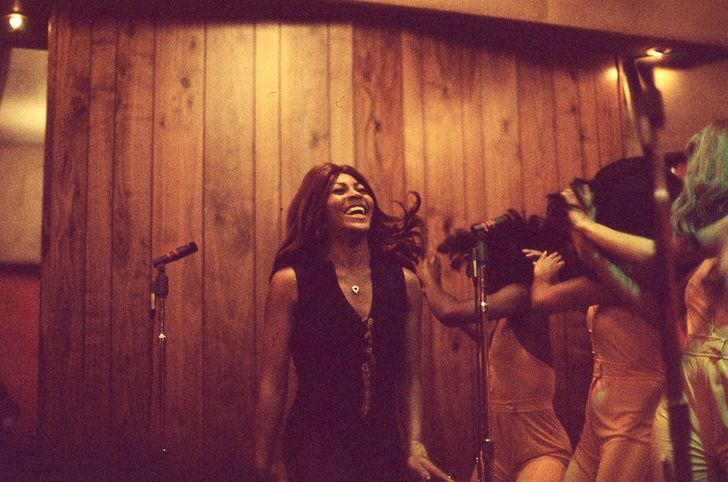
A scene from “Tina” / Courtesy of JIMFF
Q. While making this film, did you learn something new about the singer?
The fact that her life with Ike has been removed and that trauma is still so close to her. Also, I didn't know anything about her relationship with her mother. That hasn't been talked about a lot. In the film, she talks about her mother, struggles for the words and just says, “She didn't want me.” I get choked down just thinking about it now. You can just feel that wound is still very fresh to her even if she is over 80 years old and her mother passed away. That's surprising.
Q. There is an overwhelming amount of footage to choose from. What elements of her backstory and her past do you wanted to highlight in order to create the context for her emotional journey?
We had an amazing archivist in our co-producer, Ben Piner. He has an ability to find things gone missing. And we were fortunate to come across Rhonda Graam, who just passed away. (She started working for Ike and Tina in 1964. After the separation she kept working as Tina's road manager from 1976 to 1983, and then her personal assistant until Tina's retirement in 2009.) When we met her, she was protective of Tina. She was not forthcoming right away. After time and developing a relationship with her, she said, “I'll do some pictures but don't get too excited.” Then she pulled out a photo album all the way down to the 70s. None of that stuff has ever gone public before.
We wanted to lay out the film to see Tina visually. That's why the archive was so important ― to see her visually transform and travel through all these decades. We wanted to show that Tina was a relevant artist from the 50s to early 2000s. She even inspired the Rolling Stones. Also we also wanted to let performances play out and the audience go “Wow, she's incredible.”
Asked about Turner's reaction to the film, Lindasy said, “It was during lockdown when she (Tina) finally watched it. When she got on a Zoom video call with our producer Simon Chinn, she popped up on the screen and was smiling ear to ear. The biggest honor we received from her was that she said, 'You got it right.' She liked the film and thought it was authentic.”