Bridging Africa and Korea

Lyeo Woon-ki, president of the Korea-Africa Foundation, aims to establish a network of people throughout Africa to collect and share information of the continent faster. Courtesy of Korea-Africa Foundation
Korea-Africa Foundation president vows to establish information network
By Kwon Mee-yoo
Africa is known as a continent of opportunities with solid economic growth backed by its young population and abundant natural resources. Korea is seeking to strengthen relations with Africa through the Korea-Africa Foundation (KAF), which is a platform for exchanges and better understanding.
"Korea's diplomacy is centered too much on the four super powers ― the United States, Japan, China and Russia ― and inter-Korean relations. We need to diversify our diplomacy to play more roles in the international community," said Lyeo Woon-ki, president of the KAF, during an interview with The Korea Times, April 15.
"The African continent is often called the blue ocean, the young continent or the future growth engine of the world. Korea recognizes the significance of Africa in many words, but few are put into action. The Korean government founded the KAF as part of its efforts to pay more attention to Africa and create new opportunities."
The foundation, established in June 2018, is an affiliate of the Ministry of Foreign Affairs and aims to promote partnerships with African countries in the political, economic, cultural and academic fields among others.
Lyeo, who was inaugurated as the second head of the foundation in March, is a seasoned diplomat who worked at the foreign ministry for some 30 years. He served as deputy director general of the African and Middle Eastern Affairs Bureau and ambassador to Ghana and Ireland.
"I retired last year, having some free time planning the second phase of my life, and then received a call from the ministry to take this post. So I opened the second act of my life, assuming a heavy responsibility in boosting ties between Korea and the African continent," Lyeo said.
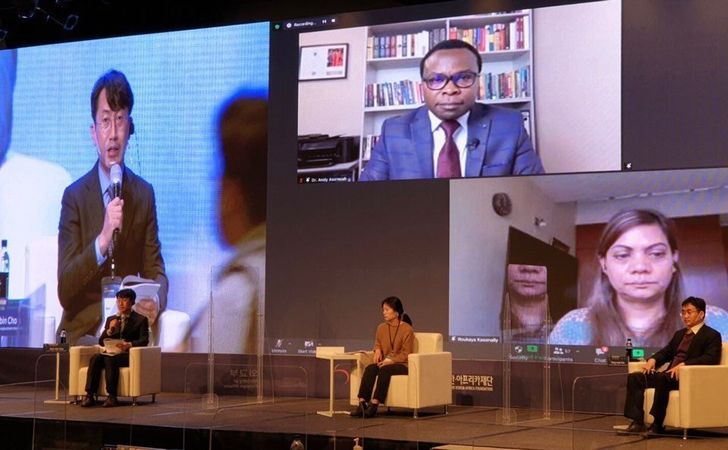
The Korea-Africa Foundation hosts “Seoul Dialogue on Africa,” an annual conference of multi-stakeholders to discuss current issues and cooperation. Courtesy of Korea-Africa Foundation
Africa is a continent with large potential ― its population as of 2020 is around 1.3 billion and is expected to reach 2.5 billion by 2050, becoming the biggest manufacturer and market in the world. However, it is not well known in Korea.
Lyeo recalled his day as the ambassador to Ghana from 2014 to 2017.
"When I arrived in Ghana, one of the first things I did was visit a KOICA (Korea International Cooperation Agency) project site, which was a two-day drive from the capital where the embassy was. Those unpaved roads and people carrying water jars for drinking water reminded me of my childhood in Gangwon Province.”
“I felt a sense of affinity, realizing that Africa was not much different from Korea. Africa is like a society where past and present co-exist. Metropolitan and urban areas are developed, much like Korea, but there are more areas with development potential outside those developed areas.
“K-pop, Korean dramas and films are well-known in Africa. I heard that the drama “Bridal Mask” is very popular in Africa as it gained sympathy because of the similar history of colonization. I wish K-pop groups such as BTS would visit and perform in Africa when they tour the world.”
Based on his experience in Africa, Lyeo said changes in perception are required to help develop relations with African countries.
"Many Koreans often associate Africa with negative images such as poverty, as typical images of Africa shown by Korean media are provided by philanthropic organizations which aim to appeal to sympathy and raise funding. Much of that footage is old or from a few disputed areas of Africa," Lyeo said.
"The actual scenery of Africa today is not much different from how we live now. Metropolitan areas enjoy the technology of modern civilization just like we do. That is why we have to stay away from stereotypical ideas of Africa. Korea does provide aid through official development assistance (ODA) programs, but Africa is not a target of aid but an equal partner in economic cooperation becoming a destination of trade and investment."
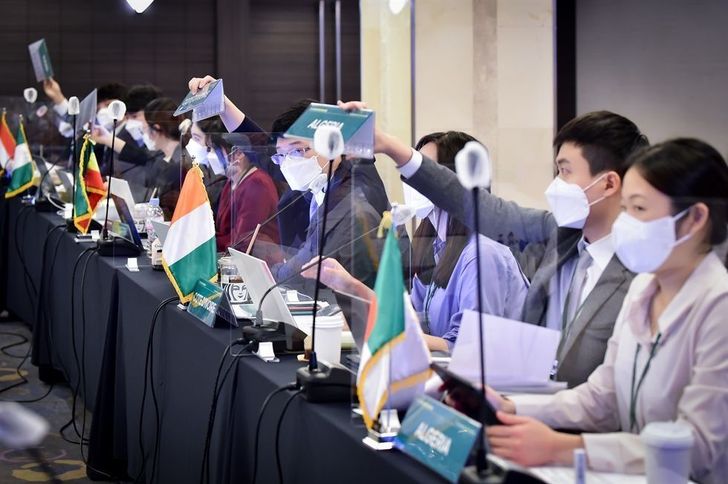
The Model African Union (AU) Assembly aims to improve awareness on Africa as young Koreans discuss various issues in an international conference format. Courtesy of Korea-Africa Foundation
Lyeo thinks Africa and Korea can work together well because the two share a history of colony and development.
"Korea achieved rapid economic growth and now is considered one of the most developed countries in the world. Some African countries highly regard Korea's rapid growth and want to follow in Korea's footsteps. There are countries executing community-driven economic initiatives similar to Korea's New Village Movement (Saemaul Undong)," he said.
"Korea can be a great partner for the African continent, sharing knowhow and transferring technology to advance together."
Currently, Korea's advancement in Africa is centered on infrastructure and public works through the Economic Development Co-operation Fund (EDCF), but Lyeo sees more potential in areas related to the Fourth Industrial Revolution.
"Africa made a quantum leap into the Fourth Industrial Revolution, skipping the previous stages. In Africa, telephone or wired internet is not well-established, but everyone has a smartphone. Koreans have a head for fintech and e-commerce, so I see bright prospects for such fields in Africa," he said.
Major programs of the KAF include supporting exchanges between Africa and Korea in the private and public sectors, researching and analyzing trends in Africa and promoting educational and cultural exchanges.
One of the new projects Lyeo plans to carry out is to establish a network of “correspondents” throughout Africa, with Africans who have returned home after studying in Korea or Africans who have other types of connections with Korea. As of 2021, Korea has diplomatic relations with 54 African countries, but embassies are located in only 24.
"Information on Africa is limited in Korea with diplomatic missions in only about half of the countries. I think it is important to have up-to-date information, so I plan to create a network of correspondents in all African countries to gather information and deliver news among Koreans there," Lyeo said.
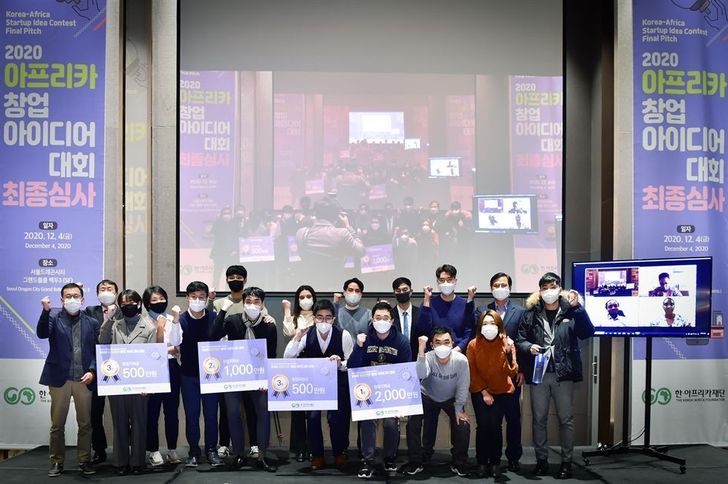
The Korea-Africa Startup Idea Contest supports young entrepreneurs who want to venture into the African market. Courtesy of Korea-Africa Foundation
He also hopes to liaise with Korean research institutes specializing in Africa with African institutes to cooperate on global issues such as climate change.
"About 80 percent of internationally controversial issues arise in the Middle East and Africa, so there is a lot to tackle. Currently, grasping the situations in Africa is the first thing for us, but when the information network is established, we can collaborate in more in-depth research," Lyeo said.
To support young Korean entrepreneurs who want to venture into the African market, the KAF hosts an annual startup competition, seeking fresh business ideas for Africa and supporting young entrepreneurs looking for investors.
In 2019, tAB won first prize for their Ladis Bottle, which sterilizes water using a UV lamp in the bottle cap, as securing clean drinking water is an ongoing problem in Africa. In 2020, Daeyoung Market's ultrasonic wave vermin eradication machine powered by solar energy won.
"There are adventurous young Koreans who establish business in Africa such as the Kijami Table, a communal restaurant and social venture in Rwanda. I am proud of those youngsters who do not mind jumping into less-developed lands," Lyeo said.
Awareness of Africa is improving in Korea, but it still has a long way to go, he said.
"It has been three years since the KAF was founded and I see some changes in awareness of Africa. However, perceptions do not change overnight and we will continue to try to change perceptions on Africa, slowly and steadily,” he said.
"I wish the Korean media would report on more African news. Otherwise, the image of Africa in Korea will remain as marketing images of charities. Koreans need to know about contemporary events happening in Africa to improve their awareness."