Catholic Church starts celebrations for bicentenary of first Korean-born priest St. Andrew Kim Tae-gon

The official poster for the jubilee of the 200th anniversary of the birth of St. Andrew Kim Tae-gon (1821-1846) / Courtesy of Catholic Bishops' Conference of Korea
By Do Je-hae
Next year marks the 200th anniversary of the birth of St. Andrew Kim Tae-gon (1821-1846), the nation's first Catholic priest who was canonized and made a saint during Pope John Paul II's 1984 visit to Korea.
On Nov. 29, the Cathedral of Virgin Mary of the Immaculate Conception in Seoul held an inaugural mass, led by Cardinal Andrew Yeom Soo-jung of Seoul and Bishop Mathias Lee Yong-hoon of Suwon, president of the Catholic Bishops' Conference of Korea (CBCK), for the opening of the “Jubilee Year of 200th Anniversary of the Birth of St. Andrew Kim Tae-gon,” with messages from Pope Francis and President Moon Jae-in. Informally known as the Myeongdong Cathedral, it is the national cathedral of the Roman Catholic Archdiocese of Seoul and the seat of Cardinal Yeom, the nation's most senior Roman Catholic prelate. Archbishop Alfred Xuereb, Apostolic Nuncio to Korea, was also present.
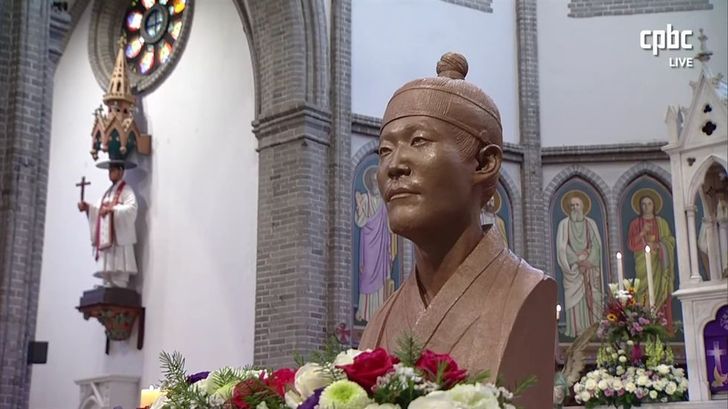
A scene from the inaugural mass for the opening of the “Jubilee Year of 200th Anniversary of the Birth of St. Andrew Kim Tae-gon" at the Cathedral of Virgin Mary of the Immaculate Conception in Myeongdong, Seoul/ Captured from YouTube
The main theme designated by the CBCK for the jubilee year is “Are you a Catholic faithful?” Kim had been asked this question by his interrogators before he was executed at the site now occupied by the Saenamteo Martyrs' Shrine and Catholic Church at the age of 25 on Sept. 16, 1846, in one of the Joseon Kingdom's major persecutions of Catholics. His death came only 13 months after he was ordained a priest at a cathedral in Shanghai in 1845. He replied, “Yes, I am a Catholic,” and this answer cost him his life at a time when the Joseon Kingdom prohibited the Catholic faith and carried out mass persecutions of Catholics and even their family members.
Bishop Lazarus You Heung-sik of Daejeon, who is leading the bicentenary celebrations at the CBCK, said in a recent interview with the Vatican News that the question “calls us to reflect seriously on our identity and our consistency as Catholics.”
With that theme in mind, the Korean Catholic Church is devoting a whole year starting Nov. 29 on activities to mark the jubilee year for the pioneering priest. The Korean Catholic Martyrs' Museum at Jeoldusan Martyr's Shrine in Mapo-gu, Seoul, is holding a year-long exhibition focusing on the life and legacy of the first Korean-born Catholic priest on the occasion of the bicentenary, which is being feted as an auspicious occasion not just within the Korean Catholic community, but also internationally as he has been chosen by UNESCO as a universal patron ahead of the bicentenary.
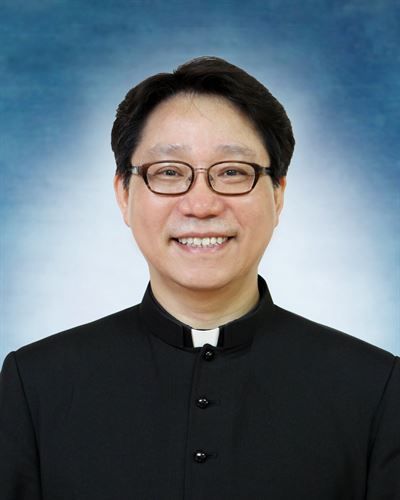
Won Jong-hyeoun, director of the Korean Catholic Martyrs' Museum / Courtesy of Korean Catholic Martyrs' Museum
The exhibition, which opened on Nov. 28 will run until Nov. 27, 2021, the eve of the first Sunday of Advent. Titled “A long wait, an eternal companion,” the exhibition will highlight his journey as one of the earliest Joseon natives to study abroad and aspects of his life as a modern intellectual, according to Won Jong-hyeoun, director of the Korean Catholic Martyrs' Museum.
“Previous exhibitions on Kim have tended to be biographical, but the commemorative exhibition of the jubilee year of Kim's bicentenary puts a focus on the priest as a modern intellectual with a vision for the future of the country and the Church,” Won said in a phone interview with The Korea Times, Dec. 9. “We focus on the last year of his life, featuring events and contemporaries such as Rev. Thomas Choe Yang-eop. The exhibition features 21 handwritten letters and other visual materials that enable viewers to grasp the long journey he made in his short life.”
One of the highlights of the exhibition is an original “complete map of Joseon” made by Kim to facilitate missionaries' travel to Korea. “Kim produced the map in order to pave the way for a safe entry into Korea by missionaries. It is the first map of Korea indicating romanized place names and is a highly valuable artifact that contributes to the dissemination of accurate information about Joseon, which was largely unknown to the Western world at the time.”
The Vatican has taken note of the jubilee celebrations, with Pope Francis sending a prayer through the Vatican Secretary of State, Cardinal Pietro Parolin, that “this outstanding legacy of Korean martyrs will empower all of God's people to work for the preaching of the Gospel and for the expansion of the Kingdom of God of holiness, justice and peace.” During the historic 2014 papal visit, Pope Francis visited and paid his respects to Kim at his birthplace at the Solmoe Catholic Holy Ground in South Chungcheong Province.
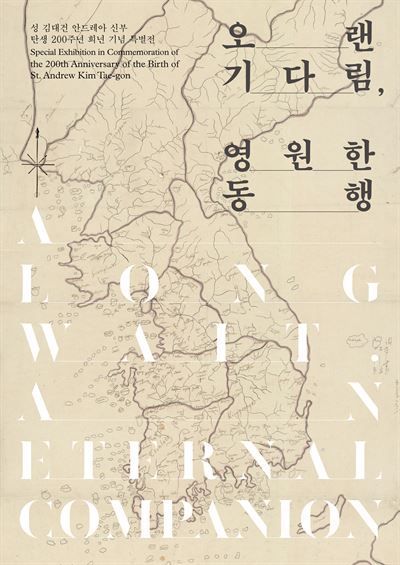
A poster for the commemorative exhibition "A long wait, an eternal companion" at the Korean Catholic Martyrs' Museum/ Courtesy of Korean Catholic Martyrs' Museum
Won says the Vatican's keen attention to the bicentenary has to do with the Korean Catholic Church's special history, marked by the growth of the faith led by laypeople despite more than a century of persistent persecution.
“The history of the Korean Catholic Church is one of persecution and martyrs. In Korea, the Catholic faith started among the laity voluntarily even before the arrival of Catholic clergy. This voluntary acceptance of the Christian faith is considered very unique in the history of the Catholic Church.” Won said.
“The official start of the Korean Catholic Church is in 1784 after a man named Yi Seung-hun was baptized in China, which led to the establishment of a community of faith through baptism here. Father Kim Tae-gon arrived in Macau for seminary studies on June 7, 1837, after walking across China for months, and was ordained a priest on Aug. 17, 1845, at the Jinjiaxiang Church in Shanghai. It took 61 years to produce a priest after the founding of the Korean Church. It is quite astonishing that all this happened during the years of persecution. So in this respect, the Vatican is showing special interest in the jubilee year of the bicentenary of Kim's birth and has encouraged the entire Catholic community in Korea to spend a meaningful year.” Won said.
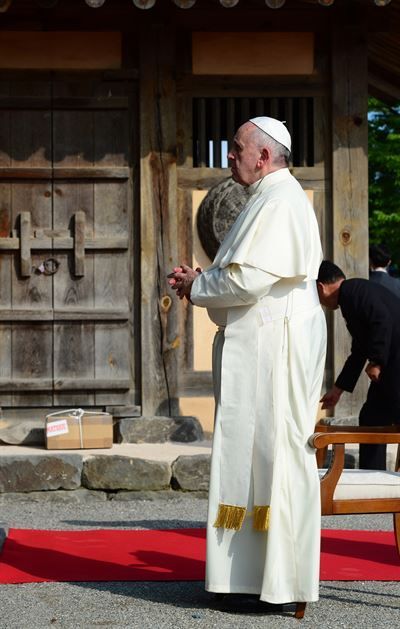
Pope Francis prays at the birthplace of St. Andrew Kim Tae-gon at the Solmoe Catholic Holy Ground in South Chungcheong Province on Aug. 15, 2014. Korea Times file
Kim's faith and martyrdom still resonates in the hearts of many believers today. “We had 100 years of persecution and martyrdom. But what is clear is that the Christian faith is not a journey toward death. Faith, in short, is practicing God's mercy and forgiveness in one's life,” Won said. “About 30,000 people nationwide lost their lives at the end of the Joseon period because of their faith. Martyrdom was about realizing the life of Jesus Christ in their lives. With such a grand purpose, death was not an issue for them. Rather, they believed that God would be with them beyond the boundary of death and gladly gave up their lives in order for the Kingdom of God to be realized within us. This is what Jesus as well as the martyrs died for,” Won said.
In one of the letters Kim wrote in Hangeul, or Korean language, before his death, the priest encouraged believers to hold on to their faith, love each other and “serve God as one body.”
More information on the bicentenary engagements and the history of the Korean Catholic Church, including the life of Father Kim, are available on the websites of the CBCK and the Korean Catholic Martyrs' Museum.