Anniversary Roundtable Women's roles by countries in COVID-19 era
The following are summaries of statements from Ambassadors to Korea Bangladesh, India, Kyrgyzstan, Nicaragua, Pakistan, Rwanda, Thailand and Timor-Leste during a roundtable hosted by The Korea Times, July 15, on women's leadership in COVID-19 era. ― ED.
Bangladeshi Ambassador Abida Islam
For Bangladesh, the first confirmed case of COVID-19 was on March 8, 2020, coming from our expatriates returning from Italy.
To address the COVID-19 pandemic, like many other countries, Bangladesh introduced travel bans, virtual working, lockdowns and most importantly, social distancing.
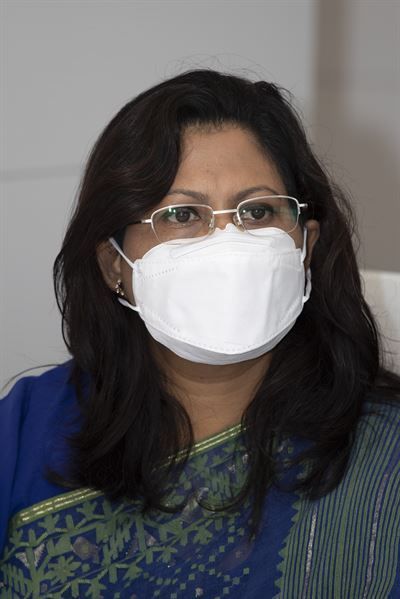
Abida Islam
Instead of locking down the economy of the country, we have locked down specific areas categorizing them as red, yellow and green zones based on the rate of confirmed COVID-19 cases.
Women in Bangladesh are more affected by this crisis than men particularly from economic aspects. The disruption of the global supply chain resulted in the cancellation of over $3 billion worth of orders in our garments industry ― the lifeline of our economy that employs approximately 4 million workers, a majority of whom are women. Many are now unemployed or on the verge of becoming so, though some garment factories are now opening up with reduced workforce.
Usually, 91.8 percent of our women are employed in informal sectors and they perform 3.43 times more unpaid domestic care work on average than men. Thousands of daily women wage earners (domestic aides, workers in SMEs, daily laborers, street vendors, cleaners, sex workers including transgender persons and other informal workers) have lost their livelihoods or are being laid off at a higher rate than men.
Our female migrant workers who went abroad for employment have returned empty-handed due to the economic crises in the destination countries with no hope for reinstatement in the near future.
In this extremely challenging situation, women in Bangladesh are playing a leading role and contributing as frontline fighters through their active participation in policy formulation and execution, and in healthcare services.
In our health system more than 94 percent of nurses and more than 90 percent of community health workers are female who are serving people diligently, at times risking their own health.
Forbes magazine praised the timely initiatives of Bangladeshi Prime Minister Sheikh Hasina, the longest-serving premier of Bangladesh, for successfully addressing the pandemic. It included the evacuation of Bangladesh nationals from China in early February, closing down of educational institutions in early March after the first confirmed case on March 8, encouraging all non-essential businesses to go online, installing screening devices in international airports, land ports and sea ports, and closing non-emergency public and private offices for several weeks.
Things are changing for the better in Bangladesh which is already a champion in women's empowerment. But more needs to be done. There is no option but to raise awareness among society to respect the work performed by women at home and outside.
Stereotypes that prevail in society about the traditional roles of men and women need to be broken. Most importantly, South Korea could adopt a human approach to protect the livelihoods of thousands of Bangladeshi EPS workers who are waiting to return to this country as soon as possible.
Women are generally more law abiding, and naturally more caring, temperamentally cooler and more mature than men. These are extremely important and essential qualities of leadership as well as people to combat any emergency and more so a pandemic like COVID-19. I feel the more women are involved and integrated in the process of addressing the health, economic, domestic and other aspects of COVID-19 challenges, the better the results will be.
Indian Ambassador Sripriya Ranganathan
As on July 14, 2020, India had an active COVID-19 caseload of 310,000 people.
We have done well in maintaining a high recovery rate of 64 percent with about 590,000 recoveries in total and a low death rate of 2.7 percent, much lower than the world average of over 5 percent.

Sripriya Ranganathan
Despite the size of our population, the ratio of our positive cases per million remains the lowest at 538, and that of deaths per million remains at 15 compared to global average of 1,453 and 68.7 respectively. In this context, our testing (we have been testing about 250,000 people every day since the beginning of July) and treatment protocols seem to be effective.
The challenge for us remains in checking of transmission, given the realities of India's large population and densely populated cities. The advantage is that the outbreak is concentrated in some parts of the country leaving vast stretches COVID-19 free. Collective and concerted containment and management efforts by the central government and the state governments/UTs have enabled us to contain the situation to the extent that we have.
The Indian government's $280 billion COVID-19 recovery package includes some special packages for vulnerable sections, including women. Through the Jan Dhan Yojana financial inclusion program, $2.6 billion has been transferred directly to the bank accounts of 200 million women since the outbreak began, creating a social safety net for women. Over 5 million women artisans and weavers will gain access to the market through the government e-marketplace portal.
The government has tried to supply subsidized women-centric products and supplements (iron, folate, calcium) through the public dispensary network. A task force has been set up to examine issues like early motherhood, means of lowering MMR and improving nutritional levels etc. Cash support is being extended directly to pregnant and lactating mothers, with the goal of bringing down malnutrition. The National Commission for Women has come out with comprehensive guidelines for the safety of women during the COVID-19 lockdown.
We have clearly seen that to tackle the pandemic, commonsense precautions are of the essence; such as wearing masks, cleaning hands, maintaining social distance, eating immunity-building foods, engaging in activities like yoga and meditation etc.
The lead role in inculcating such practices at the family level has been taken by women. Apart from this role within the family, women are playing a stellar role in tackling the COVID-19 pandemic on the ground. The ASHAs (Accredited Social Health Activist) network consists of almost a million trained female community health activists, who serve as the first port of call for the rural communities. The ASHAs network has proved to be the backbone for tracing, testing and monitoring COVID-19 patients across the villages and cities.
This apart, women's Self Help Groups in India have risen to the extraordinary challenge of COVID-19 pandemic. They are meeting shortfalls in masks, sanitizers and protective equipment, running community kitchens, fighting misinformation, and even providing banking and financial solutions to far-flung communities.
Women, in short, lead the battle in the family, in the mind and in the frontline health sector.
Kyrgyz Ambassador Dinara Kemelova
Currently more than 300 new cases of COVID-19 are registered daily in Kyrgyzstan and thousands of people need medical treatment. Due to the underdevelopment of the health care infrastructure, despite all efforts of our government, Kyrgyzstan has a lack of qualified doctors, equipment and medicines. Our government is working hard to solve these issues and calls for maintaining social distance.
Our female doctors bravely fight the virus, spending all their time in hospitals. Most nurses in Kyrgyzstan are women. It is they who are at the forefront in the war against the virus. They are our heroes. There are many volunteers who help medical staff in the fighting against the virus.

Dinara Kemelova
In this situation whole Kyrgyz society has mobilized in fighting against COVID-19 with different help including online assistance platforms and rallies.
Due to the lack of hospitals and beds, businessmen, ordinary citizens and public figures came together to expand hospitals. Some people collected financial resources nationwide and abroad to provide hospitals with such medical equipment as oxygen concentrators, medicines, individual protection equipment for doctors and people.
Many Kyrgyz people who live in Korea help Kyrgyzstan, among them I want to single out the Fund for Happy Kyrgyz Women in Korea, headed by Mrs. Rita Osmonova, who did not stand aside and contributed by donation.
I hope with consolidation of efforts of government and society we would overcome COVID-19 crisis.
I am proud that in our region only Kyrgyzstan has had a female president, Roza Otunbayeva, who performed perfectly during the challenging time of 2010-2011.
But as far as the fight against coronavirus is concerned, not gender but a leader’s professionalism plays a big role.
It does not matter whether you are a woman or a man, but if you are a professional in your field, you could find fast and effective solutions to the problem.
However, traditionally the social sector of Kyrgyzstan has been led by women such as the vice-prime minister for social policy. I believe that woman doesn’t overlook any small detail where healthcare is concerned.
Vice-Prime Minister Aida Ismailova in such challenging time is doing her best in the battle against the pandemic, because she is responsible for healthcare, education, labor, elderly people, children and the whole social system which is most vulnerable to pandemic.
I do not believe that coronavirus attacks according to a gender difference. I think the pandemic affected everyone; both women and men. Obviously, elder people and people with weak immunity or chronic diseases are most vulnerable to the virus.
For the social-economic situation the COVID-19 crisis affected the well-being of poor households whose members lost jobs and or whose business has suffered. Actually many women in Kyrgyzstan depend on their husband’s earnings, because only 48 percent of women are involved in the labor market compared with 75.8 percent of men.
To mitigate such divides, we must follow the U.N. principle of “leave no one behind” and support the most vulnerable people.
The most common problem women face in Kyrgyzstan is the lack of women’s health care and developed health care infrastructure. According to statistics in Kyrgyzstan per 100,000 live births there are 76 maternal deaths.
In fulfilling the U.N. Sustainable development goals Kyrgyzstan is still facing the challenge of the 3rd Goal, which states “Ensure healthy lives and promote well-being for all at all ages.”
In this regard our health care system needs reform. So I hope that by joint projects the government of South Korea would assist Kyrgyzstan in healthcare reform and improving capacity building by sharing its knowledge and technology and through investment.
Nicaraguan Ambassador Wendy Carolina Palma De Beckford
Nicaragua implemented a singular strategy, following the recommendation of World Health Organization but adjusting it to the unique health model that Nicaragua has in place, which is based on the reality and conditions of the country, with a preventive approach and proactive actions.
Within this model we have a balance strategy between the pandemic and the economy, vigorously fighting COVID-19 without closing our economy. The policy is based on the fact that 40 percent of the population lives in the countryside and 80 percent of urban workers belong to the informal sector and earn their livelihood on a daily basis. At the same time, defending the economic recovery of an economy weakened by the attempted coup d'etat in April 2018.

Wendy Carolina Palma De Beckford
The country has been well prepared for this fight against COVID-19, due to strengthening of the health system with the construction of 19 hospitals since 2007; early preparation that started early January 2020, and with the establishment of an inter-institutional commission, to ensure a comprehensive approach and ensure surveillance, early detection of suspected cases.
It's important to highlight the success that countries led by women are having in the fight against COVID-19, in the case of Nicaragua it's important to mention that under the leadership of President Daniel Ortega and Vice President Rosario Murrillo, female presence in the organs and committees where strategies to stop the virus are designed is strong; more than 50 percent of ministries of state are currently led by women (nine out of 16 ministers are female) and have seeing significant successes in the implementation of both preventive and containment measures in the fight against COVID-19.
In regards to gender inequality, the COVID-19 pandemic has highlighted the fact there is still a ways to go in our efforts to reduce the gender gap and an important mechanism going forward will be the incorporation of gender perspective in data collection and analysis to help minimized the long term impact of the pandemic while, recognizing the predominant role of women in overcoming health and socioeconomic crises.
We must urgently come together to minimize COVID-19's impact on public health and limit its potential for further disruption to lives and economies around the world. In this regard the Republic of Korea has played an important role with technology and knowledge sharing. We are grateful for the assistance provided to Nicaragua and we hope to continue strengthening our relation with Korea.
Pakistani Ambassador Mumtaz Zahra Baloch
The first COVID-19 case was detected in Pakistan on Feb. 26. The incidence of COVID-19 cases was controlled with smart lockdowns. However, COVID-19 cases have risen sharply recently with the easing of lockdowns. Until July 13, 254,000 confirmed coronavirus cases were registered with 171,000 recoveries and 5,300 deaths.
Our healthcare system was stretched as hospitals struggled to provide out-patient services limiting access of disadvantaged groups and rural communities. The annual immunization campaign was delayed as healthcare workers were deployed for COVID-19 response.

Mumtaz Zahra Baloch
The requisite medical equipment was procured from suppliers around the world and factories were encouraged to start domestic production. Resultantly, local production of masks, PPEs, essential medicine, ventilators has started.
Lockdowns restricted public's access to quality healthcare and caused economic hardship. GDP decline is expected with which are assessed at a loss of Rs 1.2 trillion in limited lockdown scenario, Rs 1.96 trillion in moderate and Rs 2.5 trillion in case of complete lockdown for a three-month period. Between 12.3 and 18.5 million people will become jobless.
Federal government decided to take a balanced approach simultaneously protecting people's health and livelihood. It worked with stakeholders to develop a coordinated response. Partnering with local administrations, volunteers and NGOs, food rations were distributed. Low-income individuals received relief in payment of electricity and gas bills. Banks disinfected currency notes while ensuring disinfection and quarantine of all cash collected from medical facilities. A Rs. 1.2 trillion economic relief package was introduced. Of this, a total of Rs. 150 billion was allocated for low-income groups.
As COVID-19 affects disadvantaged groups disproportionately, poor women are doubly at risk. They do not have adequate savings and have limited access to bank loans. They also face barriers in applying for benefits because of limited education and digital divide.
Being primary care givers, women are in the high-risk category. Poor women have limited access to menstrual products and contraceptives. As participants in the informal economy, they rarely have health insurance or unemployment benefits. Home-based workers are severely affected with the disruption of supply chains and transportation services.
Pakistan's COVID-19 response prioritizes. Women were provided with menstrual-care packages and access to maternity services were ensured.
Pakistan increased the number of beneficiaries under Benazir Income Support Programme (BISP) and also raised their monthly stipend. A cash transfer programme, BISP reaches over 5.8 million families and targets the ultra-poor. Primary beneficiaries are women.
We have started developing policies and plans for the post-COVID-19 situation. A project is being developed to revive microenterprises, especially women-owned businesses increasing their access to online platforms for selling their products.
An awareness campaign is being launched to encourage girls' return to schools to prevent dropouts. Programmes are being developed to facilitate women's employment, such as safe transport, childcare support and protection from harassment.
Rwandan Ambassador Dalila Yasmin Amri Sued
On March 15, the government took the preventive measure going into lockdown. This allowed the reduction of the possibility of massive cluster transmissions from the onset. Tracing teams took over and strong campaign of prevention, that had started earlier, continued. Confirmed cases would be treated at a dedicated medical center and their contacts traced.
We reached a total of 1,582 confirmed cases by July 20 with the unfortunate death of five people so far. On April 19, the country started to re-open partially. Social distancing measures were implemented at all levels.

Dalila Yasmin Amri Sued
A curfew instituted and nightlife entertainment closed. School closures will remain till September 2020.
Partial lockdowns are applied when a series of cases are detected in an area. Beginning the month of July, an exercise of street testing started twice per day in strategic areas. Candidates are randomly selected, if they consent, they will take a COVID-19 test. This will provide factual information and will lead to tactical response activities.
Technology has been key. All businesses were required to accommodate digital payment with mobile money. Drones were used to spread prevention message to the population. Robots are used on the frontlines, interacting with patients. Starting Aug. 1, the Kigali International Airport will reopen. Robots will be used at the airport to check travelers’ temperatures, mask use and respect of other social distancing measures.
The impact of these turbulent times on the economy is undeniable. We were expecting a growth of 9.5 percent this year but it has now gone to 2 percent. Tourism and MICE have been hit by the travel stop. A two-year Economic Recovery Fund (ERF) facility was established by the government to work with the private sector. The fund is expected to back the domestic production of essential goods and support business highly impacted by the crisis.
Rwanda is in the top 10 countries in the world when it comes to closing the gender gap.
It is the first when it comes to representation of women in parliament. This presence of women at leadership level has enabled taking into account the situation of women during this economic crisis.
Women’s leadership is strong in the public space but improvements are needed in the private sector.
The private sector has been encouraged to put in place special measures to safeguard women’s employment and for financial institutions women focused products that enable them to survive and thrive during these unprecedented times. The Korean response to the pandemic has been outstanding.
We look forward to continuing to exchange and cooperate to come up with innovative and best practices in fighting the coronavirus pandemic.
Thai Ambassador Rommanee Kananurak
Thailand has managed to keep the numbers of COVID-19 infections and deaths relatively low.
As of July 12, 2020, the total number of confirmed cases was 3,217. Of them, 71 were being treated in hospitals; meanwhile the total number of deaths remained as 58.

Rommanee Kananurak
According to the Department of Disease Control, Thailand has passed through the first outbreak wave since there have been no reports of local transmission for 48 consecutive days.
Thailand has not pursued mass-testing, but active case-finding in at-risk groups.
Recently, the combined effort from both public and private sectors to tackle the COVID-19 situation, with good cooperation from the Thai people, has enabled Thailand to enter phase 5 of the relaxation of measures on July 1.
The roles of women in the healthcare services, education and households have become more significant than ever during this COVID-19 pandemic.
Thai women have played a significant role in providing healthcare services like in many countries. Furthermore, a large number of women have taken part in the legion of over 1 million Village Health Volunteers, who have effectively expanded the public healthcare system to each and every remote village across the country.
The health volunteers are predominantly women who account for about 80 percent. To date there are approximately 1.05 million volunteers throughout the country. They provide vital health information to villagers on a personal basis, a simple yet highly effective preventive measure.
This volunteer network was established in 1977 as part of a primary healthcare system to raise awareness and encourage community participation in order to deal with the shortage of medical personnel.
The project was built on the spirit of volunteerism and sense of kinship among community members. Volunteers must be literate, have an occupation, live and work in the village, be respected by others and be willing to help the community. They would be trained and supervised by provincial health officials.
During the COVID-19 pandemic, they have been knocking on people's doors to give advice on personal hygiene and to identify people at risk. These volunteers also reach out to marginalized and migrant communities to provide knowledge and preventive recommendations.
The promotion of Village Health Volunteers and Migrant Health Volunteers are among our successful measures in responding to COVID-19. These volunteers have contributed to the containment of the outbreak.
The health volunteer model can certainly be applied anywhere. An extensive and proficient network of volunteers can empower the people to take ownership of their own health status as well as building resilience and preparedness for future shocks and crises.
Evidence indicates that health emergencies disproportionately affect women and girls. The poor are also among the hardest hit. Several measures have been taken by Thailand to support women and girls amidst the COVID-19 crisis.
To provide living necessities to women and girls affected by the pandemic, the Ministry of Social Development and Human Security opened eight Women's Development Centres across the country to provide unemployed and homeless single mothers and women with shelter, food and occupational training.
In addition, fully aware of the plight of female entrepreneurs, the Thai Women Empowerment Fund has extended a debt moratorium to relieve the economic impact of its members affected by the pandemic. So far, 249,015 women have benefited from this scheme.
As we move forward from the emergencies to the recovery phase, we need to make women's empowerment a priority as part of gender-based violence prevention and building resilience. This requires working with all stakeholders, including women and girls themselves, at all phases of national response to ensure that measures taken are gender-sensitive and correspond well with the real needs of women and girls.
We must also recommit ourselves to ending violence against women in all its forms once and for all. We should continue to work together to address violence against women and achieve gender equality.
Timor-Leste Ambassador Adalgisa M. S. Ximenes
Timor-Leste's recorded COVID-19 statistics have been relatively low compared to many other nations thanks to the efforts of the women and men of our proud nation, with special praise to be given to the women who are playing a great role in fighting the pandemic.
Timor-Leste recorded a total of 24 confirmed positive COVID-19 cases with four suspected cases. All patients have recovered and since May 15 there have been no active cases in the country.

Adalgisa M. S. Ximenes
The country's minister of health is a woman who leads the Inter-ministerial Commission on matters dealing with COVID-19. In parliament, the presidents of standing committees for the Health and Finance Commission are women. These two commissions are very important in making decisions about subsidies and state finance as related to COVID-19. The spokesperson for the crisis management team is also a woman. Many female nurses and female police officers also work on the front lines of public health and safety.
Likewise, the exemplary actions of women from around the world warrant mention as they have become a source of pride for all women.
President of Taiwan, Tsai Ing-wen, led the task of controlling the spread of COVID-19 there by quickly activating the country's Central Epidemic Command Center from early January, restricting travel and introducing quarantine measures. Her leadership in the face of the pandemic is to be applauded.
The Prime Minister of New Zealand, Jacinda Ardern, delivered a message via a video uploaded to Facebook stating the importance of people remaining at home, stressing that the move was to save lives. She held press conferences every day from her residence exhibiting her calm style of communication. Her appeal brought New Zealanders together to protect each other and their country. Neighbors showed care for neighbors, helping the vulnerable, and being willing to make personal sacrifices for the greater good.
Korea also can be proud of its women who have exhibited powerful leadership amid the pandemic, notably Jeong Eun-kyeong, the head of the Korea Centers for Disease Control and Prevention. She became a very well-known figure in South Korea after initiating a strategy to increase the number of tests and patient contact tracing. This strategy has brought South Korea considerable global attention as one of the countries to be emulated in the handling of COVID-19.
In Timor-Leste, each woman assumes a role according to her responsibilities to help deal with this situation. As I touched on above, in almost all aspects, women assume roles and responsibilities in decision-making positions, even in everyday life.
To tackle challenges for women in the post-COVID-19 era, the government, at an executive level, is carrying out programs to assist women who reside in rural areas by including them in the making of masks by hand. The scheme has two objectives: Firstly, to make masks available for use by the makers and their family members, and secondly, to be sold on to generate a source of income for those women.
On a bilateral level our government has excellent cooperative relations with various partners including WHO, U.N. Women, UNICEF, the embassies of New Zealand, Indonesia and Australia and with Korea through KOICA-KIDC (the Korea International Development Cooperation Center). Today the Korean government will send 48 boxes of masks to Timor-Leste - a total of around 200,000.
The assistance provided by them will advocate and raise awareness through the distribution of these masks and information on how to use them, both at schools and in the community.
At the same time, in Timor-Leste, women's organization network Rede Feto is also making a difference.
Rede Feto works to promote gender equality and women's empowerment through advocacy, networking, and capacity building. Its member organizations include key players delivering services and carrying out advocacy on issues of concern for women, particularly those living in rural areas.
Established in 2000 during the first Timor-Leste National Women's Congress, Rede Feto is built upon a constituency of 14 strong women's organizations from around the nation that all want to advance women's rights and create a strong platform for women's voices in the country's political and economic arenas, as well as on a community level.?
Currently, Rede Feto also takes an active role in helping women through the pandemic via advocacy programs. Together with U.N. Women, Rede Feto has conducted research to help it advocate for all women, especially in relation to government-provided subsidies.