Joseon Images Streetcars of Seoul: 'first step toward civilization'

A streetcar in 1902 from the Bostwick photo album / Seoul Museum of History Exhibit
By Robert Neff
When streetcars were introduced into Seoul in spring 1899, Harper's Weekly declared them to be “the first step toward civilization in the Hermit Kingdom.” They were relatively inexpensive (a ride, depending on the distance, cost between two cents and 15 cents), accessible to all (regardless of social status or gender) and viewed as cosmopolitan and fashionable. By the end of the year, the average daily patronage was 2,068 passengers. In 1910, there were 37 streetcars and the daily average passenger number was 9,810. By 1935, the daily patronage was about 150,000 served by 154 streetcars.
In the beginning, however, things did not run so smoothly. A drought plagued the country and many superstitious people believed the streetcars were responsible. The claims were many: The cars sucked away the clouds, the electrical cables interfered with the rain spirits, the power plant was built on hallowed ground and the great dragon that slept beneath the city was disturbed by the streetcar tracks.
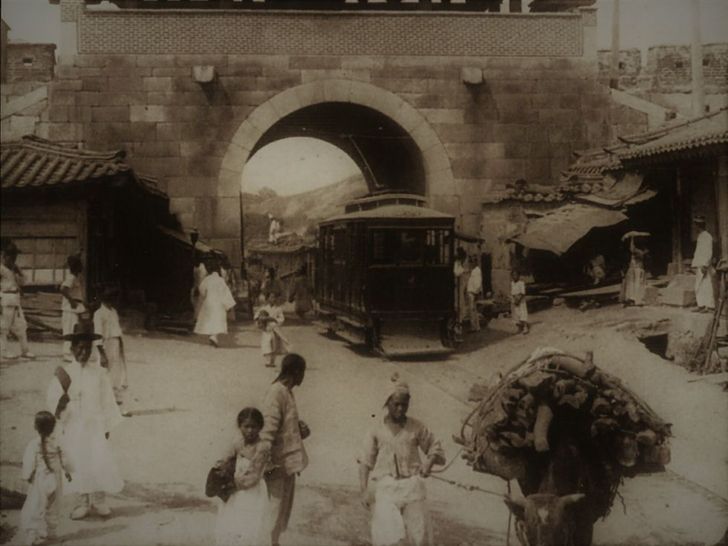
A streetcar passes through a city gate circa 1903. / Robert Neff Collection
There were also accidents. After a child was inadvertently struck and killed by a streetcar, a large mob burned two streetcars and threatened to destroy the power plant. As a result, the streetcar service was halted for several weeks.
Interestingly, shortly after the streetcars ceased running, it began to rain.
Accidents sometimes occurred because of superstitions. People plagued with persistent ghosts or malevolent spirits would sometimes jump in front of speeding streetcars, cars and even trains in the belief that as the deadly vehicle passed them, it would smash into the supernatural pests and take them away. Of course, timing was essential so there were accidents.
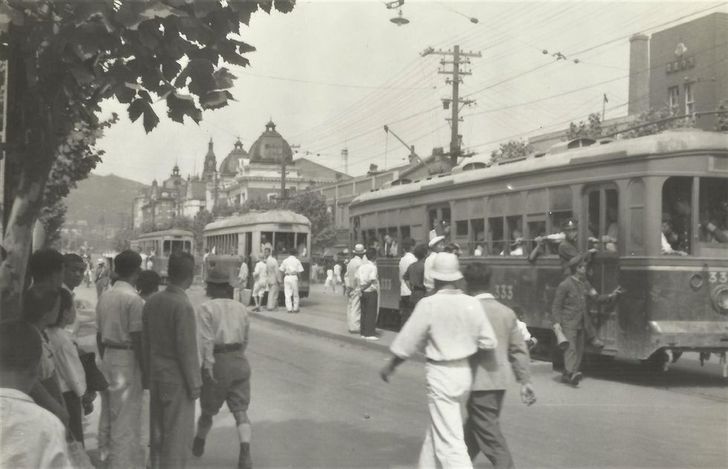
Streetcars and passengers circa late 1950s / Robert Neff Collection
In an email correspondence, Richard F. Underwood, 93, shared a story he was told by his mother, Ethel. In the early 1910s, she was on a streetcar in Seoul when a Korean boy, carrying a large tray of cold noodles, suddenly dashed in front of the car. The squeal of the brakes, followed by the scream of the boy and a large jolt as the car ran over an object seemed to indicate the boy's attempt to dispel the evil spirit plaguing him had cost him his life.
Convinced the boy's body was horribly mangled under the wheels, Ethel turned away but then, seconds later, heard him still screaming. It horrified her to think of the terrible agony he must have been suffering, trapped beneath the wheels of the streetcar.
“Then suddenly she saw the boy, unharmed, but screaming at the driver. He had escaped destruction but the food he was carrying was all ruined, crushed by the wheels, and he was mad!”
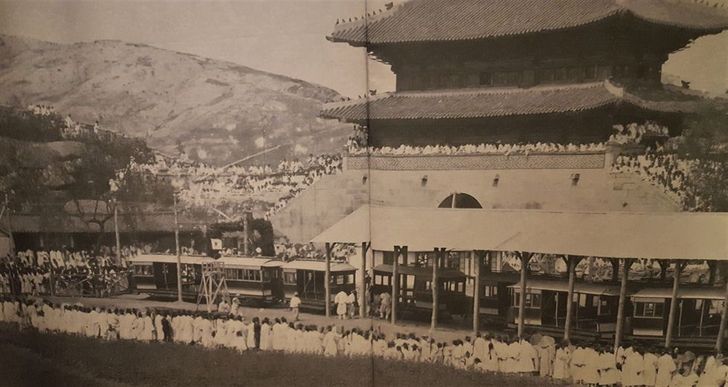
The streetcar shed in 1899 / Seoul Museum of History Exhibit
Politics also played a role in streetcar operations. The initial drivers were Japanese with Korean conductors but, following the mob's destruction of the cars, the Japanese were replaced with Americans. Later, the streetcar crews were entirely Korean. Underwood recalls that as a boy in the late 1930s, he had to use Japanese when riding on the streetcars as “the Korean conductress and the Korean driver were not allowed to speak or respond to Korean,” though they occasionally lapsed.
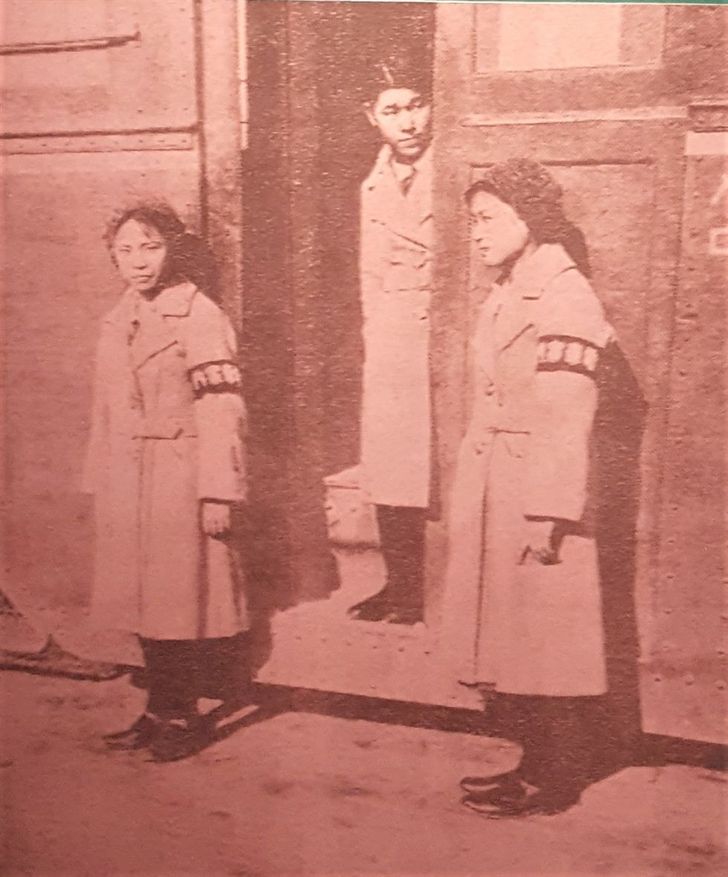
Streetcar conductresses circa 1930s / Seoul Museum of History Exhibit
Following liberation in 1945, Seoul's streetcars were in horrible condition and only a couple dozen or so were in operation. According to Underwood, that number got even smaller when an American “Army 2.5-ton truck ran into a streetcar (or vice versa) at Gwanghwamun corner and the poor wooden streetcar was totally smashed. The [onlookers] were amazed and excited that a mere truck could destroy a mighty streetcar, the king of the highway!”
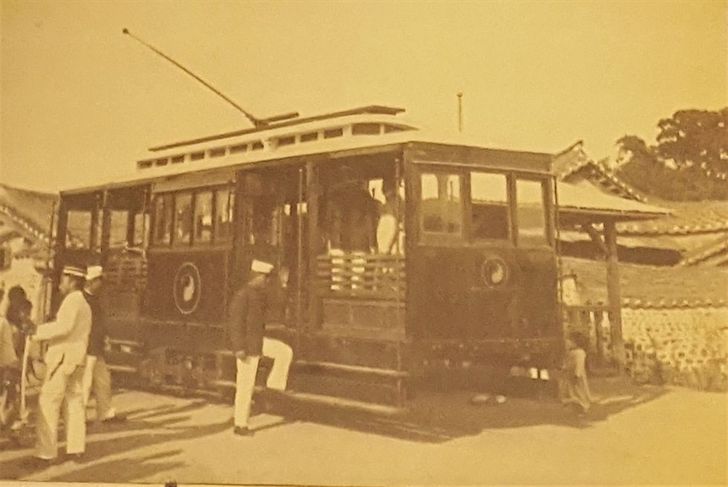
Emperor Gojong's private streetcar / Seoul Museum of History Exhibit
The Korean War also brought devastation to Seoul's streetcars. In 1951, the city had a fleet of 111 streetcars but only half were operable. Additional streetcars had to be brought in from the U.S.
According to Andrei Lankov, the streetcars' peak was in the 1960s when 213 cars served more than 350,000 people daily and were known as “the feet of the people of Seoul.” But the streetcars could not compete with other forms of transportation ― mainly buses ― and maintenance and operating costs were far greater than the revenue brought in.
On Nov. 30, 1968, Seoul's streetcars ― once heralded as “the first step towards civilization” ― made their final run.
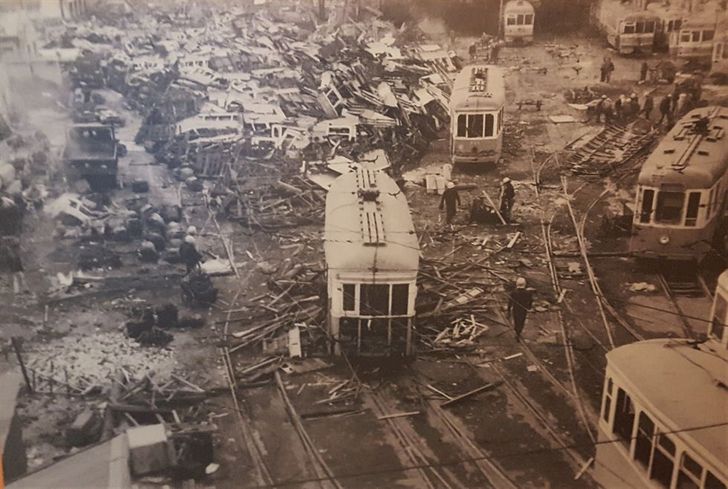
Streetcars being junked in 1968 / Seoul Museum of History Exhibit
The only streetcars that can be found now are the one on exhibit in front of Seoul Museum of History and, ironically, the handful of buses made to look like the streetcars.
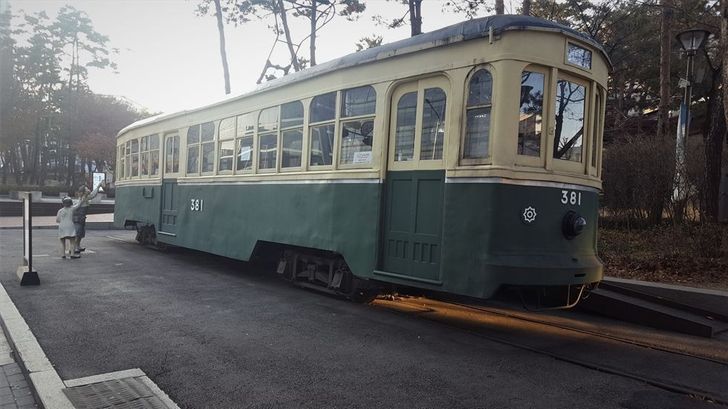
One of the only two remaining Seoul streetcars sits in front of the Seoul Museum of History. / Robert Neff Collection
Seoul Museum of History is currently holding an exhibit titled “The Trams of Seoul” until March 29.
Robert Neff is a historian and columnist for The Korea Times. He can be reached at robertneff103@gmail.com.