INTERVIEW 'Abe's motivation is more personal'
This is the second in a series of interviews with political experts and experienced analysts assessing the impact of the ongoing South Korea-Japan trade row after Tokyo removed Seoul from its list of trusted trading partners receiving preferential treatment in exports. ― ED.
By Park Ji-won, Jung Da-min
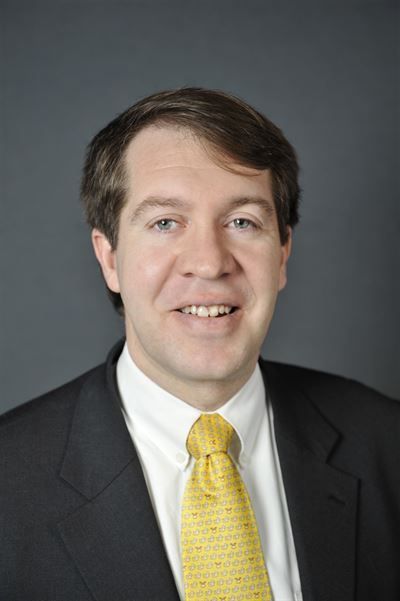
Scott Snyder, chief Korea analyst at the Council on Foreign Relations.
Japanese Prime Minister Shinzo Abe's handling of the ongoing trade friction with South Korea is “short-sighted” as his primary motivation is personal interest, the chief Korea analyst at the Council on Foreign Relations (CFR) said in a recent interview with The Korea Times.
“I do not think that Abe's primary motivation is driven by the desire for domestic political gain. I think it is more personal than that, especially because Abe has had the experience of reaching an agreement with (former president) Park that the Moon administration failed to honor. Any time someone experiences a break-up or a breach of contract of this sort, it is bound to leave a bad taste in one's mouth,” Scott Snyder said in the written interview.
The expert at the Washington-based think tank viewed Japan's recent decision to remove South Korea from its list of most trusted trading partners as “a strategy that attempts to mobilize leverage to balance against the negative effects of China's rise.” However, he said Japan's handling of relations with South Korea was short-sighted.
He also noted that the current downturn in Seoul-Tokyo relations is fundamentally different from previous ones as both governments are failing to divorce political and economic issues which is making things worse.
“The factor that makes this downturn in South Korea-Japan relations different is the inability of both governments to contain specific issues from spilling over from one domain into the other. Disputes are not being contained and managed but rather are spilling over to poison the overall relationship,” Snyder said.
From his perspective, the ongoing conflict between the neighboring countries is largely because of Japan's strategic move to manage negative effects following China's rise.
“South Korea-Japan economic news contributes at the current moment to a piling-on effect with other economic developments such as the U.S.-China trade war that push collectively in the same direction toward a possible global economic downturn following an extended period of growth. South Korea is particularly vulnerable to such a downturn,” said the senior CFR analyst.
Regarding potential security impacts on trilateral military cooperation with the U.S., Snyder said the deteriorating bilateral ties are directly challenging the underlying assumption in Washington's security strategy toward Asia.
“The United States will find ways to maintain a minimum degree of cooperation with each other. Washington's position in East Asia is increasingly being challenged externally by China and North Korea, so it is an unwelcome distraction to have to spend so much time on internal issues such as the metastasizing South Korea-Japan tensions.”
His assessment was in line with growing concerns that what have been social and economic tensions could boil over and may destroy the key intelligence information sharing arrangement GSOMIA (General Security Of Military Information Agreement).
Washington wants to retain the agreement despite warnings by the South Korean government that it might terminate the pact. The United States is seeking to use the pact as a “platform” to build strengthened defense cooperation between Seoul and Tokyo. If Seoul decides to terminate the agreement, that could impact the United States' long-term strategy in East Asia.
Snyder, senior fellow for Korea studies and director of the program on U.S.-North Korea policy at CFR, said, however, that he would not call the worsening bilateral relationship a “crisis,” though he added South Korea is faced with the challenge of managing multiple problems simultaneously.
“Presumably, the South Korean government has a comprehensive approach based on its view of South Korea's national interest that will guide it to correctly prioritize and work through all these issues in a coherent manner.”
President Moon Jae-in should pursue a “two-track approach” in addressing the matter, he said. “The reason for that is because the Moon administration's strategy in dealing with history issues has failed. I would like to see the Moon administration take necessary measures to return to its original two-track policy.”