Affinity, GIC, AlpInvest exit Hyundai Card

The Hyundai Card logo hangs on its headquarters building in Seoul in this file photo. Korea Times file
Card firm allowed to pursue longer-term IPO plan
By Park Jae-hyuk
Affinity Equity Partners, GIC and AlpInvest Partners sold their stakes in Hyundai Card to Taiwan's Fubon Financial, apparently to divest from the Korean credit card company that has shown slower-than-expected progress in its initial public offering (IPO).
According to the Taiwanese firm's regulatory filing, two of its subsidiaries ― Fubon Life Insurance and Fubon Commercial Bank ― bought common shares of Hyundai Card for 13,532 won ($11.50) per share last Friday from Consumer Preferred Choice, Complete Logistic Solutions, AlpInvest Partners Co-Investments 2015 I, AlpInvest Partners Co-Investments 2015 II and AlpInvest Mich.
Consumer Preferred Choice is Affinity's special purpose vehicle (SPV) established for the Hong Kong private equity firm (PEF) to acquire a 9.99 percent stake in Hyundai Card, while Complete Logistics Solutions was set up by GIC for the Singaporean sovereign wealth fund to buy a 9 percent stake in the card firm. AlpInvest's three SPVs were used for the Carlyle Group subsidiary to take over a 5.01 percent stake in Hyundai Motor Group's credit card unit.
Fubon's filing did not specify the exact amount of shares its subsidiaries bought, but the sellers are said to have sold their entire 24 percent stake in Hyundai Card for about 520 billion won.
“It seems that our previous shareholders started looking for a buyer of their shares, due to the delay of our IPO,” a Hyundai Card spokesperson said Tuesday.
Hyundai Card has yet to submit a regulatory filing to disclose the change in its shareholder structure, but the spokesman said that the company has been able to pursue a longer-term IPO plan with various other growth strategies.
“Because the investors that demanded our IPO sold their shares to a third party, we have been free from pressure,” the spokesperson said. “We will need to pursue a longer-term strategy, taking into account the circumstances of both our company and the market.”
He also did not rule out the possibility of the company reconsidering its IPO plan from scratch.
Fubon is regarded as a “white knight” investor that can defend Hyundai Card from hostile acquirers, in light of the long-lasting strategic partnership between the two companies.
Hyundai Commercial, an affiliate of Hyundai Card, is holding a 20.29 percent stake in Fubon Life's local subsidiary, Fubon Hyundai Life Insurance, as its second-largest shareholder. In addition, several representatives from Hyundai Card and Hyundai Capital, the card firm's other affiliate, have participated in the life insurer's management.
Given that Fubon became one of the major shareholders of Hyundai Card, its representatives are also expected to join the card firm's board of directors in the near future, replacing those sent by previous investors.
“Fubon understands our orientation and that of our affiliates well,” the Hyundai Card spokesperson said.
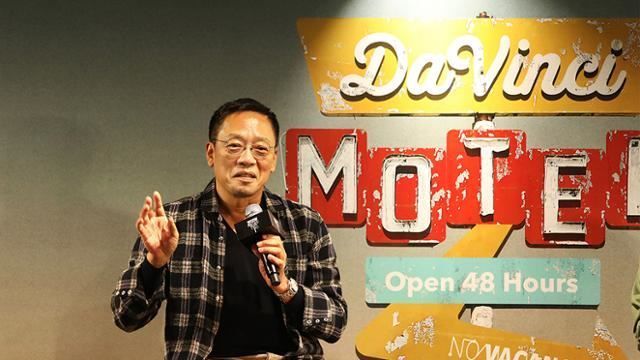
Hyundai Card CEO Chung Tae-young / Courtesy of Hyundai Card
Affinity and the two other investors based abroad had been demanding that Hyundai Card go public within this year, when they bought their shares from General Electric for 370 billion won in 2017. They were also given the right to sell their shares to Hyundai Motor Group, the largest shareholder of Hyundai Card, if the card firm failed to go public by the deadline.
The local automotive conglomerate was said to have promised at that time that Hyundai Card would be listed on the stock market by January 2020, so in 2019 Hyundai Card hired NH Investment & Securities and Citigroup Global Markets Korea Securities as the lead underwriters.
Hyundai Card CEO Chung Tae-young said earlier he wanted the listing to be deferred until 2021 to reach a more favorable IPO price.
Its IPO has become less clear since March, when it canceled a contract to acquire a 50 percent stake in Finance Company Limited for Community (FCCOM), from Vietnam Maritime Commercial Joint Stock Bank (MSB), due to the COVID-19 pandemic.
The credit card firm's first attempt to make a direct entry into a foreign market was seen as an effort to raise its valuation leading up to its IPO by exploring new income sources in Southeast Asia, but its spokesperson said that the company has not made any attempts to enter the Vietnamese market since the cancellation.
Some market observers regarded the card firm's aggressive collaborations with various other companies to release private label credit cards (PLCCs) as alternative ways of raising its valuation, but Chung denied any correlation between the PLCCs and his company's IPO.
“An IPO is a kind of money game,” he wrote on Facebook last October. “If the management drives a company from the perspective of a money game, it will lose its long-term judgment and precious time for innovation. Doing so is no good for shareholders.”