My Trip to Aomori, Japan for three nights and four days
.jpg?w=728)
A Japanese musician plays the shamisen.
By Choi Yearn-hong
AOMORI, JAPAN — It has been many years since I last visited Aomori, Japan. My previous visits were mostly academic, such as research on Japan’s low-level radioactive waste disposal sites in Rokashomura.
This time, I was looking forward to this trip purely for pleasure, such as soaking in the hot springs and delighting in the apple pies for which the region is famous. The delicious and sweet Fuji apples produced in this province are known to be among the best. Aomori’s greatest production is of the Fuji variety, which is grown in the area centered on Hirosaki known as the Tsugaru region. Fuji apples have a moderate acidity with a pleasant crunchy texture.
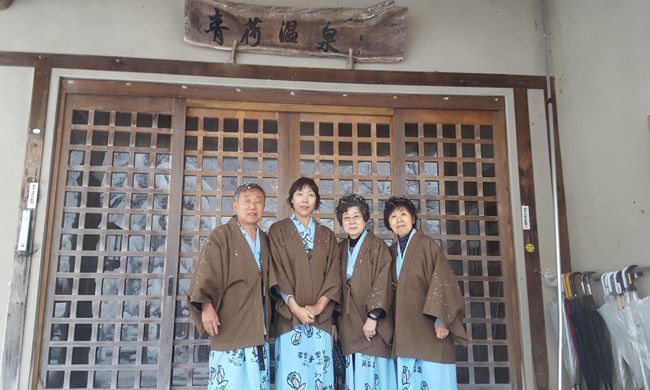
Aoni hot spring
Fuji apples have a moderate acidity with a pleasant crunchy texture. The taste of fresh apple juice will really open your eyes, too. If you visit Aomori, you may be surprised by authentically delicious apples. way of baking apple pie may be unknown to me, but it is certainly with a pleasant crunchy texture.
In the last week of November, I returned to Aomori, Japan, via Seoul. Aomori is located on the northern island, just south of Hokkaido. The flight was a little more than two hours non-stop from Seoul. Korean Air has frequent flights scheduled daily to Aomori. I love the word, Aomori, as much as I like the words Niagara, Kentucky and Kankakee, and other Indian names, in the United States.
Aomori literally means blue forest; though it could be translated as "green forest." The name generally refers to a small forest on a hill near a town or village. This forest was often used by fishermen as a landmark for navigation. A different idea suggests that the name might have been derived from the Ainu language spoken by the Japanese aboriginal people in the northern prefectures.
If you are interested in archeology and that pre-historic time, you are in for a delightful reward and may fall in love with the area. It has been populated extensively since prehistoric times. The most famous archeological site are the Sannai-Maruyama Ruins located on southwest outskirts of the city center, dating back to 5500-4000 BC. The Sannai-Maryuyama Ruins is shown in the photograph. It is a must for sightseeing.
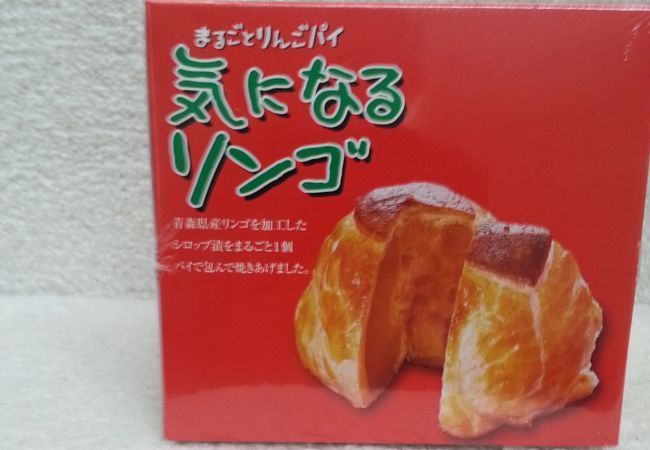
Apple pie
Aomori ,is the capital city of Aomori Prefecture. As of September 2015, the city had an estimated population of 288,029. The total area of the city is 824.61 square kilometers (318.38 sq mi).
My most recent trip had only one purpose, seeking and enjoying just simple leisurely pleasure with my wife and friends. We had an excellent guide who was fluent in Japanese leading us to explore the late autumn beauty of the Japanese seaside and hot springs. We spent three nights and four days as we planned for the trip, splitting between the City of Aomori with the area of the northern peninsula and Aoni, one of the famous hot springs of Japan located in the mountains southwest of the City of Aomori.
We spent our first day in the city.
We checked into the Hotel Passage not very far from the train station. The memorable highlight to me was the Aomori Museum of Art where three of Marc Chagall‘s major works are on permanent exhibit on three walls. The paintings were done by this French-Russian artist in 1942 as a refugee fleeing to the United States from Nazi persecution. The paintings are the backdrops of the ballet “Aleko,” requested by the New York ballet company, the Ballet Theater. Aleko was a ballet by Rachmaninov, the libretto based on Pushkin’s poem "The Gypsies." It has four acts, but only three are displayed.
The Gypsies:
First Act: Aleko and Zemphira by Moonlight;
Second Act: The Carnival;
Fourth Act: A Fantasy of St. Petersburg.
His painting for Act Three is located in Philadelphia. No photography was allowed.
The museum opened in 2006 with Chagall’s works, first on loan from the Philadelphia Museum of Art, and then purchased for a permanent exhibit.
In addition to these works, we enjoyed the works of Aomori-born Kojima Ichiro, a photographer known for depicting life in Japan during war and peace of the 1930s and 1940s, as well as Japanese calligrapher-print artist Munakata Shiko’s works. I found Shiko’s calligraphy of Tang poet Tufu’s poems very impressive.
After we returned to the city center near the railroad station, we enjoyed the Japanese style dinner of sushi and sasumi with sake, while appreciating traditional Japanese string music, Shamisen, by a female musician.
The next day, we took a day trip by rental car to explore the northernmost tip of Honshu, Shimokita Peninsula. The axe-shaped Shimokita-hanto faces the Pacific Ocean and the Tsugaru Strait, and is in the northeastern part of Aomori. This rugged land, both beautiful and majestic, is the creation of dynamic gales and strong raging waves. The white sands and blue pines surrounding Fujizaki Cape and Lake Tawada are permanently imprinted in my memory.
There are a number of scenic spots on the Shimokita-hanto Peninsula, such as Cape Ooma, which is the northernmost promontory, and Cape Shiriya, where the chalky lighthouse stands gracefully. The area is also known for Wakinosawa National Park, which houses Japanese monkeys under national protection. They are wild animals in the northernmost region in this world. It was a bit strange to see monkeys in chilly November weather under the cold sea wind. Nonetheless, we enjoyed their friendly nature as they approached our car with no fear.
Darkness fell quickly when we were heading to the city of Aomori. The ride was pleasant even in the darkness, passing by idle countryside and towns. After we returned the rental car at 8 pm, on the way to our hotel, we stopped by a small café on the roadside operated by one man in a very limited space serving sushi, sashimi, udon noodle soup and sake. We filled the little cafe occupying all the six seats. We enjoyed everything he served.
The following morning, we headed to Aomori Station for our final destination, the Aoni Hot Spring via Hirosaki. While we were waiting for our train, we enjoyed delicious udon noodle soup. It is difficult to find bad food in Japan! From Hirosaki, we took a local bus to Nijinoko, the end of the bus line. When we arrived at the Nijinoko Car Park next to Autumn Lake, an Aomi shuttle bus waited for us. From there to the hot spring, it took about 15 minutes. We then crossed two mountains. The visitors were all silent as they looked at the beauty of the mountains in the bus all the way until they arrived at the hot spring in the valley between the mountains.
This spring, with just one dim lamp light, is in secluded spot, but still attracts tourists because of its serene meditative nature. There was no electric power or other manmade facilities around the hot spring. The trip was well worth it as we got into the spring, warming our bodies in the cold autumn air, with its comfortable 39 degrees Celsius temperature. After the hot spring, we enjoyed a delicious feast again. Seeing the meal in a photo, we knew what we wanted to order.
The serenity of the experience was enhanced as it started to snow that evening. The snowfall continued into the next morning, blanketing the mountain, exposing only the hot spring water flowing gently with steam rising. It was a beautiful scene I should never forget. I spotted one small bird look like a lark, singing in the snow outside my room window. Another bird joined to make a pair. All lovely.
The next day we returned to Aomori Airport by taxi, to catch our flight to Seoul.
Three-nights-and-four-days in Aomori, Japan was special to me, because we planned the hours and minutes of the four days, enjoying all fresh seafood of good taste and the best hot spring under the lamp in the Japanese Alps under unexpected snow. All was done well from one transfer to another, from the beginning to the end. All lodging and food expenses including taxicab, public transit fares, and rental car for one day on Shimokita Peninsula: less than $1,000 per person.
Confirmed positively: Travel is poetry, whereas daily life is prose.
Dr. Choi is a Washington-based poet and writer.