Book dissects 'Generation 586,' warns of their experiment to redirect South Korea

This photo from the 1980s shows university students launching an anti-government protest. The banner reads 'Bring the dictatorship down with the defiant spirit of the April protests.' / Korea Times file
Author opens up possibility for a shift in their political orientation from juche to Xiism
By Kang Hyun-kyung
The specter of the late North Korean founder Kim Il-sung haunts South Korea, although 26 years have passed since his death in 1994 from heart attack.
During a confirmation hearing Thursday, Unification Minister nominee Lee In-young was quizzed on his current views on North Korea and its official political ideology, juche, which is “known” to have been crafted by the late North Korean leader.
Opposition party lawmakers tried to double-check if he was still a juche sympathizer, saying “If not, prove it.” They noted the hearing was held to test if he is qualified to become the unification minister of South Korea, not North Korea.
Lee denied the accusations, saying he had never been a juche sympathizer. In a show of support, some ruling party lawmakers yelled at the opposition party lawmakers, criticizing them for insulting the four-term lawmaker and attempting to discredit him by stoking a “red scare.”
The odd scene ― a confirmation hearing for a South Korean cabinet minister nominee gripped by North Korea's official political ideology ― unfolded because of Lee's radical past.
He was the founder of the radical student group “Jeondaehyup,” a kind of Korean acronym for the Council of University Student Representatives of South Korea, and served as its first chairman in 1987.
Lee is a towering figure among “Generation 586” in politics. The three numbers stand for people who are in their 50s, went to university in the 1980s and were born in the 1960s. The first number has changed as they get older and whenever they enter a different age group. In their 20s, for example, they were called Generation 286. When they were in the 30s, people called them Generation 386.
The Thursday hearing in the National Assembly was a snapshot of the rocky road ahead for South Korea following the presence of the new Generation 586 political elite after President Moon Jae-in took power.
Lee Ho-lim's 2018 book, “Generation 586: Heroes or Monsters,” foretells of a clash between Generation 586 politicians and conservative people who are worried about the nation's policy direction after the former took key posts in government.
His book didn't get much attention when it was published in November 2018. However it was brought back into the spotlight because of its precise analysis of what has happened in South Korea after these student protestors-turned-politicians took the helm in major policy areas.
“Generation 586: Heroes or Monsters” is prophetic. It predicts a surge of anti-Japan protests and movies featuring the 1980s “heroes” who took to the street for democracy.
Lee said Generation 586 politicians' inclination toward North Korea is an impact of the late thinker and journalist Yi Yong-hui (1929-2010).
“Yi's couple of books had a great impact on them when they were in their 20s. They took Yi's ideas seriously and tried to take action to make them happen in real politics,” he said.
Yi denied the legitimacy of the South Korean government. He claimed South Korea's founding fathers, including first President Syngman Rhee, were collaborators of the Japanese colonial rule and those who fought against Japan at that time were the founders of North Korea. “It remains uncertain whether he was a North Korea sympathizer or not. It would be fair to say he was an advocate of Maoism as he praised the Chinese leader and the Cultural Revolution,” the book reads.
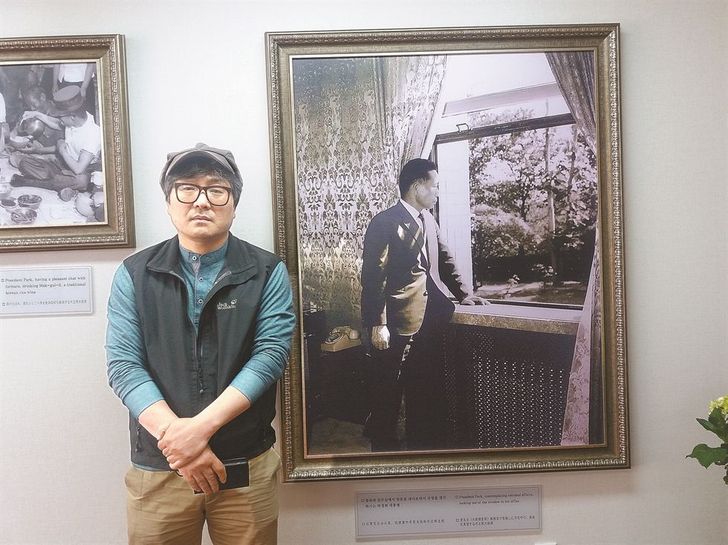
Lee Ho-lim, author of 'Generation 586: Heroes or Monsters,' poses at former President Park Chung-hee's birthplace in the southeastern industrial city of Gumi in this 2017 file photo.
Lee characterizes Generation 586 politicians as revolutionaries who deny Syngman Rhee as the founding father of South Korea. “Their ultimate goal is to rebuild South Korea to make it easier to achieve their longtime goal ― the reunification of the two Koreas,” he said.
He said checking whether the unification minister nominee and other Generation 586 politicians are still affected by the communist ideology or not seems to be pointless.
Lee said the times have changed and they now have wider options.
“In addition to North Korea's juche ideology, they can look at China's social democracy or what European leftists adopted (as a model for their vision). They wouldn't care which one is chosen, as long as it works for their vision to establish a new South Korea that stands against the South Korea created by the founding fathers,” he said.
“Like Lee, Generation 586 politicians were able to be as successful as they are today despite their radical past. They have no good reason to look back on what they did or repent it because it has not affected their careers. So I think it's silly to ask whether he has moved on in his political orientation or not,” he said.
“Generation 586: Heroes or Monsters” dissects South Korea's controversial generation who were once considered heroes of democracy, but later fell into disgrace as more than a few of politicians in the group reportedly have been involved in corruption cases and other violations of law.
It traces the evolution of the radical student activists after the 1980s. Some of them realized the fallacies of juche ideology while witnessing the collapse of the Soviet Union and Eastern European communist regimes which was followed by the great famine in the mid-1990s that killed hundreds of thousands of North Koreans.
But some still didn't give up and rather became encouraged by the rise of China as “a social democracy,” according to the book.
The book warns of their wildest dream to redirect South Korea. It is the center-right author's critical review of South Korea's modern history after the rise of student protestors-turned-politicians in politics after President Moon was elected president in May 2017 following the ousting of his predecessor Park Geun-hye from the presidency.
Lee said Generation 586 politicians now are the children of the May 18 Uprising which took place in 1980, months after Chun Doo-hwan rose to power through a military coup.
Back then, they were teenagers, some were middle schoolers and some were attending high school. Due to their age, Lee said it is unlikely that they were key players in the pro-democracy movement. He said it's ironic that they are even depicted as central figures behind the movement.
“Generation 586: Heroes or Monsters” is an informative piece for those who want to know why there were surges in anti-Japan sentiment during the Moon administration's rule as well as the rebound of retro films zooming in on the 1980s democracy protests and movies dealing with inter-Korean relations.
Lee said filmmakers and novelists have become politicized.
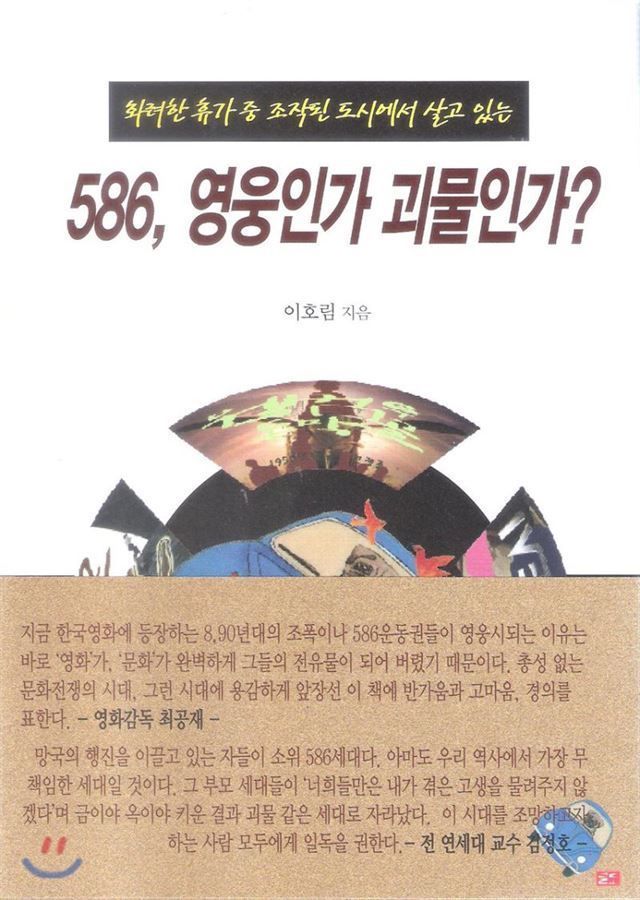
“Generation 586: Heroes or Monsters” by Lee Ho-lim
His book debunks the idea that Generation 586 politicians are “diehard” North Korea supporters, stating there are some issue areas that would pit then against the North.
“Generation 586 politicians claim they were the key players of the May 18 protests and consider this as a source of their legitimacy. Meanwhile, North Korea considers it was part of their work. So clashes between the two sides are inevitable in the interpretation of the historical event,” he said. “The two sides reject that Syngman Rhee was the founding father of South Korea. But in other areas, they have little in common.”
The book also raises China's influence on Generation 586.
If Yi Yong-hui, who had a huge impact on the current South Korean political elite were still alive, the book asks how would he react to China ruled by Xi Jinping. Xi led the Chinese economy to achieve economic growth, but established a one-man rule and is set to take China back to the Mao Zedong era.
“Yi might feel that his vision was realized in Xi-led China. Generation 586 who were greatly influenced by Yi's thoughts may be on the same page with him,” the book reads. “Generation 586 in sync with China seems to be inevitable.”
Follow Kang Hyun-kyung on Facebook: