Artists make social experimentations at 'Korea Artist Prize'

Hong Young-in "Sadang B" is on display at the Korea Artist Prize 2019 exhibition at the National Museum of Modern and Contemporary Art, Seoul. / Courtesy of MMCA
By Kwon Mee-yoo
Hong Young-in, Park Hye-soo, Rhii Jew-yo and Kim A-young are the four artists representing Korean contemporary art this year at the Korea Artist Prize (KAP) 2019, held at the National Museum of Modern and Contemporary Art, Seoul (MMCA).
Established in its current style in 2012, the prize is co-organized by the MMCA and the SBS Foundation. A panel of Korean and overseas experts select four candidates and provide them an opportunity to present new art that develops their artistic world. The new works are exhibited at the KAP exhibition and the winner is announced at a later date after the opening of the show.
This year, for the first time, all four candidates are female.
"This year's candidates have gained attention for their experimental work in video, installation and performance, parting from the traditional mediums of painting and sculpture," curator Yang Ok-kum said.
The curator said this year's KAP exhibition stands out because of its dynamism as the exhibition will evolve during the period.
"The exhibit not only has set installations, but changes fluidly as there is a lot of content-making going on in the gallery through performance, seminars, surveys and live streaming," Yang said.
The winner will be announced on Nov. 28.
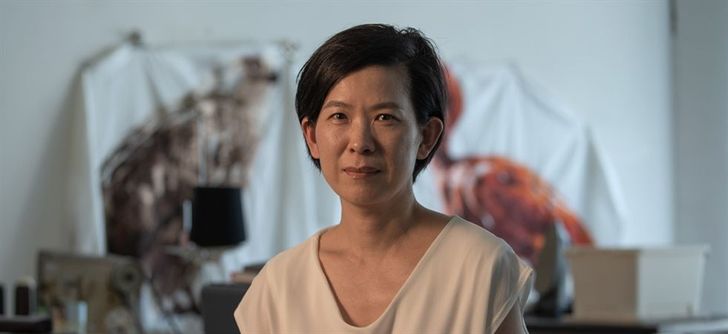
Hong Young-in
Hong Young-in
Hong Young-in has been exploring the theme of "equality" in the form of art in installation, performance, drawing, embroidery and sound. The U.K.-based artist presents "Sadang B," which consists of three works "To Paint the Portrait of a Bird," "The White Mask" and "Un-Splitting."
The installation resembles a large cage as the artist took interest in animals which communicate in different ways from humans. Inside the cage are items such as a carpet representing the Houses of Parliament and outside the cage are images and sounds of birds, recorded by the artist herself.
Hong said the space outside the cage is of nature and inside is of humans. "So it is the human world seen from the bird's perspective in a symbolic and critical way," Hong explained. "The only thing that can go inside and outside the cage is a bird call."
It throws a question on the hierarchy of humans and animals, dividing the inside and outside of the cage.
"Since when did we start to think that animals are inferior to humans? In fact, humans are animals too. This is my attempt to interpret history from the perspective of women and animals," Hong said.
In "White Mask," Hong created an improvisational musical ensemble with Club Inegales as an attempt to have humans "become animals."
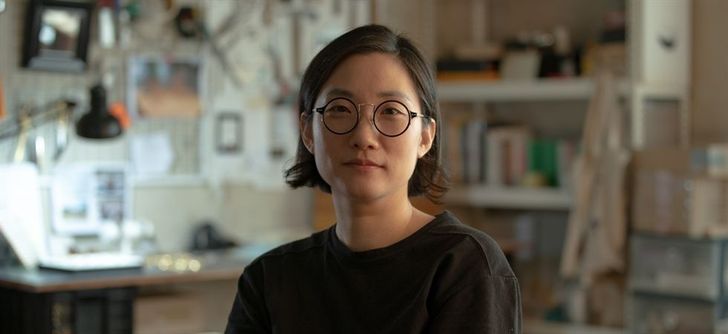
Park Hye-soo
Park Hye-soo
Park Hye-soo has been exploring intangible values and unconscious thoughts that affect society and her latest work visualizes the question: "Who is your 'we'?"
“Park looks squarely at the boundaries between the identities of modern people through the collective unconscious and personal memories,” the curator said.
Park surveyed the perception of “we” ahead of the exhibit and the result is on display, analyzed by experts and reinterpreted by the artist. The survey will continue at the gallery and visitors can add their results, which will change organically during the period.
"Ordinary people put stress on 'we' in a group, but I wondered who 'we' are. I felt that those who emphasize 'we' are those who are in power and started to wonder whether they are included in 'we' or not," Park said.
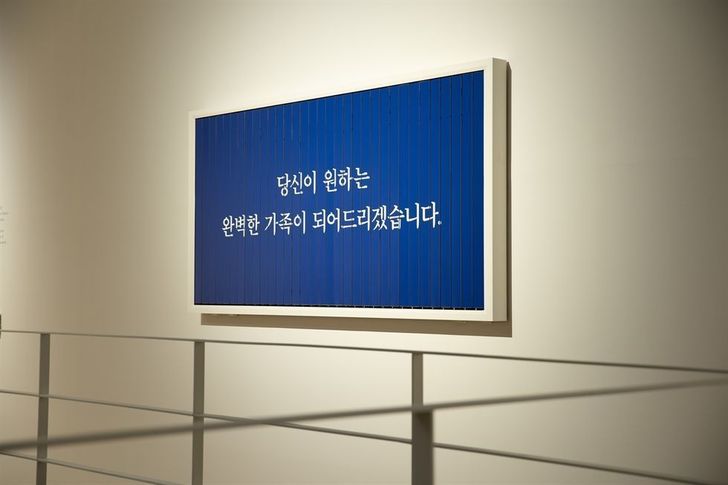
Park Hye-soo's “Perfect Family”
"Forum Theatre 'URI'" is a series of lectures that will be held throughout the exhibition period by the artist and her collaborators. Located at the center of the gallery, Park hopes the theater will serve as a flexible space for discussion. Those who participate are spectators as well as performers.
She also questions the rapid change in the forms of family by establishing a fictional human rental company named Perfect Family.
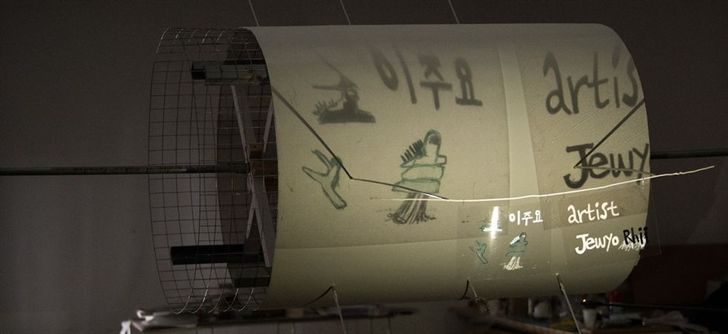
Rhii Jew-yo
Rhii Jew-yo
Rhii Jew-yo, also stylized as Jewyo Rhii, is known for “forging the psychological and physical compounds of variable, ephemeral and mundane materials.”
Rhii suggested a storage system at the gallery titled "Love Your Depot." This is an exhibition space, storage room, creative studio, research archive and platform to communicate with the outside. It is a prototype of what the artist will pursue in the future.
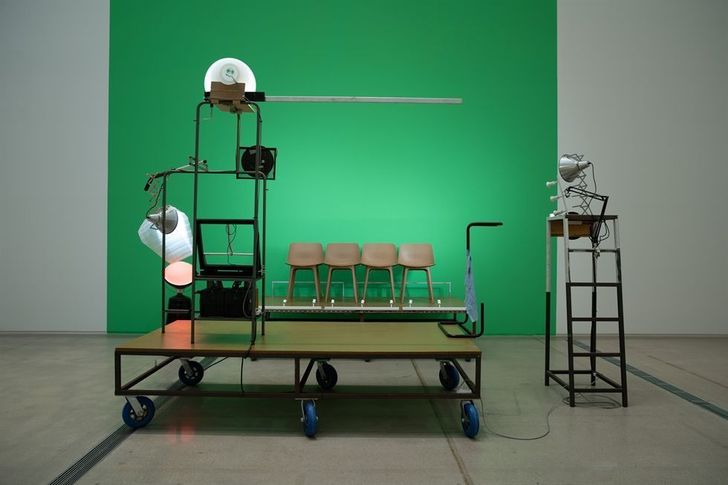
Rhii Jew-yo's "Love Your Depot"
"Artists produce and exhibit their works, but if not selected and sold to a collector or an institution, the artworks have the potential to be discarded and become extinct. Rhii suggests an alternative for the artist's fateful question," the curator said. “This experimental system conceived by the artist is an alternative proposal for a 'way of delaying the death of works by artists and sharing art.'”
There is a five-story vertical storage tower, a “Team Depot” for content research, a “Broad Depot” for online broadcasting and a storage rack for art pieces.
"This is where artists can postpone the disuse of their works. If the artists leave their work here, it can be researched and expanded through an online platform," Rhii said.
"My collections have come from four cities around the world, including London and New York. Some of them are unsold artworks, and some are special materials. This could be my materialistic desires, but I just can't throw things away. So I am looking for a new possibility through this storage system.”
Kim A-young
Kim A-young
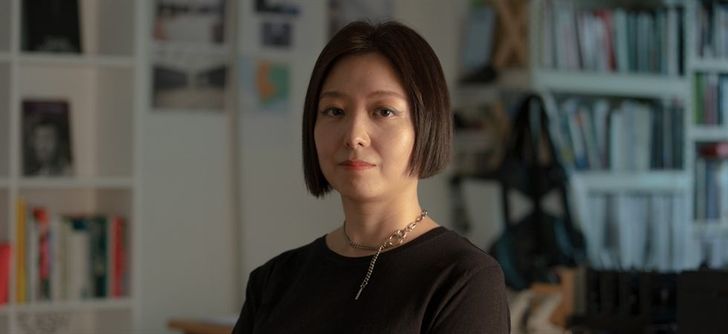
Kim A-young's interest lies in modern and contemporary history, territorial imperialism, petroleum politics and the migration of capital and information through various mediums of video, performance and installations.
The centerpiece of Kim's exhibit at the KAP is "Porosity Valley 2: Tricksters' Plot," a sequel to her 2017 video "Porosity Valley: Portable Holes."
Visitors will enter through a narrow corridor to the exhibition space, physically experiencing the border inspection spaces.
This video and installation center on Petra Genetrix, a mineral and data cluster, and its journey in the process of migration to an island.
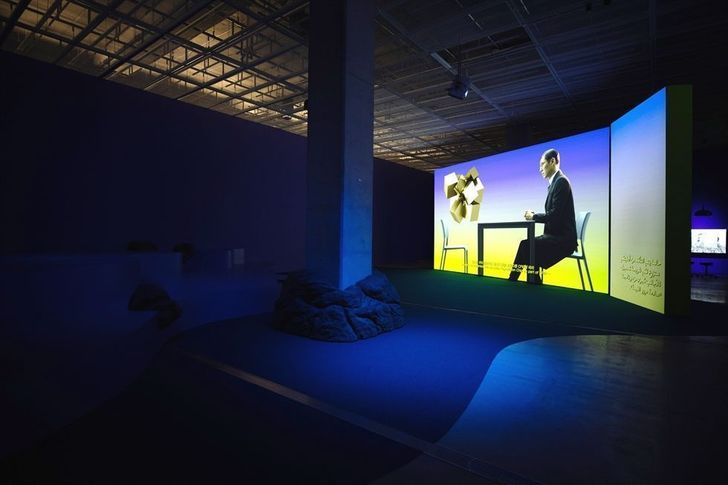
Kim A-young's "Porosity Valley 2: Tricksters' Plot"
This reflects the migration and refugees across the globe in multiple layers. Kim borrowed ideas from Mongolian traditional totemic tales of rocks and juxtaposed it with the influx of Yemeni refugees seeking asylum on Jeju Island.
"As actual and imaginary agents between the inner and outer parts of the continent are halted or let through at the borders, these intricate relationships raise new questions that straddle history and the present," the curator said.