Translation Awards Grand Prize Winner in Fiction - Then What Do We Sing
Written by Park Sol-moe
Following is an excerpt from the translation by Sarah Lyo
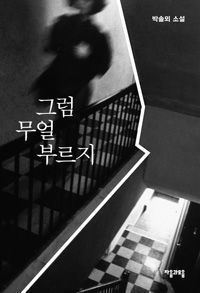
I met Hanna in San Francisco. In Berkeley, to be exact: I once went to a meeting that took place once a month near the University of California, Berkeley; it was there that I met Hanna. The meeting was for those interested in Korea who wished to learn Korean, and therefore attended mostly by Korean-Americans who were unfamiliar with the language. Because of the mix of Korean and English, there were also a few students from Korea who had recently come abroad to study. I was traveling at the time: someone had approached me at a café where I was reading a book in Korean and offered, Would you be interested in coming to this meeting? I’m no longer certain who that person was. I remember the book I’d been reading: a novel by a best-selling French author, which I’d borrowed from a friend. Next to the book was a cup of cappuccino, the bottom of which was visible.
It was 8 p.m. at a café with wide tables near the university. I remember that the night air was light and dry. The meeting seemed to proceed in a generally predetermined order. Whoever had to give the presentation that day would present on whatever he wished; he would afterwards translate into Korean any English words he’d used in the presentation, and vice versa. It was Hanna’s turn that day. Hanna’s mother was Korean, though her father was American. Her mother had died ten years ago and her father had since remarried, to an American woman from Seattle. ‘So do you live with your parents right now?’ ‘No. Dad and his wife live in L.A., and I live by myself in Berkeley.’ She began to tell me all kinds of things, though we’d never met before. ‘That was when my grandfather and grandmother came to America, and my mother . . . ’ she went on. There was nothing for me to explain. I simply listened to her with an expression that said, Is that so? When she was done, Hanna looked around and smiled as she mentioned the previous week’s presentation: Didn’t this happen last week . . . She was trying to keep me informed. People replied: Oh yeah, wasn’t that funny.
Hanna took out stapled printouts from her bag and handed them out. It was material on 18 May, she said. The eighteenth of May: but of course, I thought, that’s the Gwangju massacre. ‘Well,’ I said, ‘that’s my hometown.’ ‘Is that true?’ Hanna stared at me, impressed. Why is she surprised, why is she impressed, why did her eyes widen, I wondered; then with a laugh I added, ‘Yes, I was born there.’ To think of it now, it was in May that I’d been travelling around in San Francisco. A café in Berkeley was not a location I had expected – a location, that is, where I’d hear of events that occurred more than thirty years ago in the place of my birth. ‘Do Koreans really believe,’ I’d thought people would say, ‘that you’ll die if you sleep with the electric fan on? Surely they don’t believe it’s caused by a lack of oxygen?’ I’d thought people would talk about things like that – light-hearted things. In any case, the account of that May as discussed in that place sounded clear and relatively indisputable, as if I was listening to a discussion of Ireland’s Bloody Sunday, or of Pinochet’s crimes in Chile and the stories of oppression suffered by the people there: as if the English language itself lent objectivity to the event. Hanna’s printouts contained material written in English from the May 18 Memorial Foundation and an edited article from The New York Times.
Once the material was distributed, it was apparently time to read aloud. With routine familiarity, people took turns to read a paragraph each. The printout consisted of three or four densely typed sheets of A4, but to my surprise we were able to go through them quickly. It was announced that our drinks were ready, and a few people stood up and brought them over. A woman with long hair opposite me had ordered a large milkshake while I’d ordered a cappuccino: facing my small cup of cappuccino was a tall glass of milkshake. Everyone took a sip and looked up at Hanna. When she saw that people were seated, Hanna began: ‘So Korea at the time . . .’ Her explanations weren’t incorrect, but there was a difference of several veils between hearing them in English and hearing them in Korean. These veils existed only to me, however, and not to Hanna. I took a sip of my coffee and looked again at the printout. On the white paper, alongside the densely typed text, were several photos: a man’s crushed face, a young man waving a flag on top of a truck, a soldier looking down at people crouched on their knees. I took another sip of coffee. At that point, someone asked, ‘Where is Gwangju?’ and Hanna drew a map of Korea, though it was more accurately a shape resembling Korea. She pointed to Gwangju on her roughly sketched map. ‘Here – south of Seoul, west of Busan.’ ‘Ah,’ a few people nodded. A Korean university student, who was visiting San Francisco on an English language program, asked for a definition of ‘massacre’: ‘What does this mean? It keeps coming up but it’s not clear to me.’ Someone gave a simple explanation: ‘Killing many people in a brutal way.’ ‘What is it in Korean?’ ‘Massacre, haksal.’ As if writing a footnote, the student underlined ‘massacre’ and wrote underneath: haksal.
Hanna and I exchanged email addresses; the meeting came to an end. It seems likely that other topics were discussed too, but there is nothing I can remember. They probably said: Whose turn is it next? Ah, I’m busy that day. Oh really? Then I’ll go before you. Where do we meet? You decide and send us an email. All right. As we were parting, Hanna handed me a few sheets of paper. It was poetry. ‘I wanted to read this,’ she said, ‘but I wasn’t able to.’ I took the paper and returned to my hotel, which was located past Chinatown. The night was blue, and beneath it the street extended narrowly. The traffic lights had changed and I was slowly walking forward when my eyes met those of a middle-aged white man. He asked me whether I was Chinese, Taiwanese or Japanese, and if I cared for a drink. I decided to nod if the name of my country came up, and considered following him and drinking with him and doing whatever he told me to do – but even as I amused myself with such thoughts, the moment to nod never came. I missed my chance to reply. Nothing happened. In silence, I crossed the road and walked past the man, who stood motionless, and returned to my hotel. I lay down on the bed and spread out the sheet of paper. The poem was Kim Nam-Ju’s ‘Massacre 2’. Printed in both Korean and English, it was like a poem by a foreign poet. It was like a poem by a person who had held his breath and watched as soldiers occupied a university in Mexico or Chile in the late sixties – by someone who had seen people disappearing from the streets. It seemed to be about Guernica. It seemed to be about Taipei in 1947. It was a poem about people being beaten in an alley at night, about the people who had given the beating. Someone beats, someone is beaten; there are people who kill and people who die, and there are very many people who cry. It was that kind of poem.
On the next page, someone’s handwriting was visible, as if pressed down into the paper. It was a text of some kind: namely, a declaration. I could see the words ‘the defence of democracy’. Above the photocopy of this declaration, Hanna had added a caption. She had converted the year #### in the calendar of Dangun to 19xx, the corresponding year in the Western calendar.
Three years passed before I met Hanna again, and in the meantime I took a trip to Kyoto, Japan. There are two reasons why I mention this fact: first, that was the only travelling I did during that time; second, it was there that I encountered yet another individual who mentioned Gwangju, at a bar near Shijo Kawaramachi. A café near the University of California, Berkeley, and a bar near Shijo Station in Kyoto: of the two, which is the more unlikely location? – where one hears, unexpectedly, of events that occurred more than thirty years ago in the city of one’s birth? As usual, I cannot even remember the name of the person I met at the bar, but it had been a man of large build who appeared to be in his early sixties. He had worn glasses and a dark blue shirt. I remember some details, like his facial expression; I also remember the wrinkles around his eyes. He might not have told me his name. Or he told me his name, but I forgot what it was because I never called him by his name. He was the owner of the bar, and I was the only person there, and remained so for a long time. I drank draught beer while he drank Nihonshu sake, which he was heating in a large pot. I watched the boiling pot, then I watched the man’s reddening face, and then the pot, and back again. After a while, I had a feeling that the boiling sake was really pure alcohol itself. The beer was so cold, yet the heated sake was very hot, and somehow the face of the person drinking it seemed hot, too.
----------------------------
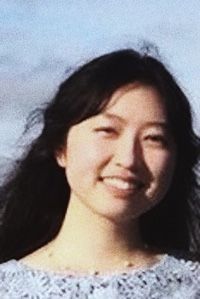
Sarah Lyo graduated last year from the University of Oxford, where she read English Literature. At Oxford, she became involved with Oxford Student PEN, which is a student center supporting the work of PEN International, the writers’ organization campaigns for freedom of expression and promotes literature in translation.
“It was through this exposure that I first grew interested in translating Korean literature,” Lyo said.
Lyo is currently a second year student and fellow at the Korea Literature Translation Institute.
She translated Park Sol-moe’s “Then What Do We Sing” into English, which is a modern, unsentimental take on the Gwangju massacre from a contemporary perspective.
“I was attracted to the story’s unflinching attempt to address this difficult historical legacy,” Lyo said. “‘Then What Do We Sing’ was stylistically challenging to translate, as the language tended to be quite spare and hard.”
Lyo believes that a good translation is one that conveys the spirit of the original text as well as its meaning.