Spicy Chinese food delights Koreans' taste buds

Malatang, a Chinese hot-pot originated from the Sichuan Province, attracts spicy food loving Koreans. Korea times photo by Lee Han-na
By Lee Han-na
The latest culinary hit in Korea is a fiery dish from China ― the hot-pot malatang.
Just like popular street foods yupki-tteokboki or extra hot stir-fried rice cake and fiery chicken, malatang, which originated in the Southwest Chinese Province of Sichuan, is especially hot because of the main ingredient, mala.
The dish is well-known for its unique spiciness that makes the tongue numb just as its Chinese characters indicate ― “ma” means numb and “la” means spicy.
The mala sauce, which contains Sichuan pepper, gives the attractively spicy flavor that keeps people coming back for more.
Aside from the flavor, the way the dish is cooked is attractive to younger Koreans.
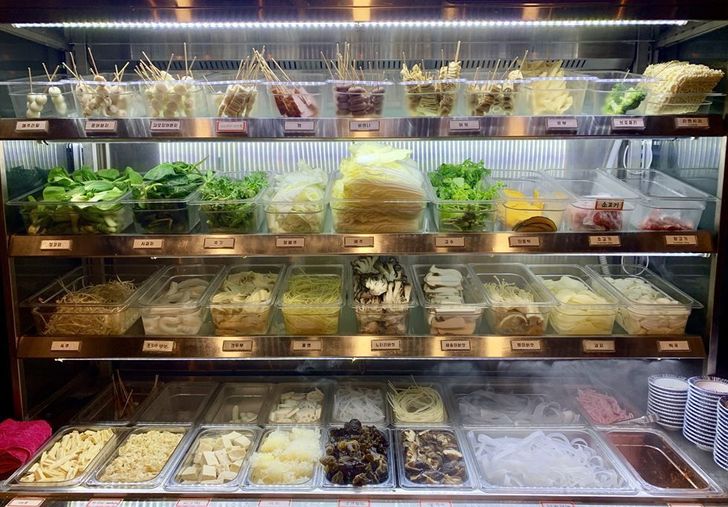
Customers can choose their ingredients for malatang. Korea Times photo by Lee Han-na
Upon entering a malatang restaurant, diners are asked to choose fresh ingredients to add to their hot pot, such as vegetables, seafood balls, tofu, and mushrooms, along with their preferred meat ― usually lamb or beef.
Chosen ingredients are cooked in two ways: as a soup, malatang, or fried, mala xiang guo.?Customers can also choose the level of spiciness.
Compared to spicy foods that were trending previously, such as stir-fried rice cake or fiery chicken, which are heavy in carbohydrates, malatang has a healthier balance, including fresh vegetables and meat.
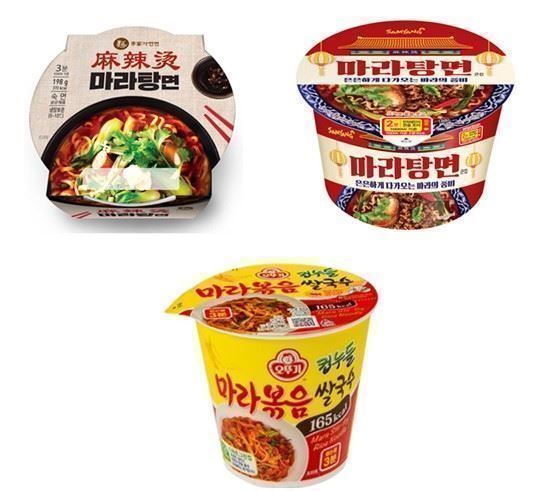
Instant noodles with mala sauce have been released to attract younger Koreans fond of the Chinese dish.
The trend is popular among Koreans, particularly in their 20s and 30s and female diners. The popularity of the Chinese noodles was the catalyst for an increase in malatang eateries, and companies producing mala sauce instant noodles.
The CU, Samyang and Ottogi Cup Noodle have all released versions of malatang noodles.
The popularity of malatang also sparked a sales increase in Chinese glass noodles. Customers who fell for the sticky and chewy texture are making new combinations of the glass noodle with other spicy foods.
Many see these trends as hugely influenced by online “mukbang” creators ― who make YouTube videos featuring what they are eating and show themselves enjoying the dish. The videos motivate viewers to try the food, and can lead to a gain in popularity of certain dishes.
Amid the increasing demand, many economists worry that the trend will not last long, and that new malatang business owners may not get much profit from their ventures.
However, on several social media platforms, it is clear that malatang is still gaining a lot of attention and love from various regions in Korea.
Lee Han-na is a Korea Times intern