'Blockchain to transform entertainment'

Familia CEO Alexander Shulgin / Courtesy of Alexander Shulgin
By Park Hyong-ki
Imagine a world where not only can people pick and select a character to play in a video game, but also can actually “be that character.”
They can be not “like” but actually “be” the superheroes they dreamed of or imagined.
In the near future, people can wear a red suit of armor and fly away, or turn green and smash buildings.

gettyimagesbank
This may look like a science fiction movie.
But the world of “mixed reality” ― the merging of real and virtual worlds ― will soon emerge in entertainment, all because of blockchain, said Alexander Shulgin, CEO of Familia Group based in Moscow, Russia.
“Blockchain will transform, in general, everything from energy and finance to entertainment, our whole lifestyle,” said Shulgin in a recent interview with The Korea Times in Seoul.
“You will be the content, not just play in front of a computer, but actually be an athlete playing a game. People will be involved. Blockchain will create a whole new entertainment sector. Its impact on society will be as big as the invention of electricity.”
Shulgin, who heads the investment holding company Familia, is a venture capitalist who invests in blockchain and digital startups.
In the 1980s, Shulgin was a member of Kruiz, the first rock band in the former USSR, drawing inspiration from innovative rock and roll bands such as Led Zeppelin and Pink Floyd.
Innovative tool
The investor and composer said blockchain will be used as an innovative tool, like metal, electricity and computers.
Innovation has changed music over the years, he said.
“Inventors and innovators used metal to create saxophones. Then, we had jazz. Electricity helped create rock and roll as they plugged their guitars into electric amps. Pianos with electricity launched disco music, and computers created DJ music,” Shulgin said.
“Rock and roll was definitely innovative. Rock musicians were more like entrepreneurs and pioneers with three to four people starting a band from their garage. They did not particularly know what to do but had dreams to create and find something. Of course, many pioneers fail, but that was their role.”
He added blockchain will have the same effect where every object and character in mixed reality will be able to interact with and respond to people's movement and action.
The technology backed by a decentralized network system will make that happen.
This is because each object and character will be running on their own blocks of servers.
“Those objects will interact with you. For example, if you shoot them, they will respond in mixed reality. They will respond in real time because everything is decentralized,” he said.
In augmented reality, people see artificial holographic images, but they do not “interact” with them as humans do when they meet, talk and bump into one another.
gettyimagesbank
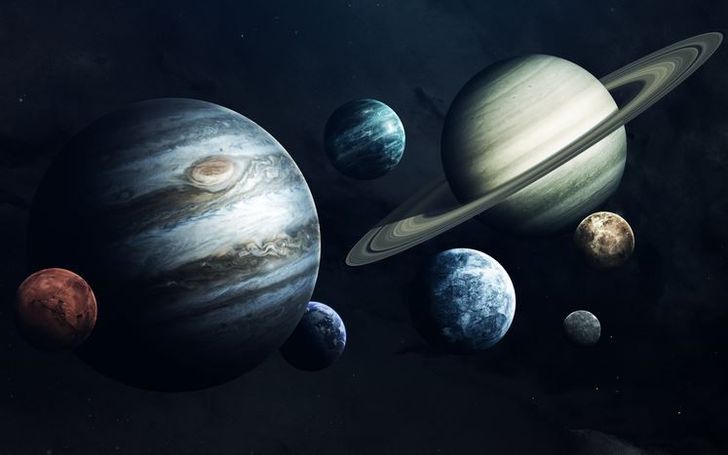
He compared blockchain to the solar system.
“It is like an interdependent solar system, not vertical or horizontal. It is interdependent,” Shulgin said, noting planets move and rotate, pushing and pulling within the system.
Shulgin forecast commercial blockchain applications and content will start appearing in the market as soon as the fifth-generation (5G) wireless network becomes widespread.
This is because the market will need a powerful bandwidth to distribute blockchain content, and enable people to download and experience it in real time.
“5G will help make that happen. You need a good strong bandwidth,” he said.
“It will start slowly, beginning in 2022 when the next generation 5G's penetration rate reaches about 20 percent to 30 percent. Then, mixed reality content and applications will start to come out.”
Shulgin said the technology will not tear down the border between professionals and amateurs, and art and entertainment.
Rather, he added he hoped blockchain will help “find and fix the value of art” because it has become lost amid the rise of social media.
“A single photo posted online can get a million likes. Young people believe and understand that is value. No, it is not. They just monetized it,” he said.
“What draws the line between art and entertainment is art, whether tangible or intangible, makes a philosophical impact and helps change and move your soul. Entertainment is just having fun, sharing some time with friends. There's nothing wrong with that. But that is not art.”