INTERVIEW Seoul Metropolitan Opera head hopes to spread joy of harmony through opera

Seoul Metropolitan Opera presents Mozart's opera “Don Giovanni” at the Sejong Center for the Performing Arts until Nov. 2. The photo is taken from a press call held Monday at the Grand Theater of the Sejong Center for the Performing Arts. / Courtesy of Sejong Center and Seoul Metropolitan Opera
By Anna J. Park
Lee Kyoung-jae, artistic and general director at the Seoul Metropolitan Opera, began his second two-year term last month. He was the youngest artistic director ever in the municipal opera company's history when he was appointed to the position in his mid-40s two years ago; now he will lead the metropolitan opera company for two more years.
During a recent interview with The Korea Times, Lee talked about the main goals he'd like to focus on during his second term, the Seoul Metropolitan Opera's repertoire for this season, the ongoing performance of Mozart's opera “Don Giovanni,” the undeniable charms of opera and more.

Seoul Metropolitan Opera artistic director Lee Kyoung-jae / Courtesy of Sejong Center Seoul Metropolitan Opera
As head of the municipal opera group, Lee stressed that one of his main focuses is to expand the audience for its productions.
“Previous artistic directors all had their own distinctive colors in leading the company; some stressed the importance of creating original Korean operas, while some planned to present Verdi-focused grand-scale operas. What I hope to achieve during the next two years is to effectively link our opera productions and potential audiences. Securing a substantial number of loyal opera fans is by far the most important task, and we need to put extra energy into this,” the artistic director said.
“Currently, it seems the Seoul Metropolitan Opera does not have many loyal subscribers, although diverse opera fans come to our productions. Expanding opera audiences and loyal fans for our company will be one of the most main focuses in the next two years.”
As a strategic plan to realize the idea, Lee said when putting together the company's program, he'd like to balance both ticket power and artistic value.
“As a public arts company, we have to assume certain roles for the development of the opera scene here in Korea, such as introducing rarely performed yet artistically valuable opera works to Korean audiences. However, we also need to think how much competitiveness such rare opera productions would have with potential audiences, when they are faced with so many other alternative cultural products to enjoy,” he said.
Lee said the unique conditions of the Sejong Center for the Performing Arts, one of the major publicly run theaters in Seoul, under which the Seoul Metropolitan Opera is affiliated, need to be considered when choosing a repertoire.
“The grand theater of the Sejong Center for the Performing Arts has 3,300 seats, which is almost twice the size of any other opera theater in Seoul. In this grand theater, we plan to present well-known, globally and timelessly beloved opera series. At the 600-seat M Theater, we will present mostly comic opera works that children and families can enjoy together. Also at a smaller theater, we plan to stage contemporary operas at least once every two years,” Lee explained.
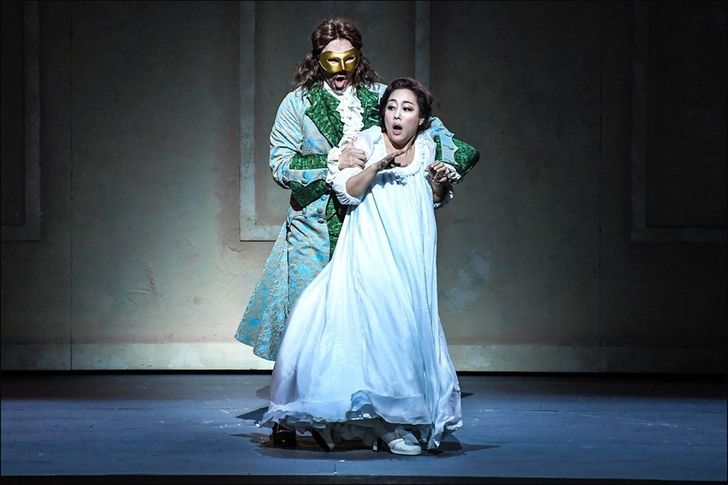
Mozart's opera “Don Giovanni” is the first production by the Seoul Metropolitan Opera since its artistic director Lee Kyoung-jae began his second two-year term earlier this autumn. The production is currently underway at the Sejong Center for the Performing Arts until Nov. 2. / Courtesy of Sejong Center Seoul Metropolitan Opera
The first opera production by the Seoul Metropolitan Opera since his tenure is renewed was Mozart's “Don Giovanni.” The comedic and yet melodramatic opera is one of the four major operatic works by Mozart, along with “The Marriage of Figaro,” “The Magic Flute” and “Cosi Fan Tutte” among his 22 operas.
“Don Giovanni” is currently ongoing at the Sejong Center for the Performing Arts' Grand Theater until this Saturday. Lee himself directs the stage production, while maestro Massimo Zanetti, a conductor in residence at the Gyeonggi Philharmonic Orchestra, leads the orchestra.
“The main plot of the opera is rather simple in that infamous womanizer Don Giovanni continues his evil deeds, until his soul ends up in hell. However, this opera's significant weight is put more into the seven other characters. Each character is a metaphor for various social aspects. Mozart and his playwright Lorenzo Da Ponte made this intention very clear through the music of the opera,” he said.
“While Don Giovanni is the main character, he only has two rather short arias; many other characters have two longer, and more beautifully composed arias, which have become more famous and popular. Such meticulously calculated musical elements clearly demonstrate Mozart's intention to show that every voice of each individual in society is all-important and beautiful.”
The Seoul Metropolitan Opera is planning to present Rossini's comic masterpiece “The Barber of Seville” as a family opera early next year, followed by Pucchini's “Tosca.”
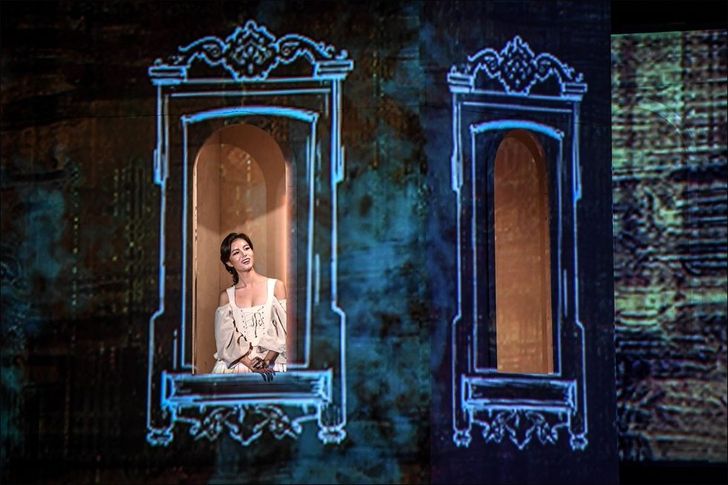
Seoul Metropolitan Opera presents Mozart's opera “Don Giovanni” at the Sejong Center for the Performing Arts from Oct. 30 until Nov. 2. The photo is taken from a press call held Monday at the Grand Theater of the Sejong Center for the Performing Arts. / Courtesy of Sejong Center Seoul Metropolitan Opera
Lee studied singing in college, and continued to study opera stage directing at a graduate school in the U.S. Even though he was trained as a vocalist, he recalled that he was always interested in creating opera productions, rather than singing on stage.
“There must be reasons why these musical masterpieces continue to be performed some hundreds of years after their creation; as a director, I get to realize such reasons through the musical scores of each composer. I also get to understand more and more of the composer's original intentions such as why instruments are arranged in a certain way. It is a great delight to find such intentions of the composers, and I hope to convey such joy to the audiences,” Lee said.
“Also it's not just because music scores are beautiful that this genre has survived more than 400 years. The visual actualization of the music by dozens of singers and chorus members on stage, as well as some 70 instrumental players of an orchestra, is something that we cannot easily encounter in daily life. As opera artists, we hope to continue to provide opportunities for people to experience such valuable performances,” he stressed.
“When various people gather in a society, it tends to be divided. In operas, every single member of the company makes their distinctive voice, whether it be singing or playing, yet it's still beautiful and happy together; that's what we call harmony that each can be happy making their own sounds. Audiences can experience such harmony through opera works, although only good-quality opera productions can convey such happiness to the audiences. I hope people can get to experience such happiness-inducing operas.”