INTERVIEW Yale professor's love affair with K-pop

Grace Kao, a professor of sociology at Yale University, poses before an interview at a hotel in central Seoul, April 25. Korea Times photo by Choi Won-suk
Yale professor talks about changes brought by K-pop
By Dong Sun-hwa
Grace Kao's fascination with K-pop began in 2019 when she became captivated by the boy band BTS. As a sociology professor at Yale University, Kao found herself immediately enchanted by the septet's performance on “Saturday Night Live” (SNL) in the U.S., marking a groundbreaking moment as the first appearance of an Asian act on the show as a musical guest.
“(Growing up,) I never had the opportunity to enjoy Asian or Asian American musicians in the U.S.,” Kao recalled during a recent interview with The Korea Times at a hotel in central Seoul. Kao visited Korea to speak at various universities about the significance of K-pop for music and Asian Americans.
“Since I became a teenager in the MTV ― an American entertainment channel ― era of the 1980s, my favorite groups were Spandau Ballet, Duran Duran, The English Beat and so forth. They are all English groups who are primarily white … So, it was a big deal when BTS performed on SNL. It was a memorable moment not just for me, but for anyone my age who has been watching it. When I first saw BTS, I did not know who it was, but I was just mesmerized by the members' dancing and the way they gaze at the audience.”
Kao believes that BTS has made being Asian "cool."
“I previously wrote a book about interracial friendships and romantic relationships and found that Asian American men are at the bottom of the dating hierarchy in the U.S.,” Kao explained. “The stereotypes about Asian men were that they are like martial artists or geeky guys. BTS, however, was so striking. BTS is desirable and women would want to date its members. This is a big shift in terms of images of Asian American men in the U.S. 'The BTS benefit' has spread to all Asians and even minorities.”
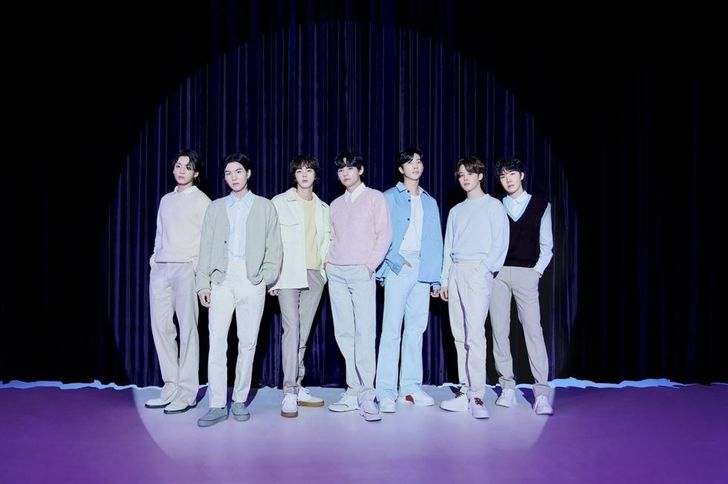
K-pop idol group BTS / Courtesy of Big Hit Music
Like many Americans, she began her K-pop journey with BTS, but now she finds herself supporting numerous other groups, including SEVENTEEN, Super Junior, ENHYPEN, NewJeans, VERIVERY and TRENDZ. K-pop has brought a breath of fresh air into her life, she says.
“Being a professor who teaches students who are young adults, I can also live vicariously through them,” she said. “I cannot imagine what it's like to be an Asian American young person who only listens to and watches K-pop. My family members and close friends have also seen many BTS music videos and many of them can name the members. I have also met other people my age at Yale and elsewhere who enjoy K-pop.”
Currently, Kao is working on papers exploring the representation of different genres in K-pop.
“I am also cooperating with two data scientists to examine Twitter data before and after BTS' tweet about #StopAsianHate and #StopAAPIHate,” she said.
In 2021, the Grammy-nominated septet released a statement about racial discrimination and violence in the wake of a deadly shooting in Atlanta, which took the lives of eight people including four women of Korean descent and two of Chinese descent. The incident prompted the Stop Asian Hate movement in the U.S. and beyond.
“What our voice must convey is clear,” BTS wrote on Twitter. “We stand against racial discrimination. We condemn violence.”

Professor Grace Kao, left, poses with her husband Jeff Rubidge, before an interview at a hotel in central Seoul, April 25. Korea Times photo by Choi Won-suk
Kao's research focuses primarily on race, ethnicity and migration. However, since 2020, she has also been teaching an undergraduate course at Yale titled "Race and Place in British New Wave, K-Pop and Beyond."
“My class examines race and the migration of people and culture can be seen in these two genres,” she noted. “The British New Wave is music from the late 1970s to mid-1980s during a time when British bands dominated U.S. charts. It is also the time when MTV and music videos first began. MTV actively promoted white artists and kept Black artists from its channel, hence it looked outside the U.S. for groups. Music videos meant that group members had to be good-looking. Their styles became important, and their musicianship arguably became less important. It was also an era where androgyny was hip.”
Kao draws a connection between the British New Wave and K-pop, highlighting that both are reliant on music videos and the presence of attractive performers.
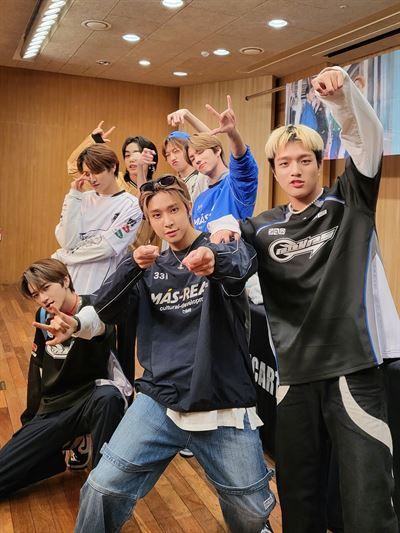
K-pop boy group TRENDZ / Captured from Twitter
“Concepts and styles are as important as the music to each song and album,” she said.
Kao sees them as representations of the cultural movement to and from South Korea. In her course, students are required to watch music videos from a weekly playlist, and playlists from previous semesters are available on YouTube for public access.
Additionally, she has plans to organize an academic conference on K-pop at Yale in the coming year. However, Kao acknowledges that to expand the university's course offerings related to Korea and its culture, the issue of faculty shortage needs to be addressed.
“I think there is a great demand for these courses,” she pointed out. “But there are not that many faculty members who can teach them. Honestly, at places like Yale, the faculty have quite a bit of autonomy in what we want to teach but if there is no one with the expertise, it is not possible to have these classes.”