Excessive privileges of parliamentary members
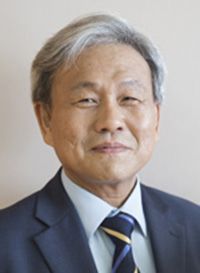
By Choe Chong-dae
During one of my visits to Europe before the pandemic, I had the privilege of a lunch appointment with a distinguished official who was both a member of parliament and a government minister of a European nation. As I sat in the restaurant waiting for him, I was astonished when he appeared on a bicycle. Intrigued by this unexpected sight, I couldn't resist the urge to inquire about his decision to opt for a bicycle instead of his official car.
To my surprise, his answer wasn't very complex: He believed that choosing a bicycle over a car was simply the better option. He expanded upon this by explaining that the bicycle provided an opportunity for exercise making it a healthier option and that the bicycle also helped in reducing carbon emissions. This stark contrast between his approach and the preference for luxurious official cars among the majority of Korean high officials was striking.
It is disheartening to observe the prevalence of corrupt behavior and the lack of ethical consciousness among many high-ranking officials in public institutions, particularly members of Parliament, people who are meant to uphold the principles of the constitutional body. This issue extends further to influential individuals within governmental organizations, where corruption and unethical practices have become alarmingly widespread.
The granting of privileges, such as immunity from arrest and legal prosecution while serving as a Parliamentary member, has raised significant concerns regarding the principle of equality before the law. Furthermore, the generous salaries, expansive office facilities, and substantial staff allocations including drivers and secretaries provided to parliament members are often seen as excessive and superfluous.
Another area of concern relates to the supplementary allowances and sponsorship funds available to lawmakers. The absence of guidelines regarding the intended purpose and distribution of these funds, granted by external sources, has given rise to worries about transparency and accountability.
Campaigns are underway to review and potentially revise the privileges granted to members of parliament who are meant to uphold principles such as equality, transparency and responsible use of public resources. The aim is to enhance public trust and promote democracy by establishing clearer regulations and stricter oversight regarding funds and privileges.
Some politicians frequently display an excessive attachment to material possessions, power, social status and authority. Their desire for more seems insatiable. However, there are also individuals who demonstrate a different approach, and balanced lives without actively chasing after wealth and power, even if that leads them to possess limited resources.
Two notable examples of such politicians are Jose Mujica, the former president of Uruguay (2010-2015) and Tage Erlander, the former prime minister of Sweden (1945-1969). These leaders epitomized austerity and self-sacrifice, eschewing worldly luxuries in favor of simplicity. Despite their modest lifestyles, their impact on the world was far-reaching and profound.
Recently, a civic group known as the People's Movement Headquarters for Abolishing Privileges, led by Jang Ki-pyo, has garnered significant attention. In April 2023, the group organized a rally where voters formed a roughly 3-kilometer human chain surrounding the National Assembly. The objective was to directly pressure the National Assembly, whose members have been accused of paying lip- service to reforms without taking genuine action.
Parliamentarians should prioritize public service over self-importance, embracing the spirit of “noblesse oblige.” I propose the solution would be for voters to hold these politicians accountable for prioritizing personal interests over public service and self-sacrifice.
Choe Chong-dae (choecd@naver.com) is a guest columnist of The Korea Times. He is president of Dae-kwang International Co., and Director of the Korean-Swedish Association.