Political films to hit theaters ahead of 2022 presidential election

A footage of Kim Dae-jung delivering a speech in the documentary film “President” / Courtesy of Blue Film Works
By Kwak Yeon-soo
With only seven weeks before the 20th presidential election, political films are flooding the market in an effort to keep voters engaged and enraged.
Most prominent is Byun Sung-hyun's star-studded “Kingmaker,” inspired by a mysterious political strategist in the 1960-70s named Eom Chang-rok who worked for former President Kim Dae-jung, serving under him from 1998 to 2003.
A string of political documentaries aim to take advantage of the heightened political climate. “President” traces Kim's meteoric rise through footage of his impassioned speeches calling for democracy and an end to the military dictatorship, punctuated with current-day interviews given by his close aides.
It follows the timeline of Kim's first presidential race from 1971 to becoming the first opposition to win the presidential election in 1997 on his fourth run. He won the Nobel Prize in 2002 for his reconciliation efforts with North Korea.
“Kim became the people's president, surviving a death sentence and an assassination attempt by military dictators. Thirteen years have passed since he passed away, but he is still remembered as the president who devoted his life to build peace on the Korean Peninsula,” director Kim Jin-hong said.
“This film leaves us with more questions as the deep ideological divide, social polarization and economic inequality is getting worse. I hope this film gives courage to people to restore humanity and overcome injustice,” he added. “President” will be coming to theaters on Jan. 27.
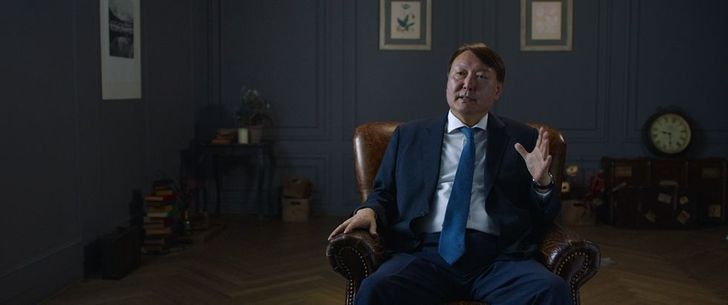
Yoon Seok-yeol, the presidential candidate for main opposition People Power Party, in a scene from the documentary film “Candlelight Revolution” / Courtesy of Little Big Pictures
There is also “Candlelight Revolution,” which is set for release on Feb. 10. It is directed by freelance liberal journalist Joo Jin-woo and actor Kim Eui-sung and focuses on mass protests that played a great part in toppling former president Park Geun-hye.
The film explores the Park administration's poor handling of the tragic sinking of the Sewol ferry in April 2014 and her downfall prompted by the corruption scandal surrounding her ties to secret confidante, Choi Soon-sil. The footage includes an interview with politicians and citizens.
Independent counsel Park Young-soo, who led the investigation into the scandal around the disgraced former president's crimes, former Seoul Mayor Park Won-soon and Yoon Seok-yeol, the presidential candidate for the main opposition People Power Party, also recall memories of the candlelight protests.
Although it includes interviews from both conservative and liberal groups, the film leans liberal and seeks to influence viewers' voting decisions. Joo noted that he took on the directing assignment as a way to remind people of their courage that restored a “government based on principle and justice.”
“It was the people gathered in Gwanghwamun that led a change and gave me confidence to direct this film. I wanted to help restore Korean pride as we have done amazing things in our political history,” he said.