Entertainment firm finds future in Culture Technology

S.M. Entertainment chief producer Lee Soo-man speaks about the New Culture Technology plan during a press conference at SMTOWN in COEX Artium, southeastern Seoul, on Jan. 27. / Courtesy of S.M. Entertainment
By Kim Jae-heun
Since Lee Soo-man founded S.M. Entertainment in 1995, the company has been playing a leading role in paving the way for K-pop music to the global scene.
SM’s early idol group H.O.T., who were very popular in the mid- to late ‘90s, became the first Korean group to hold a solo concert in Beijing, China. Many believed it was the beginning of hallyu, or the Korean wave.
In 2002, BoA became the first Korean artist to top the Japanese Oricon Chart with her first album in Japan “Listen to My Heart.” Nine years later, the collection of SM artists named SMTOWN gained another title as the first singers from Asia to hold a concert in Madison Square Garden in New York.
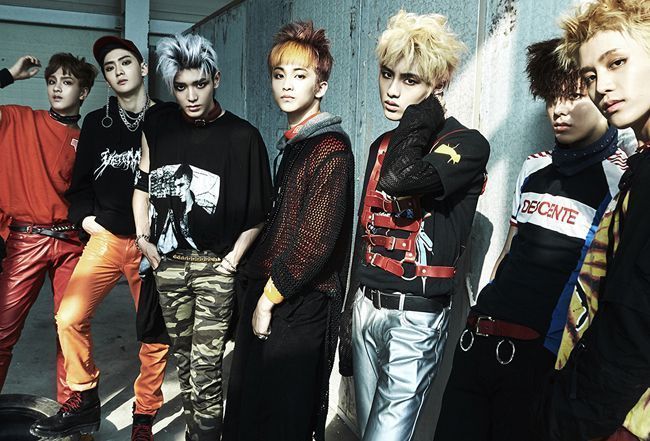
S.M. Entertainment’s new K-pop boy band Neo Culture Technology (NCT).
Lee explains that all these achievements were possible because of SM’s strategy that he calls culture technology (CT).
In the past 20 years, the entertainment company adopted four core stages for casting, training, producing and marketing under the name of CT in developing idol groups and promoting them abroad.
Here, SM only exported cultural products of hallyu and advanced to expand the market internationally by cooperating with regional companies and musicians.
Now, SM has evolved the four core stages to present an improved strategy called New Culture Technology (NCT), of which Lee says “interactive” is the keyword behind it.
NCT led SM to own a smartphone-friendly platform where the company can promote its musicians and invite fans to interact with each other and engage in producing music and videos for their favorite artists.
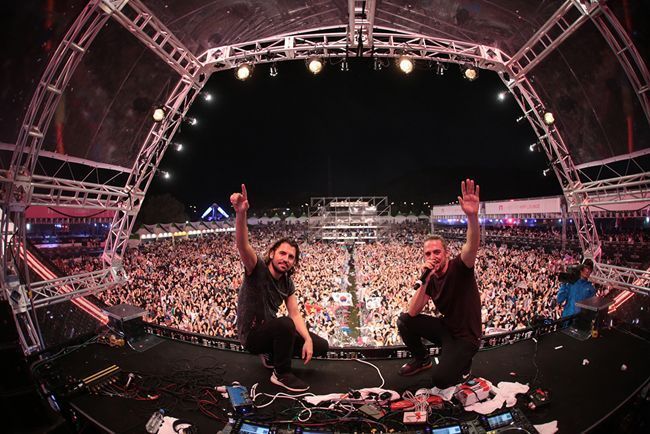
Headliner DJs Dimitri Vegas and Like Mike pose during S.M. Entertainment’s Spectrum Dance Music Festival at Nanji Hangang Park in Seoul on Oct 1.
SM launched a new form of digital music channel called STATION that releases songs every week for a year. The platform shows active movement in digital albums of SM musicians and collaborations with singers of other labels as well.
The entertainment company also began an electronic dance music (EDM) Label ScreaM Records, and held its first EDM event Spectrum Dance Music Festival at Nanji Hangang Park in Seoul, on Oct. 1 and 2, inviting world-class DJs such as Dimitri Vegas & Like Mike, KASKADE, Don Diablo and Galantis.
SM has used its strengths of “performance dance music” by expanding the audience’s musical pleasure from “performance to watch and listen” to “performance to enjoy together.” SM aims to cooperate with global EDM labels such as Refune Music based in Sweden and OWSLA based in the U.S. and develop a DJ agency to foster top DJs and producers based in Asia.
The entertainment company said that it will expand to host EDM festivals on a large scale starting in China and spread from there to all across Asia and make Seoul into another hub of the world EDM music market along with Miami and Amsterdam.
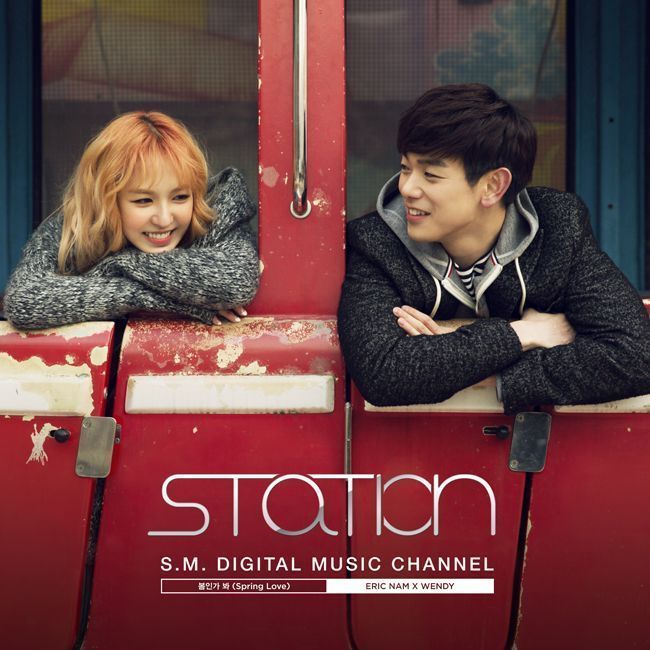
A promotional poster for a project between singers Eric Nam, right, and Wendy
Digital playground is another project that SM has established for its fans to enjoy karaoke on a mobile phone application called everysing and produce music videos or become an actor or actress in a scene with a program titled everyshot.
The celebrity interest-based SNS Vyrl allows users to communicate freely all over the world with its translating system covering 50 different languages. The digital playground service is available 24 hours a day, seven days a week.
As part of Lee’s interactive plan, producer aspirants can download the Rookie Entertainment Mobile Application, where they can engage in producing and training pre-debut SM rookies. The entertainment company rewards the most active participant by giving her or him credit on the album for his or her work and provides an opportunity for an internship at SM.
SM singers, actors and MCs will star in web content available on the mobile platform for fans to access easily.
NCT, team of openness and expandability
Apart from his new strategies to share K-pop content on mobile platforms and interact with fans, Lee debuted a whole new concept of K-pop boy band called Neo Culture Technology (NCT).
As he explained in a press conference held in early January, Lee has already introduced three subunit groups of NCT: NCT U, NCT 127 and NCT Dream.
NCT is the chief producer’s hallyu localization project group that does not limit the number of members in the band. They are divided into multiple subunits based in different cities worldwide. There is no restriction for addition of new members, and singers can move between the subunits.
The groups take one hit song and perform it in different languages in respective territories, along with music and content localized to target local markets where the groups are based.
The main unit, NCT U, first debuted in April, consisting of six members Taeil, Taeyong, Doyoung, Ten, Jaehyun and Mark. They released two digital singles in the same month, “The 7th Sense” and “Without You” the next day. Only NCT 127’s debut single “Fire Truck” has topped the Gaon Album Chart.
Still, SM announced it will introduce NCT in major cities such as Tokyo, Beijing and Shanghai soon, followed by countries in Southeast Asia and Latin America.
“Now, in 2016, it’s been 21 years since SM Entertainment became a corporation. SM had its own coming-of-age phase, and is looking forward to taking another leap,” said Lee during a press conference held at SMTOWN at COEX, southeastern Seoul.
“If you have enjoyed SM’s music and performances during the time that a fan of our first idol group grew to become a mother of two children, you will definitely experience a more profound and broad world through various music, content and new culture that SM and SM’s celebrities will make from now on,” said Lee.
Lee became the first Korean honored by the Asia Game Changer Awards hosted by the Asia Society based in New York, last Thursday. The non-profit organization, founded by John. D. Rockefeller III, credited Lee for his efforts to spark the trend of K-pop worldwide. Chinese film director Zhang Yimou, Chinese American architect I. M. Pei, Nepali doctor Sanduk Ruit and orchestra director Karim Wasfi participated in the event.
“Technology and culture change the world and help people make their lives happier. SM and I will put forth our best efforts to pursue happiness in the world that is rapidly changing with new technology, especially with robots and AI,” said Lee during his award acceptance speech.