What should be done to protect K-pop stars' mental health?

Psychiatrist Oh Eun-young appears on the MBC program, “Hesitation before Going to School,” to help aspiring singers. Courtesy of Phunky Studio
By Dong Sun-hwa
Amid the flood of audition programs, local broadcaster MBC is slated to premiere a new talent search show, “My Teenage Girl,” on Nov. 28 in a bid to form a new girl group. MBC, however, attempted to deviate from the norm by airing a prequel ― “Hesitation before Going to School” ― where famous psychiatrist Oh Eun-young appears as the “mother” of 83 aspiring singers, to provide psychological support for the participants who will soon go head-to-head with one another to make their debuts.
It is unknown whether Oh's appearance is part of MBC's tactic to promote the upcoming contest or a sincere effort to take care of the teens who are expected to go through a great deal of stress during the competition. But one thing is obvious: the mental health of stars ― and aspiring performers ― is no longer a taboo subject on TV.
“Today, a growing number of people seem to believe that mental health issues are not something to hide,” Lee Jong-im, a visiting professor at the Graduate School of Journalism and Communication at Kyung Hee University, told The Korea Times. Lee is also the author of “Idol Trainees' Sweat and Tears” (2018), a book exploring the dark side of the K-pop training system.
In fact, the state-run Korea Creative Content Agency (KOCCA), which has been offering psychological counseling for aspiring singers and K-pop stars since 2011, revealed that the number of counseling cases spiked nearly 18 times, from 40 in 2011, to 699 in 2020.
“Although the effectiveness of MBC's support remains to be seen, its new approach may help more people realize the significance of counseling,” Lee pointed out.
Experts believe that more measures should be taken to protect the vulnerable people in the K-pop scene, where A-listers like TWICE's Jeongyeon and Kang Daniel put their careers on hold due to mental health issues. Over the years, some celebrities have even taken their own lives after their struggles with depression, raising a red flag that something needs to change to prevent such tragedies.
The need for personal mental health trainers for all K-pop stars
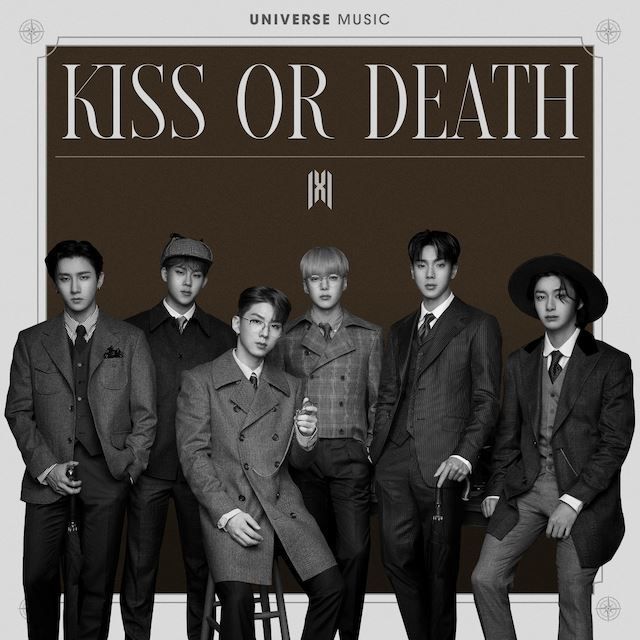
K-pop act Monsta X / Courtesy of Klap
Cho Jung-hwa, a life coach for the idol trainees at Starship Entertainment ― home to K-pop acts like Monsta X and WJSN (Cosmic Girls) ― says mental health training from an early stage would be helpful.
“Young singer hopefuls, whose average age is 15, often undergo several years of brutal vocal and dancing training to achieve their sole goal in life: to debut,” Cho, founder of career coaching company Two Rabbits, said in a recent telephone interview. “Due to their hectic schedules, many of them are not even aware that they are psychologically exhausted… They dedicate their sweat and tears to becoming singers, but always fear they may fail. So when they feel like their skills are not improving enough, they become extremely anxious about their unforeseeable future.”
Pointing out that most K-pop labels are just focusing on treating already-suffering singers, Cho stressed the significance of taking a preemptive approach.
“K-pop labels these days bring their singers to psychiatrists or psychological counselors if the stars reveal their mental issues, but I believe these companies should move faster and think more about how to prevent the problems in advance,” she said. “I think more labels should consider providing mental health training to the idol trainees, so that they can take care of their mental health from the very beginning and grow up as strong-minded adults who can relay positive messages to the public.”
Cho then moved on to explain how she works with her clients. The first step is to ask them to open up about their insecurities.
“I ask them what kind of person they want to be and what kinds of blueprints they have for the future,” she said. “Then, some say they want to be an entertainer, while others say they want to be a singer-songwriter. Once they feel more comfortable speaking about themselves, they tell me about their dreams and visions, gradually learning that their lives would not come to an end even if they did not succeed in making their debut. By seeing the bigger picture, they are less likely to feel that they are on the edge of a precipice. In fact, many aspiring singers enjoy their time with me, because they can delve deeper into themselves without trying to meet the criteria set by the others.”
Lee Jong-im echoed this sentiment, saying, “I hope more idol trainees realize that being a big star is not the only choice in their lives.”
Cho believes that all K-pop singers, who easily fall prey to cyberattacks and deal with stiff competition throughout their careers, need personal mental health trainers.
“K-pop singers have managers, hair designers and makeup artists, but they often do not have any experts to resort to when they feel emotionally taxed,” she said. “If they can get some direct help from a mental health trainer, they will feel much better.”
Online therapy is another option

Jeongyeon of K-pop girl group TWICE previously revealed that she had been suffering from panic disorder. Courtesy of JYP Entertainment
Lim Myung-ho, a psychology and psychiatry professor at Dankook University, thinks online counseling is another good option for celebrities suffering from mental distress, if they are not ready to openly talk about their conditions.
“For a long time, celebrities have mostly avoided meeting a psychiatrist or a psychological counselor as they were afraid that their health condition would somehow tarnish their image,” he said. “But these days, they can share their worries with experts without meeting them in person via various online and mobile platforms. In fact, the COVID-19 pandemic has prompted the growth of such platforms, as the number of people seeking help has seen a dramatic rise following the global health crisis.”
Just like Cho, Lim also stressed that stars should first open up about themselves.
“If they cannot seek help from the experts, they first have to get their emotions off their chest by having a talk with their friends or family. This phenomenon is called 'abreaction,' in which people release their emotional tension through verbalization.”
Likening the celebrities to “isolated islands” accessible only to a limited number of people, Lim advised K-pop labels to provide regular mental health check-up sessions for their singers.
“Celebrities are generally more impressionable than non-celebrities,” he said. “They often take the brunt of the emotional labor too, because they frequently conceal their genuine emotions in front of the public… In the short run, having a regular mental health check-up may seem unnecessary, but in the long run, it will help the K-pop companies' financial success by ensuring the mental stability of their stars.”