Documentary 'Assassins' director on following the murderers of Kim Jong-un's half-brother

Director Ryan White talks to journalists via video chat during a media conference for the documentary, “Assassins,” in Gwangjin-gu, eastern Seoul, Wednesday. Courtesy of THE COOP
The film traces two-year trial of two female “assassins”
By Lee Gyu-lee

Poster for the documentary, “Assassins,” directed by Ryan White / Courtesy of THE COOP
The murder of Kim Jong-nam, the estranged half-brother of North Korean dictator Kim Jong-un, in Malaysia, shocked the world in February 2017, especially with the crime occurring in broad daylight inside a crowded Kuala Lumpur International Airport.
Two women ― Siti Aisyah from Indonesia and Doan Thi Huong from Vietnam ― were arrested shortly after they smeared the lethal chemical agent, VX, on Kim's face, which killed him within an hour.
As the case made headlines around the world, many people became aware of Kim's death and the arrests of the two young women who carried out the assassination.
But director Ryan White's latest documentary, “Assassins,” brings to light what really happened to these women and what prompted the two economic migrants to get involved in the murder, facing possible execution following their two-year trial.
“They were admitting that they assassinated Kim Jong-nam, but were saying they didn't know they were about to assassinate someone. The story seemed too strange to be true,” White said via video chat during a media conference for the documentary in Gwangjin-gu, eastern Seoul, Wednesday.
“And that's what drew us to make this film and to follow the women's trial. It was the mystery of who the women are … and delving into their past to figure out what form their lives led them up to this moment.
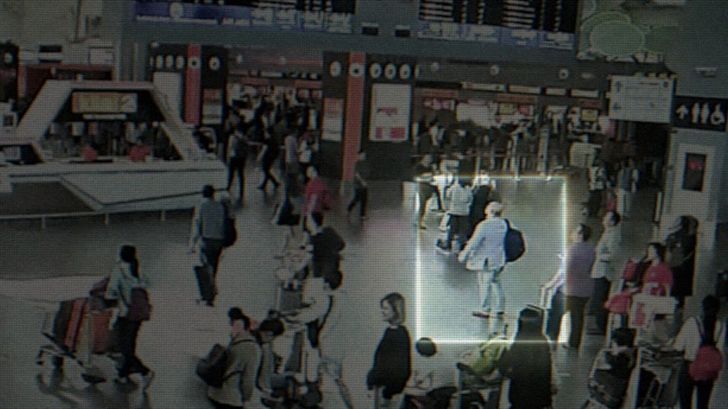
CCTV footage showing Kim Jong-nam at Kuala Lumpur International Airport on Feb. 13, 2017, on the day of his murder / Courtesy of THE COOP
The film starts by highlighting the day of the murder, Feb. 13, 2017, showing CCTV footage of 29-year-old Huong and 25-year-old Aisyah in action. The footage also showed them running off to wash their hands, making their claim that they thought they were on a prank show unconvincing.
But, as the story develops, tracing the evidence and interviewing their defense attorneys, undercover sources, and journalists who covered the case, the documentary questions whether the women were really trained assassins working for North Korea or unwitting pawns of a political murder plot.
“We were very much more interested (in the women's story) than the political parts of this film … At the beginning of the media aftermath, these women looked guilty. They were portrayed as guilty,” White said, adding that he also was not sure of their innocence when he first got his hands on the case.
With the suggestion of a journalist covering the aftermath of the assassination, White first flew over to Malaysia to learn the background himself and interviewed a related source before deciding to make the film.
“It was while I was there, when I met both legal defense teams and they were opening up to me. And I met a lot of undercover sources. And I just knew it would be a compelling story,” he said. “I didn't know whether I believed the women at that time when I began. But I knew either way, whether they were telling the truth or lying, that this would be an interesting trial to follow and an interesting hook for a documentary.”
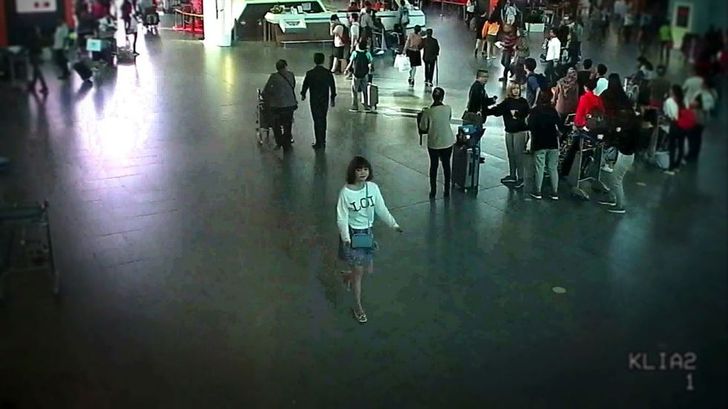
Footage showing Doan Thi Huong walking away after rubbing deadly chemical agent on Kim's face / Courtesy of THE COOP
The director spent a substantial amount of his time over the two years of the trial and in going through hours of the airport's CCTV footage, from the day of the murder and from the days leading up to it.
The more White went through the sizeable amount of evidence, the more he started to believe that the two women merely thought they had been recruited to make a hidden camera show and prank strangers.
“At the beginning of making the film, I assumed that the women were guilty. The longer I made the film, the more my eyes started to open that maybe these women are telling the truth,” he said.
“It was less about a moment that (evidence) proves that they are innocent, but was more about the lack of evidence, absence of anything that showed they were aware of what they were doing… and that they were about to harm someone. The only piece of evidence that was ever used by the prosecution and the judge pointed to was that the women washed their hands after the assassination and that Doan looked aggressive the way she touched his face.”
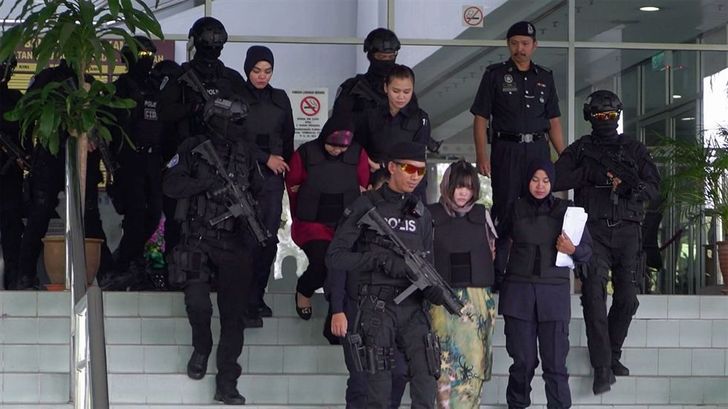
Huong, front center, and Aisyah, in maroon, walk out of the court after their trial. Courtesy of THE COOP
Aisyah was freed during the trial after prosecutors dropped her charges, and Huong was released two months later for pleading guilty to causing bodily harm.
The director noted that their release, avoiding the death sentence, made it possible for him to get the film out into the world.
“Clearly, the ruling of the judge ― who would decide whether the women are guilty ― after the prosecution's case was, empathically, that these women were guilty. There was no nuance,” he said. “Then the question became… 'Can we even put up a film out into the world if it proves these women are innocent and ends with them dying and paying the ultimate price for the crime.”
Adding that the charges against Aisyah being dropped was a turning point not only for the women's lives but also for the film, he said: “I think, in a lot of ways, we were even lucky that we could release a film about this, because had the women been executed, I don't even know if we could have finished that film.”
The documentary was denied “art movie” status by the Korean Film Council (KOFIC) in May, as it claimed that the film failed to meet four criteria. Therefore, the film was not able to acquire screen time in theaters. But it earned the status after a reevaluation, as local distributors protested the decision.
“Assassins” is set to hit local theaters on Aug. 12.