Stars becoming more vocal in political matters

Political retaliation once discouraged stars from speaking out; now politicians' hardcore supporters can put gag on celebrities
By Park Han-sol
Unlike Hollywood where actors often feel free to criticize or mock politicians, the atmosphere in the Korean entertainment industry has long been quite different.
For celebrities, commenting on people in power has been a long-held taboo. Several celebrities have found their careers coming to abrupt and unexpected ends after criticizing politicians. And watching stars pay the price for their politically motivated comments became a warning for the others to keep their mouths closed
But lately, some entertainers have begun to challenge the decades-old taboo and have started sharing their candid opinions about political affairs.
Kwon Mina, a former member of K-pop girl band AOA, blamed President Moon Jae-in for skyrocketing housing prices in the greater Seoul area.
“Housing prices are rising… President Moon played a part in this… I wonder if Korea is heading in the right direction,” she said during a recent live Instagram video. She then expressed worries about the safety of COVID-19 vaccines. “I need to get the shot, but I'm scared because there were several people who suffered after getting vaccinated. I will get it once the President is inoculated.”
Facing criticism from the President's supporters, she added, “I know making political statements is dangerous. But before you see me as a public figure, I'm also a member of the Korean public.”
Singer JK Kim Dong-uk, whose career was cut short after making a series of remarks critical of the incumbent administration on social media, opened fire again, this time at the unspecified corrupt officials from the state-owned Korea Land and Housing Corporation (LH) accused of having used inside information about urban development plans to illegally invest in property.
“So for you guys, purchasing property was just like eating the snack matdongsan,” he wrote on social media. His use of the snack analogy came because the two words in Korean ― property (dongsan) and the snack (matdongsan) ― are close homonyms.
“Have you guys ever thought of sharing the delicious snack with other citizens?” he said, mocking the government with the hashtag #MatdongsanParty and #MastersofPropertySpeculation.”
Experts say more and more stars will venture to walk the tightrope by making comments critical of the government as there seems to be less systematic retaliation that can arise from their remarks, meaning less risk to their careers than during the past authoritarian regimes.
Culture critic Ha Jae-keun pointed out that in the past, stars were discouraged from speaking out publicly due to strict censorship under authoritarian rule when political retaliation was actively practiced.
“It hasn't been long since Korea achieved democratization. Seeing the political statements made under dictatorships subsequently being subject to retaliation made the topic taboo in the industry. Even after the authoritarian regimes ended, that sentiment became fixed almost like a custom. Within such an environment, an artist making any kind of political comment immediately stood out and was taken very sensitively by the public,” Ha said.
Besides political repression, culture critic Jung Duk-hyun suggested another reason that motivated celebrities not to talk about politics. They know the risky nature of speaking out as public figures. If they reveal their political leanings, which are bound to be divisive, it could possibly ostracize some of their fans.
But compared to the past, as more entertainers are more openly calling for social justice and becoming politically active with no clearly enforced forms of government censorship, the general public is becoming more accepting toward those with different views, Jung added.
However, even in the absence of a controlling government, Ha cautioned that many stars may still feel pressured not to express their voices due to some hardcore supporters of politicians. If stars speak negatively about certain politicians, he said, they could quickly come under attack from extremists.
The relationship between politics and entertainment has changed dramatically over the past decades. During the authoritarian regimes, government censorship and political pressure often put a gag on the voices of popular artists.
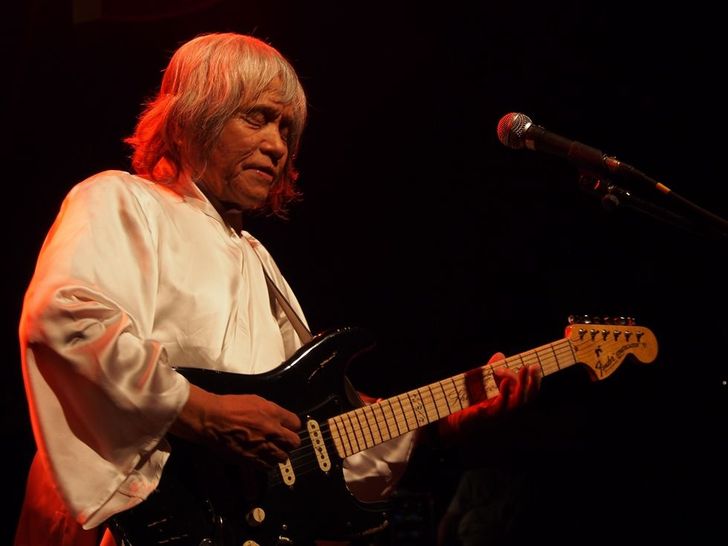
Singer Shin Joong-hyun / Korea Times file
Shin Joong-hyun, commonly referred to as the godfather of Korean rock 'n' roll in the 1960s and early 1970s, was imprisoned for drug possession in 1975, after allegedly refusing to write a song supporting then-President Park Chung-hee. His songs remained banned until the 1990s after Korea's authoritarian regimes ended.
Songstress Yang Hee-eun was among many who experienced similar persecution after the release of her song “Morning Dew” in 1975. It was speculated that the song's suggestive lyrics and its popularity among protesters fueled the decision.
In the 1980s, during the Chun Doo-hwan administration, actor Park Yong-sik was even banned from appearing on television for nearly a decade due to his striking resemblance to the president, the late actor claimed. He was only able to come back to the small screen after Chun stepped down.
An end to TV and film careers seemed to be a common fate for entertainers even after the authoritarian regimes came to an end.
Popular comedian Shim Hyun-seob argued that his public support for then-presidential candidate Lee Hoi-chang from the conservative Grand National Party (GNP) in the early 2000s led to his downfall after Lee lost the election.
In 2008, during the Lee Myung-bak administration, actress Kim Gyu-ri criticized the government's decision to import U.S. beef, which had previously been banned after a cow in the U.S. was found to have mad cow disease.
“This is absurd … Importing beef smothered with mad cow disease with bones and everything. I would rather fill my mouth with potassium cyanide,” she wrote on social media. The actress who appeared in a number of movies, television shows and the cover of magazines, subsequently disappeared from the public eye for years.
Rumors of the government blacklist of artists and other cultural figures, who were pressured to leave their jobs and excluded from many projects, also surfaced in the Park Geun-hye administration.
Artists' political outspokenness especially came under the spotlight in 2016 during the mass rallies in Gwanghwamun Square as part of the protest against former President Park Geun-hye. Dozens of celebrities, including singer Jeon In-kwon, Lee Seung-hwan, actor Cha In-pyo, actress Kim Yoo-jung and singer-actor and former K-pop star Lee Joon, took part or voiced support for the movement.